Come Clean, Go Clean
Biosecurity hygiene
Come Clean, Stay Clean, Go Clean – when visiting farms.
On-farm biosecurity is everyone’s responsibility, including the property owner, visitors and workers.
This web page provides information about how to visit a farm safely, keep vehicles, clothing and equipment clean and identify signs of disease.
Did you know you can carry animal diseases, pests and weeds on your clothes, boots, vehicle, machinery and equipment?
Come Clean – Go Clean is a simple and effective strategy to minimise the spread of animal diseases.
Ask your visitors to wear clean clothes and boots, and to clean their vehicle, machinery and equipment to ensure they are free from mud, dirt and manure.
Where possible, leave visitors' vehicles at the front gate of the property or designated parking area and use your farm vehicle.
Record all visitors to your property. Keep a log of the name, contact details and date of your visitors in case you need to make contact later
When visitors are leaving, remind them to remove mud, dirt and manure from clothes, boots, vehicles, machinery and equipment before entering another property.
Don't forget, Come Clean – Go Clean.
Authorised by the Victorian Government, 1 Treasury place, Melbourne.
Come clean: planning the visit
When planning to visit a farming property:
- Check with the property owner before arriving to learn about any specific biosecurity requirements or potential issues.
- Gain additional information about the visit, for example where stock are located, how many, etc.
- Wash and disinfect your boots/shoes when arriving at the property.
- Where practical, arrange to meet at the house or on a sealed/gravel area away from livestock.
Biosecurity tip
When bringing your own machinery or vehicles, ensure they are clean before arriving – no built-up soil, especially in wheel arches, ute trays, footwells and floor mats.
Stay clean: entering the property
Best-practice procedures to consider when entering a farming property:
- Park in a designated area or choose a safe, clean area outside of the high-risk production zone.
- Preferably, leave your vehicle at the front gate of the property and have the land/livestock owner pick you up in a farm vehicle.
- Sign the visitor record book.
- Record the time of entry and exit onto the farm, the farm location, the owner’s name, and their telephone number in your diary.
- If you are handling livestock, ensure you put on clean protective clothing.
Biosecurity tip
It is a good idea to keep a spare pair of shoes inside your vehicle and wear them only while driving, to keep the interior of your vehicle clean.
Go clean: leaving the property
Best practice procedures when exiting a property:
- Vehicles, machinery and quad bikes can all transport pests, diseases and weeds from paddock to paddock, or farm to farm. Any vehicle used on a farm should be thoroughly cleaned using a high-pressure wash and detergent.
- Wash and disinfect your boots/shoes when leaving the property.
- Remove protective clothing and place it in a designated bag for used clothing.
- Wash and disinfect your hands.
Steps for cleaning your footwear
Dirty boots can carry diseases, pests and weeds. A simple way to minimise this biosecurity risk is to ensure all footwear is thoroughly disinfected when entering and exiting farming properties.
To set up a footbath station you will need:
- A flat surface. Set up the footbath on a flat surface outside any animal enclosures and where animals, including pets, cannot drink from it.
- A tarpaulin (if footbaths are to be placed on a dirt surface).
- Heavy-duty scrubbing brushes and scraping tools such as a horse hoof-pick or a screwdriver and at least two heavy-duty plastic containers.
- Two containers big enough to fit a large boot.
- Fill the first plastic container with clean water for washing off any soil and plant material prior to the decontamination process. You can add some soap or detergent.
- Fill the second footbath with a cleaning agent/detergent. Follow the manufacturer’s instructions, particularly regarding the right concentration for the soiling/organic matter present.
- Drying material - something clean, porous and non-slip, such as hessian bags, rubber mats or towels. Lay drying material next to each of the clean water and decontamination footbaths.
Step one: Clean
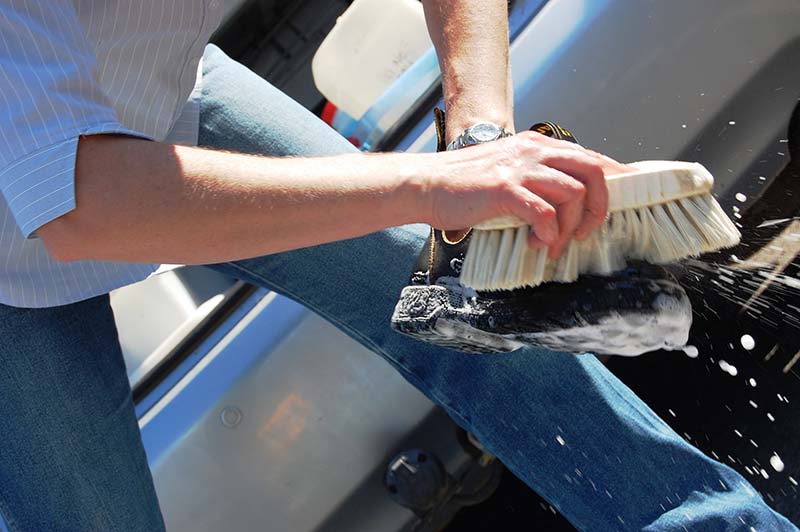
Use a strong bristled brush or sharp tool to remove all visible debris. Footwear should be free of dirt, mud, manure and plant material before using the footbath. Organic matter can quickly contaminate the water and prevent the disinfectant from killing germs, so the boots or shoes need to be fairly clean before you wash and disinfect.
Step two: Wash
Submerge your footwear so the liquid saturates all parts of it. If shoes were very dirty to begin with, use the scrubbing brush while standing in this solution to thoroughly clean the soles of the shoe. Step out of the first container onto the drying material.
Step three: Disinfect
The second footbath should contain disinfecting products. When using any chemical, care should be taken to determine the safety of disinfectants prior to using them near your livestock, and always follow the labelled instructions. Rinse shoes after disinfection to prevent damage.
Refer to the AUSVETPLAN Decontamination Manual on the Animal Health Australia website by visiting animalhealthaustralia.com.au and enter the search words ‘Informing EAD responses’.
Come Clean, Go Clean poster

Contents for your biosecurity kit
The contents of a biosecurity kit will vary from farm to farm but all kits should include items for cleaning hands, shoes, small equipment and vehicle interiors. It is important the biosecurity kit is fully stocked at all times.
Create a toolkit specific to your farm by visiting the Create you create your own biosecurity kit page on the farm biosecurity website.
Tip
Store chemicals safely and in accordance with the manufacturer’s instructions and legislative requirements. For information visit agriculture.vic.gov.au/chemicals
eLearning
 This course will provide you with information to know what to do to visit farms in a safe manner. You can help protect Australia's farms.
All people, vehicles and equipment visiting farms can spread pests, diseases and weeds.
Good biosecurity is about awareness and action. Know what you have to do to visit farms in a safe manner and how to keep everything clean while you are there.
Know how to identify signs of pests, diseases, or weeds and know how to report anything unusual you may see on your visit.
This course will take approximately 15 minutes.
View Come Clean, Stay Clean, Go Clean – when visiting farms online courseBiosecurity planning workshops
Agriculture Victoria hosts On-farm biosecurity planning workshops across the state. Participants walk away from the workshops with their farm biosecurity plan in-hand. View the range of new biosecurity courses, find an event near you or access biosecurity plan templates at agriculture.vic.gov.au/ead.
For general enquiries and information on emergency animal diseases, send your questions to ead.engagement@agriculture.vic.gov.au.
Biosecurity planning
A farm biosecurity plan is an essential tool for farmers who want to prevent, eliminate, and minimise biosecurity risks on-farm.
It can be a simple checklist to meet Livestock Production Assurance (LPA),and Animal Health Australia (AHA) requirements or part of a more detailed and strategic plan.
The right plan depends on the type of farm business, its risk profile and particular needs.
Templates
- Animal Health Australia on-farm biosecurity
- Integrity Systems biosecurity plan template
- Support tool: Farm biosecurity action planner
- Dairy Australia – emergency animal disease preparedness
- Australian Pork Ltd – biosecurity plan and resources
Agriculture Victoria Biosecurity Management Plan coversheet
New laws have been introduced in Victoria under the Livestock Management Act 2010, enabling livestock producers to protect their property from unlawful trespassers. To take advantage of these protections, producers must include a farm map and specific information as part of their farm biosecurity plan and display compliant biosecurity signage.
A biosecurity management plan (BMP) coversheet template that includes the required specific Agriculture Victoria BMP coversheet template  [MS Word Document - 36.4 KB]
Read more about Changes to the Livestock Management Act 2010