Plum pox virus
Sharka (also known as plum pox) is the most devastating and destructive disease of stone fruit in the world. As sharka progresses in a host tree, the tree becomes less productive and can have decreased tree growth, and fruit can drop prematurely. Sharka is caused by the plum pox virus (PPV; Potyvirus plumpoxi).
PPV is not known to occur in Australia and is listed as a National Priority Plant Pest for Australia. There are strict quarantine measures in place to prevent its introduction into Australia.
PPV can be found across Europe and parts of Canada, South America, northern Africa, the Middle East and Asia.
Transmission
PPV is spread by the movement of infected plant material and insect vectors (aphids) in the field. Aphids such as the green peach aphid (Myzus persicae) and Aphis spiraecola are known vectors of PPV, and are both known to be present in Victoria and other states of Australia.
Host range
PPV affects trees in the genus Prunus. Commercial stone fruits such as peaches, nectarines, cherries, nectarines and plums are known hosts of PPV.
For more extensive host information and secondary hosts of PPV, please check the European and Mediterranean Plant Protection Organization and Centre for Agriculture and Biosciences International host lists.
Symptoms
PPV can be confused with abiotic stress symptoms (such as nutrient deficiency) and physical injuries (such as frost damage or insect attacks). Some hosts of PPV (such as almonds) show no symptoms when infected (they are asymptomatic), and symptoms can vary between different Prunus species.
PPV symptoms on trees include:
- trunk splitting
- premature fruit drop
- localised symptoms on a single branch or across the whole tree.
PPV symptoms on leaves include:
- chlorotic or yellow rings or bands
- spots
- blotches or flecks
- mottling
- yellow lines along leaf veins
- vein clearing
- distorted or deformed leaves.
PPV symptoms on fruit include:
- chlorotic spots or rings that can appear sunken
- deformed or irregularly shaped fruit, which can develop brown or necrotic areas under ring symptoms
- internal browning and gummosis on diseased fruits
- poor fruit production and quality.
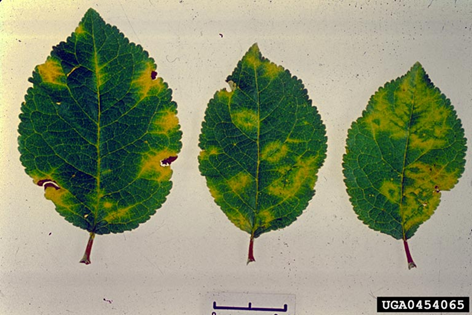
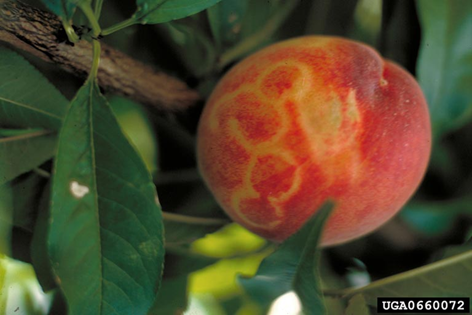
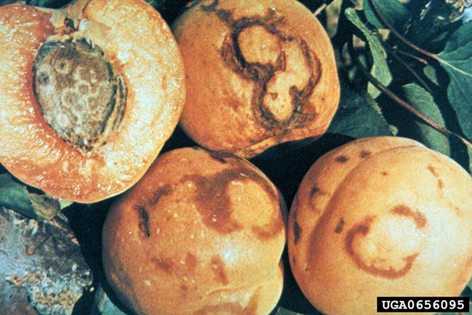
For more photos of PPV symptoms, please check the photo sections of the European and Mediterranean Plant Protection Organization and Centre for Agriculture and Biosciences International web pages.
Detection and prevention measures
There is currently no cure for PPV. Because of this, early detection and public reporting are critical. Agriculture Victoria regularly responds to reports of suspect plant diseases and conducts exclusion diagnostics on plants with symptoms.
To protect your property, maintain best practice on-farm biosecurity standards. Make sure propagation material is purchased from reputable suppliers and regularly check your plants for symptoms. Report suspect symptoms immediately.
Reporting an unusual plant insect pest or disease
Report any unusual plant pest or disease immediately using our online reporting form or by calling the Exotic Plant Pest Hotline on 1800 084 881. Early reporting increases the chance of effective control and eradication.
Please take multiple good quality photos of the pests or damage to include in your report where possible, as this is essential for rapid pest and disease diagnosis and response.
Your report will be responded to by an experienced staff member, who may seek more information about the detection and explain next steps.
Report online