H5 bird flu resources
Access the following bird flu resources to help raise awareness and improve understanding of H5 bird flu.
For national bird flu resources, including translated materials, visit the Australian Government bird flu resources page.
Stakeholder communications packs
These packs contain the most up-to-date information on the H5 bird flu for sharing with communities and networks. Corresponding downloadable files are linked below.
- Stakeholder communications pack - October 2026
 [PDF File - 3.3 MB]
- Poultry stakeholder communications pack – November 2026 [PDF File - 1.1 MB]
Social media tiles
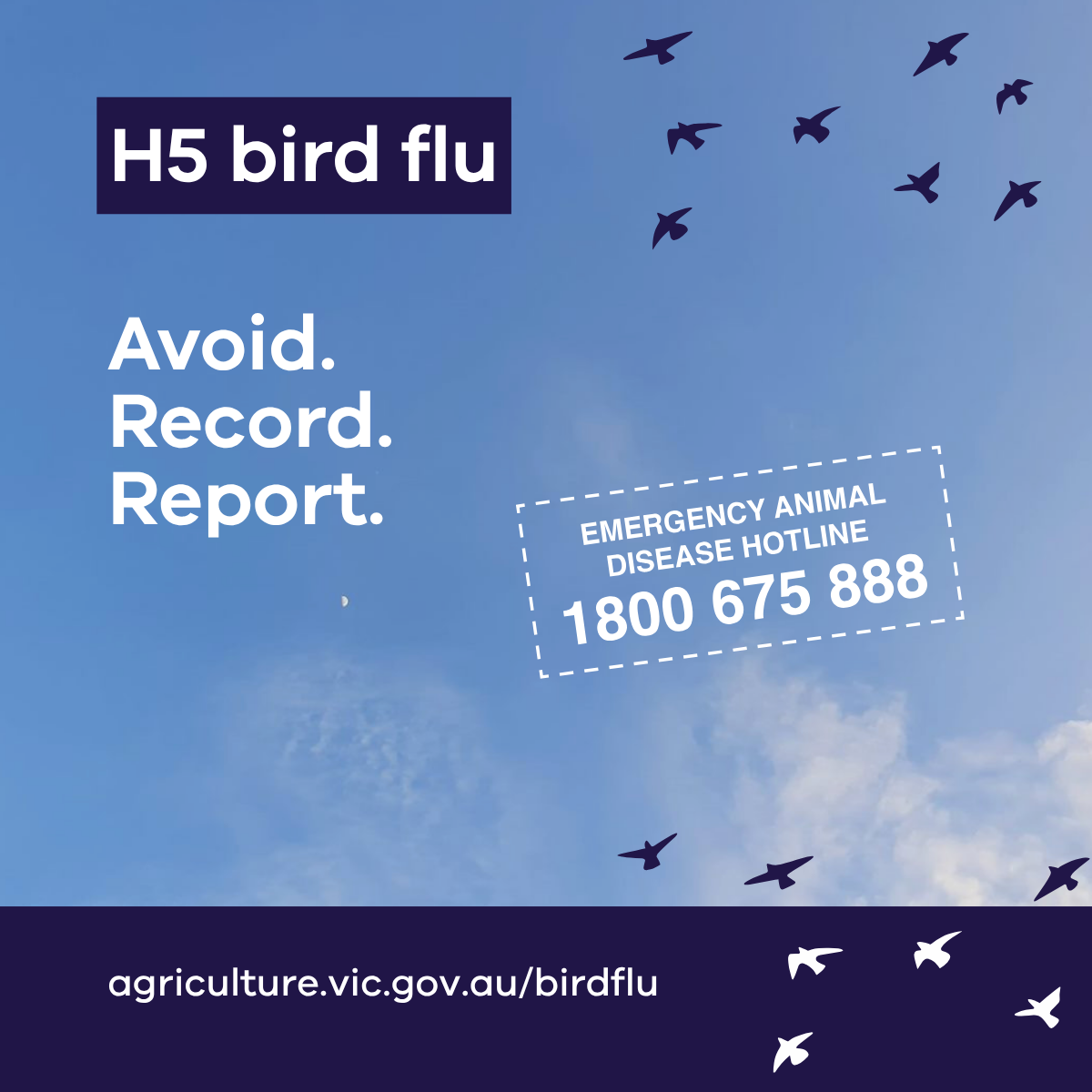
- About H5 bird flu
 [Image - 310.9 KB]
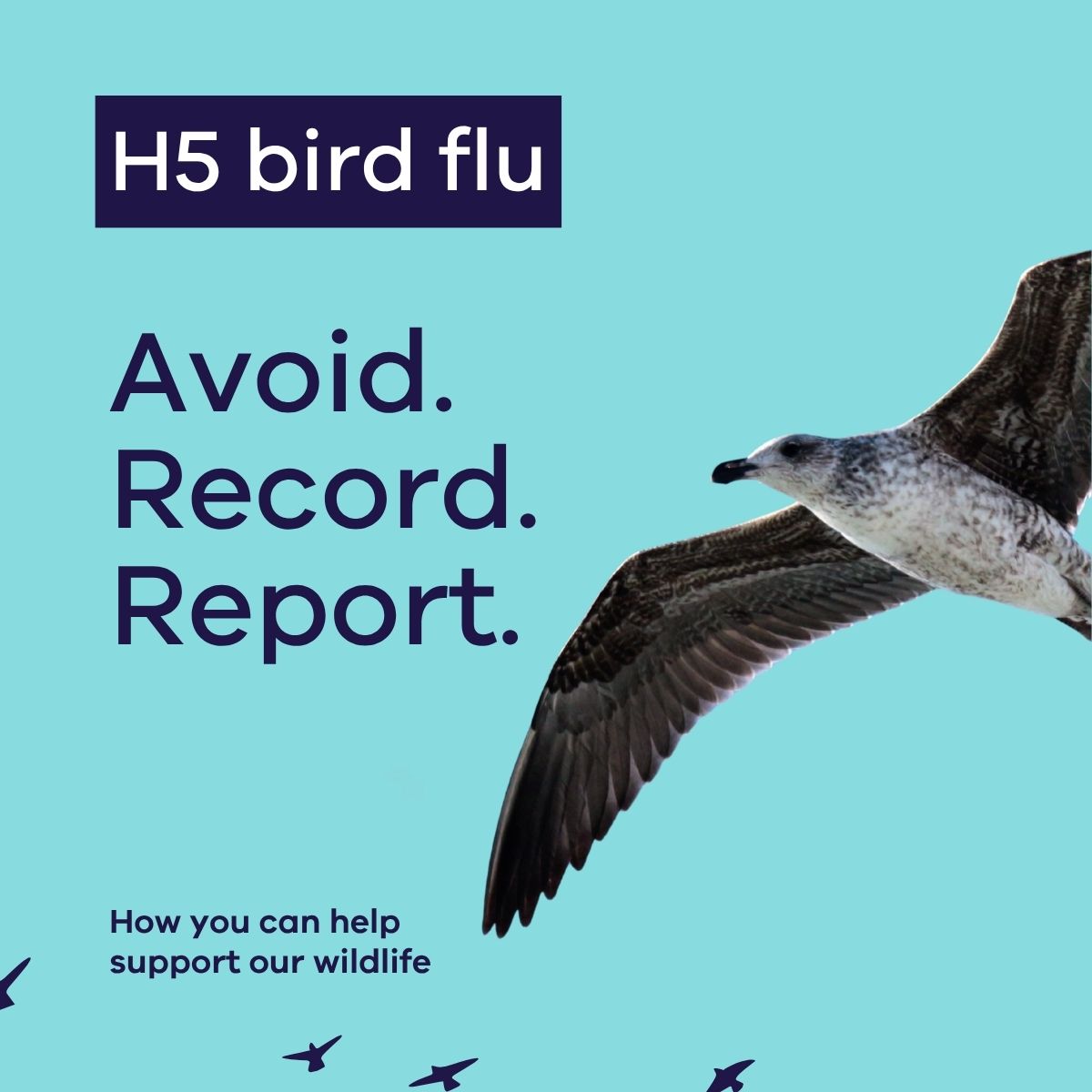
- How to report H5 bird flu [Image - 113.6 KB]
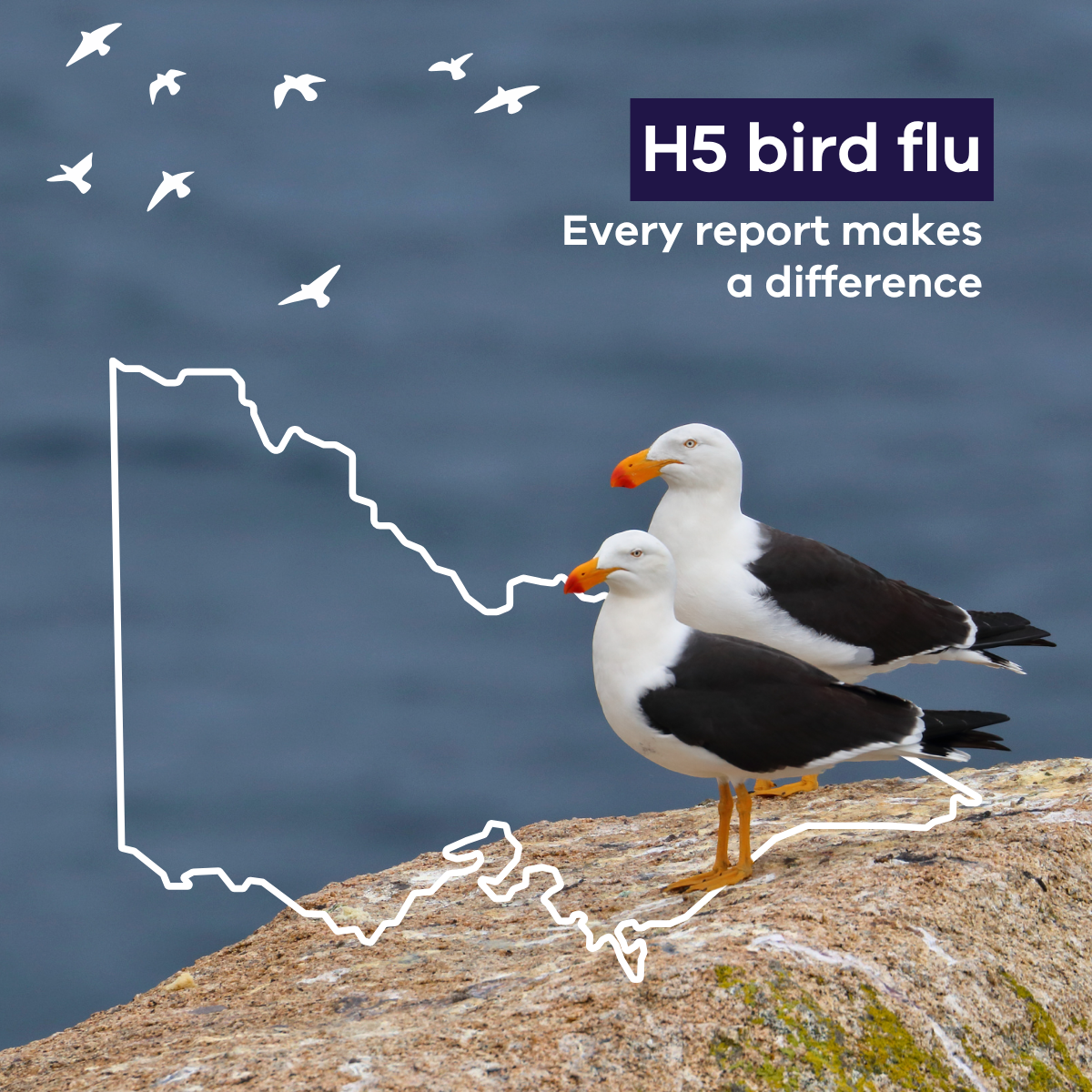
- What happens when you make a report [Image - 2.1 MB]
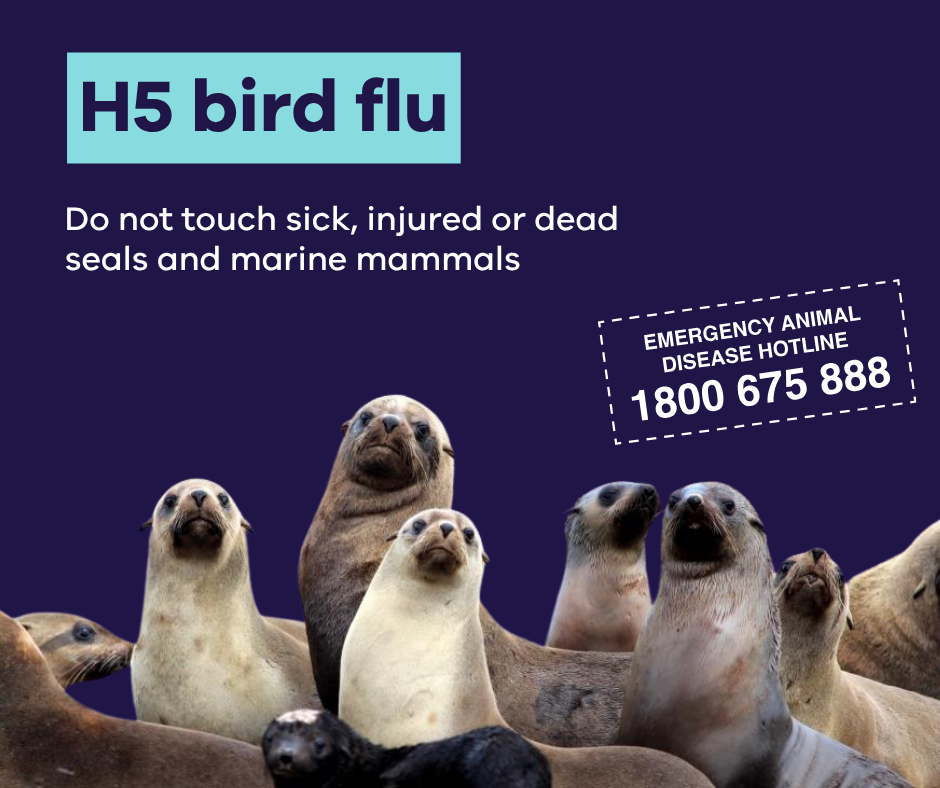
- Seals and marine mammals [Image - 623.6 KB]
- Looking after your mental health [Image - 844.2 KB]
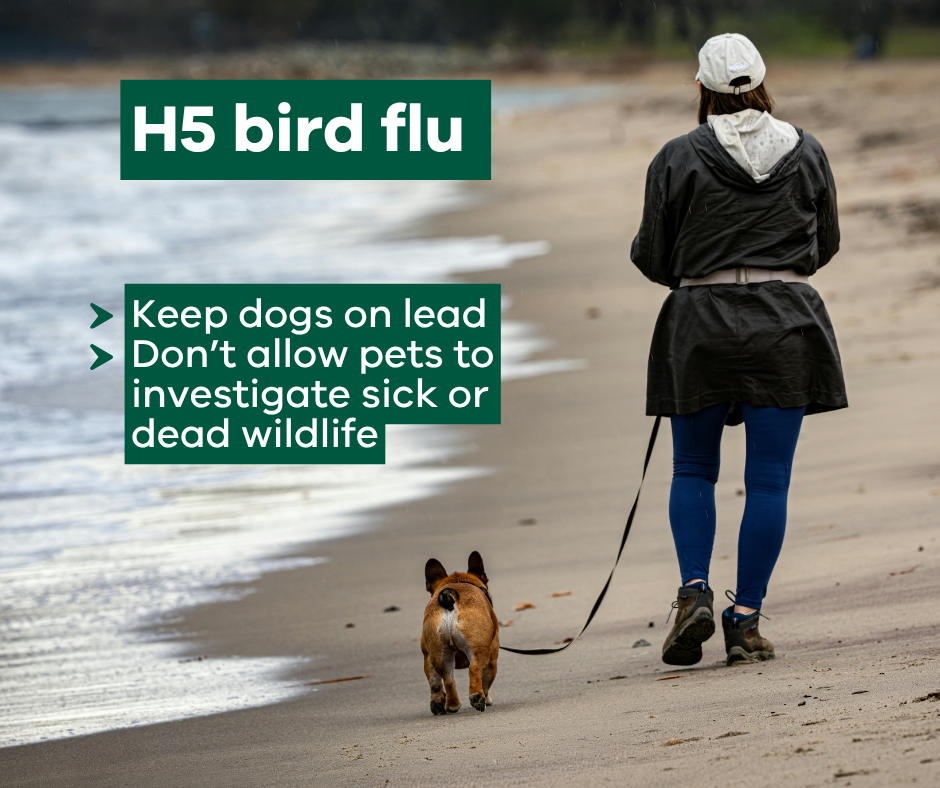
- Keeping your pets safe [Image - 1.0 MB]
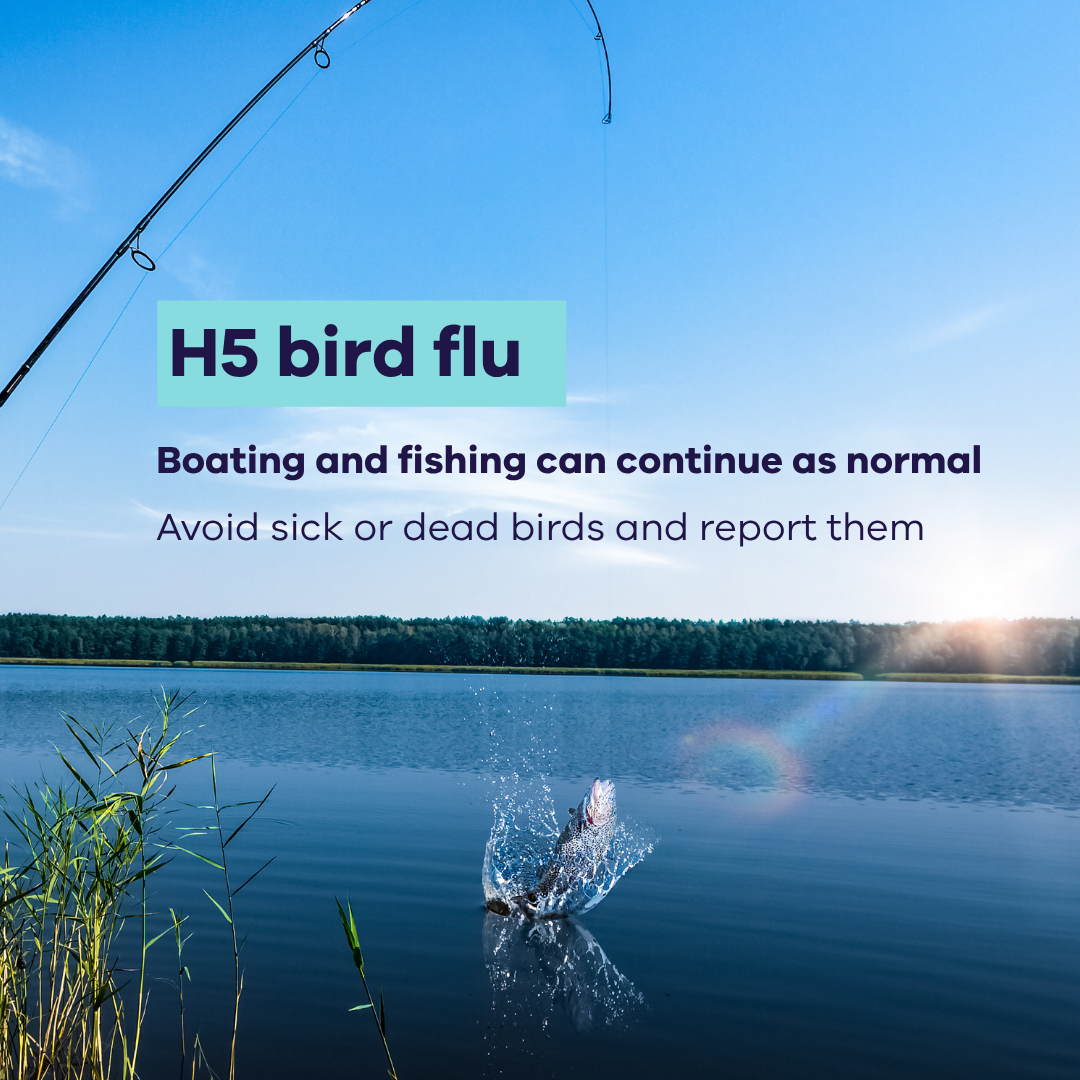
- Boating and fishing [Image - 1.8 MB]
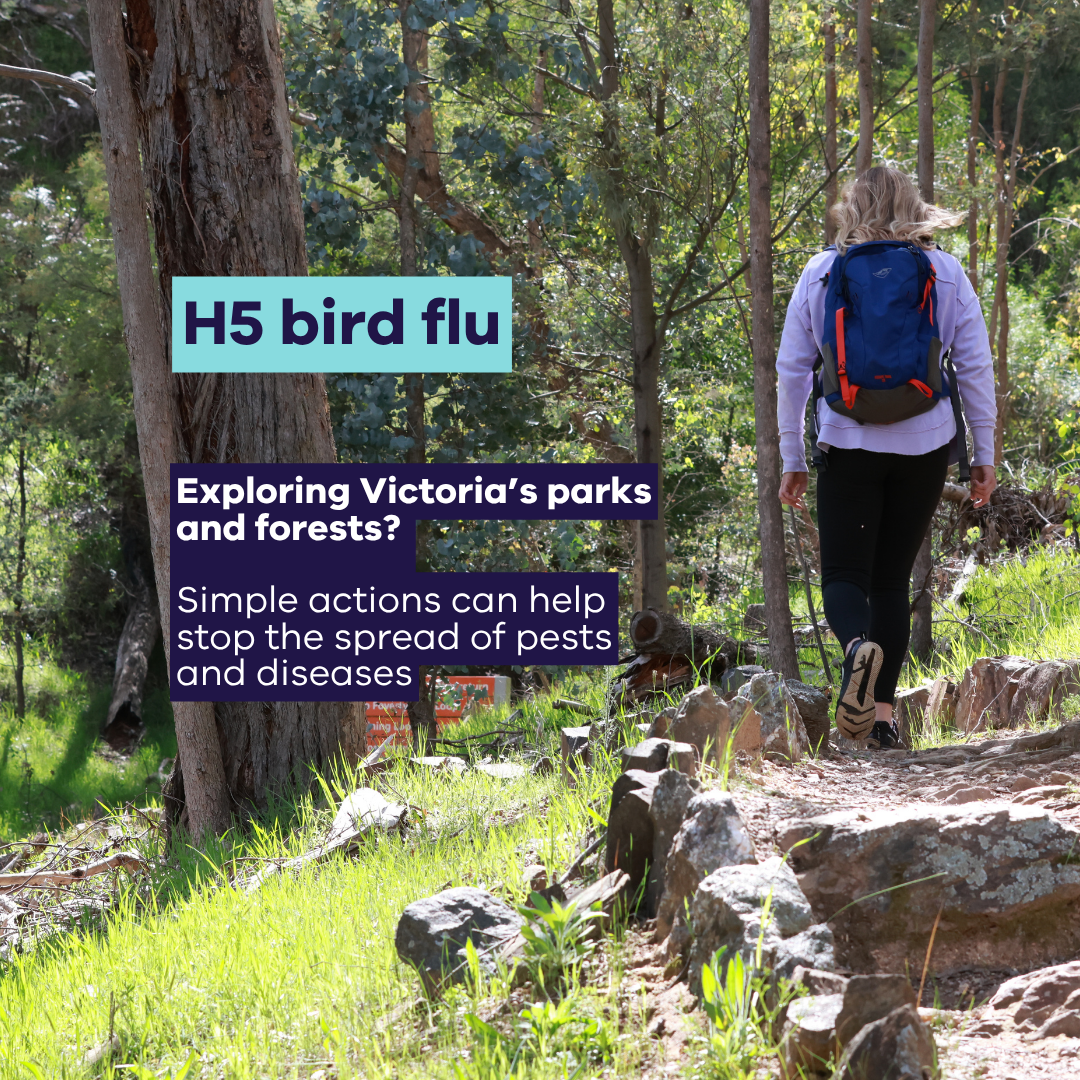
- Bushwalking [Image - 2.8 MB]
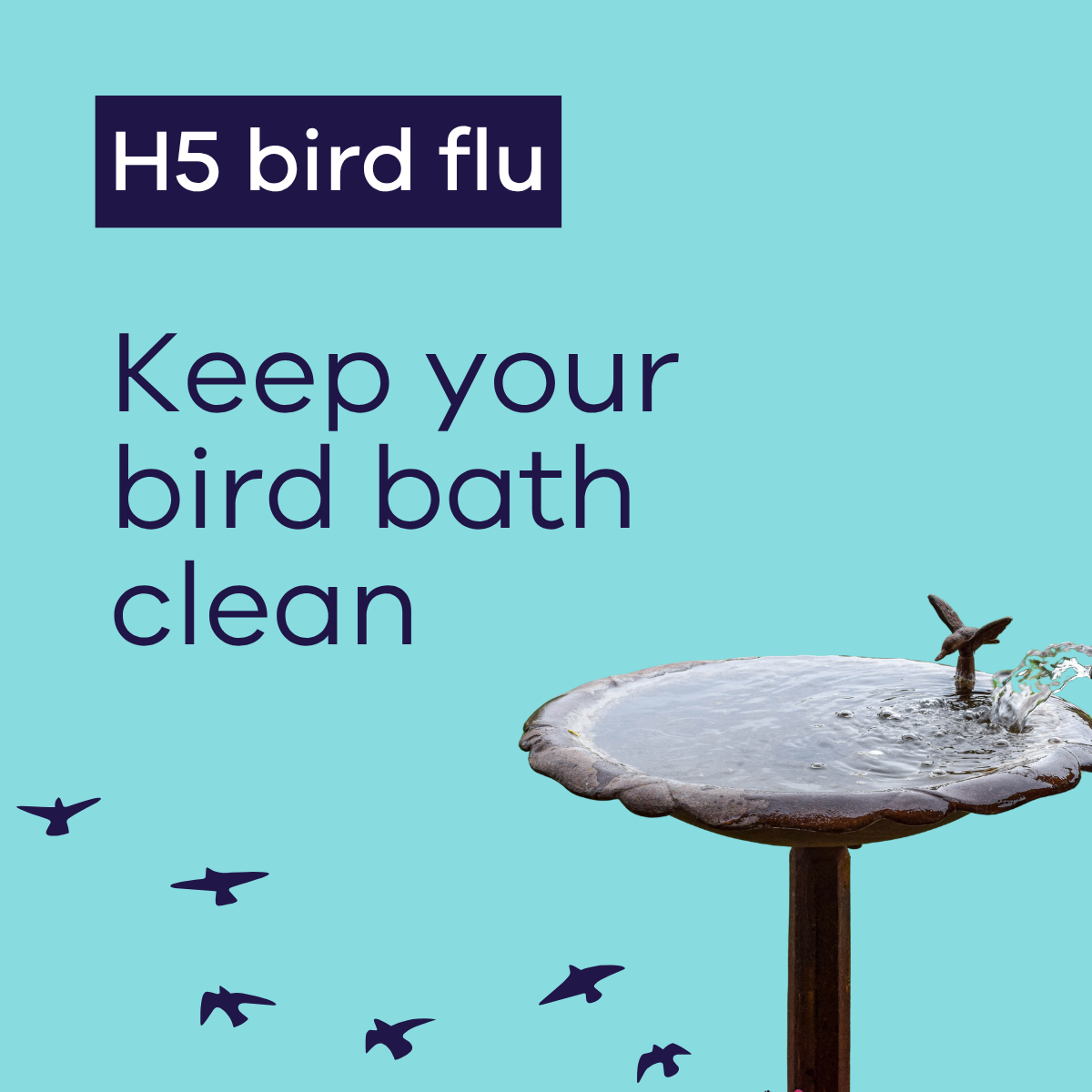
- Bird baths [Image - 344.9 KB]
Poultry social media tiles
- Keep pests away [Image - 3.3 MB]
- Sudden death [Image - 2.6 MB]
- Wild birds [Image - 3.0 MB]
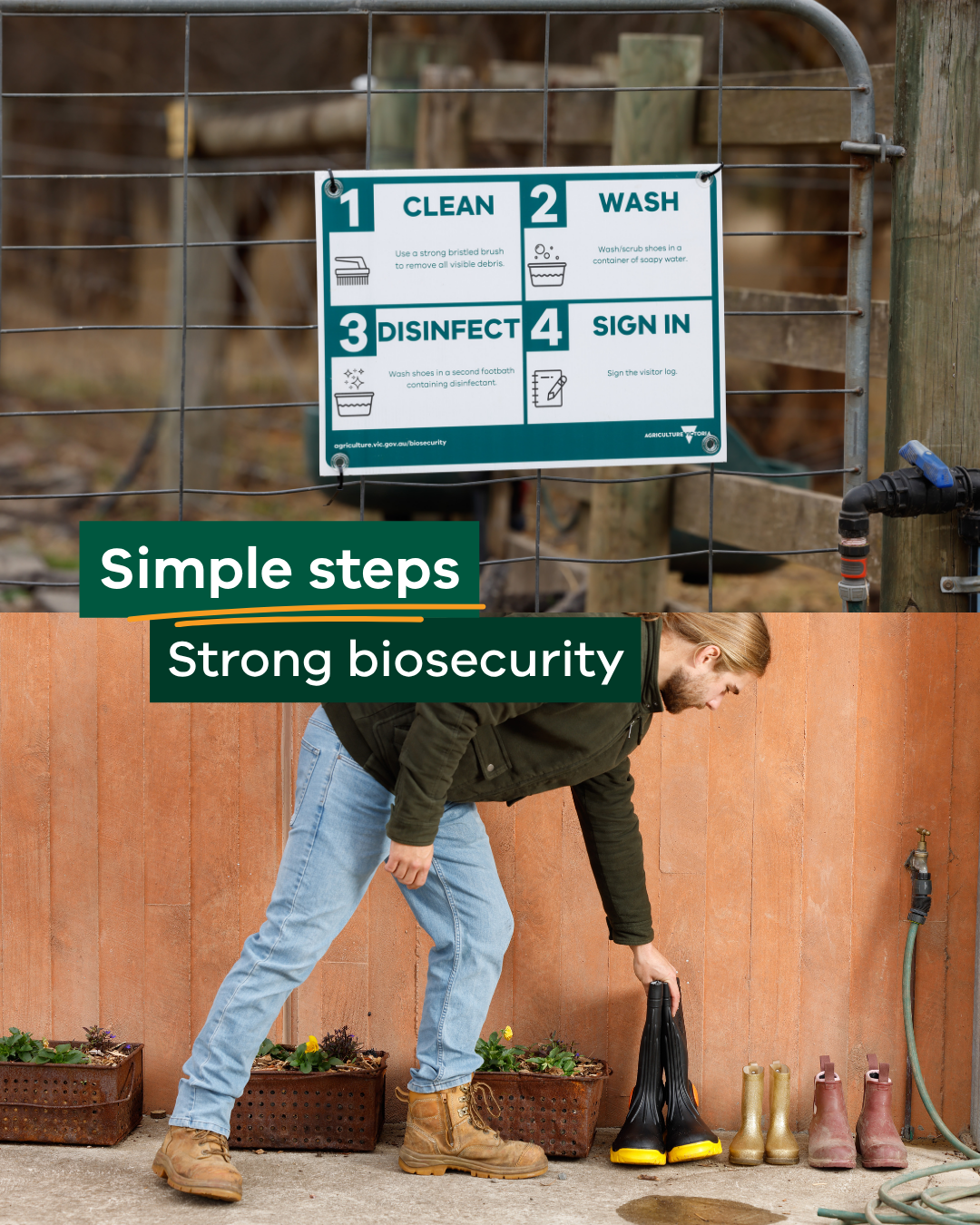
- Clean boots [Image - 3.0 MB]
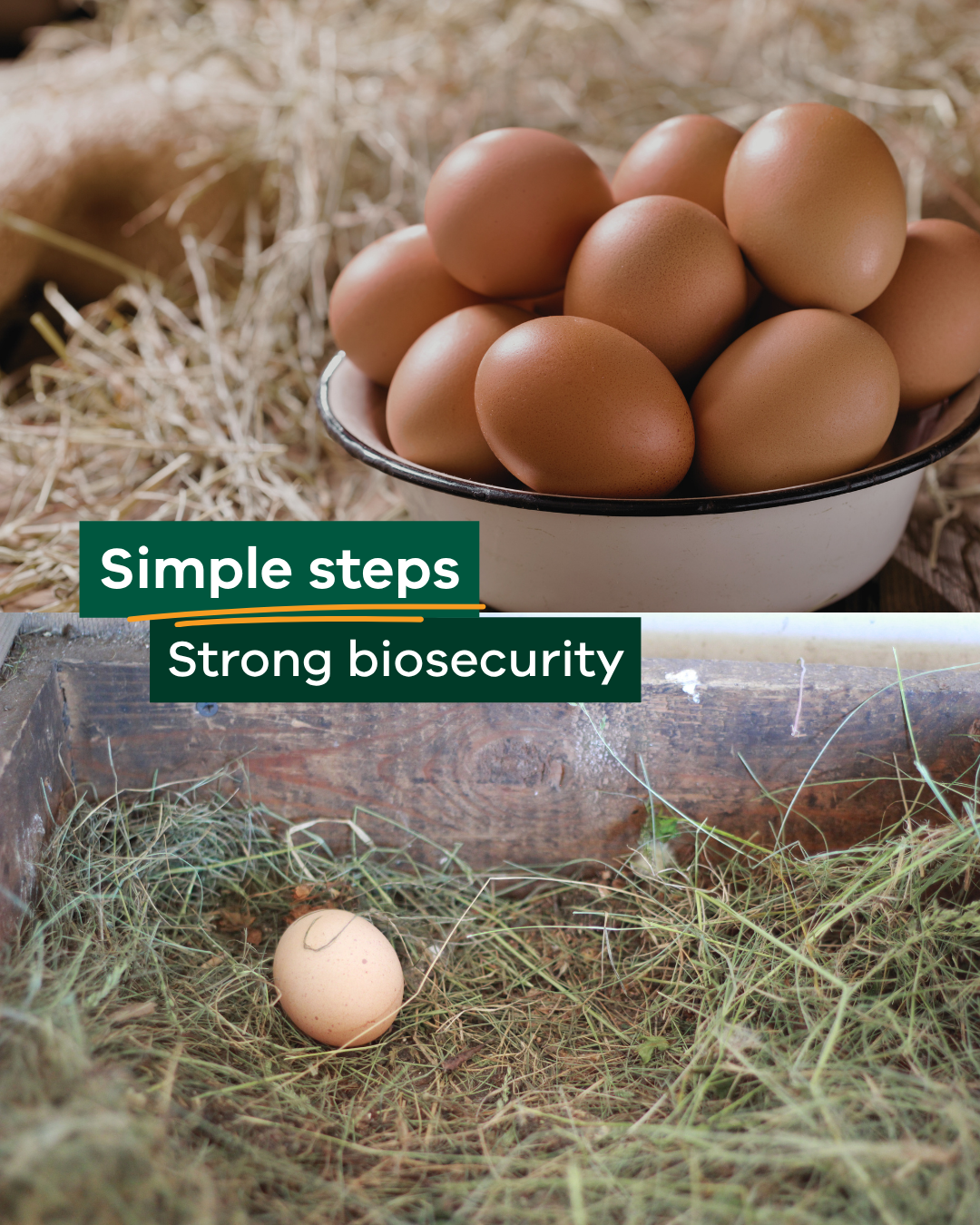
- Sharing eggs [Image - 3.0 MB]
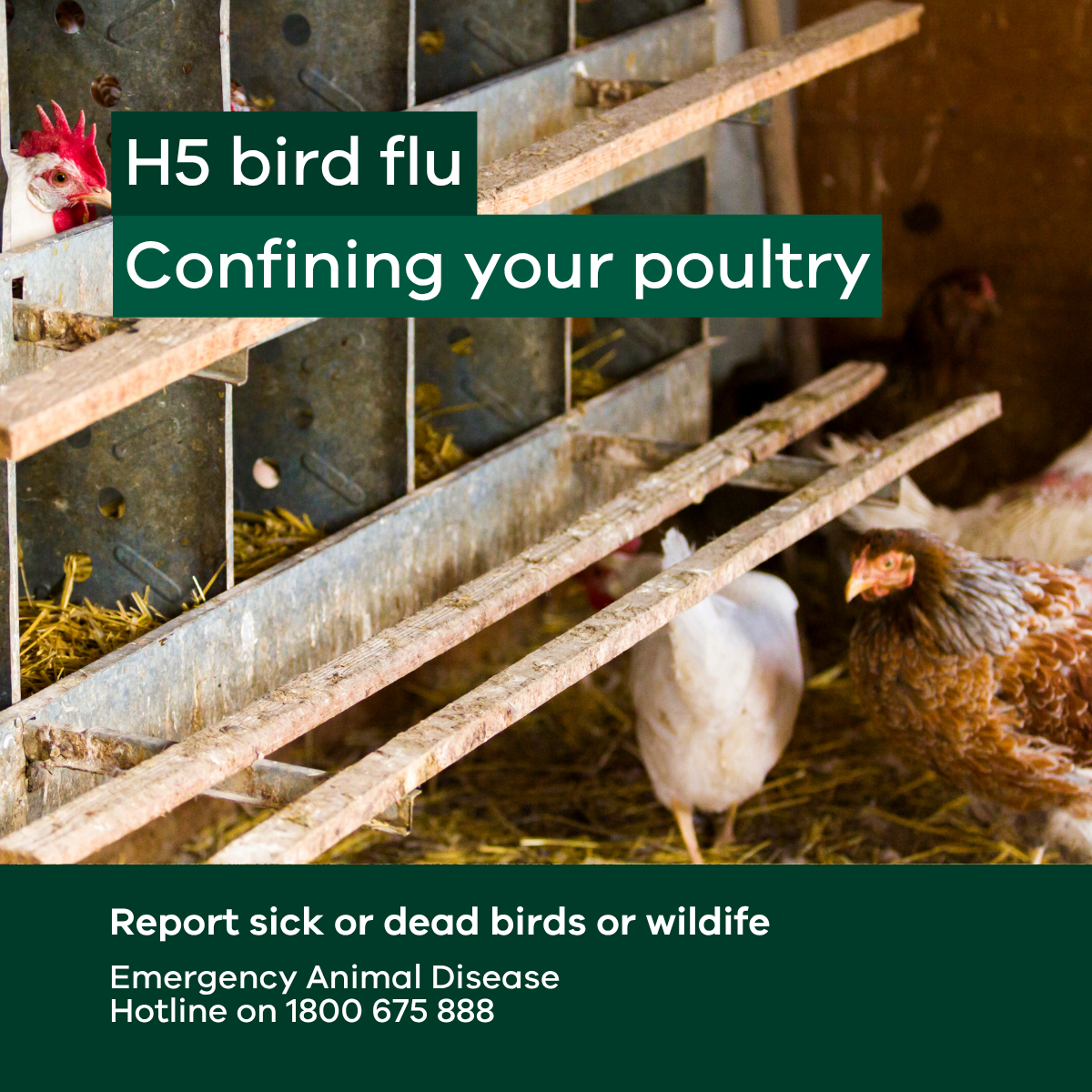
- Poultry confinement [Image - 2.6 MB]
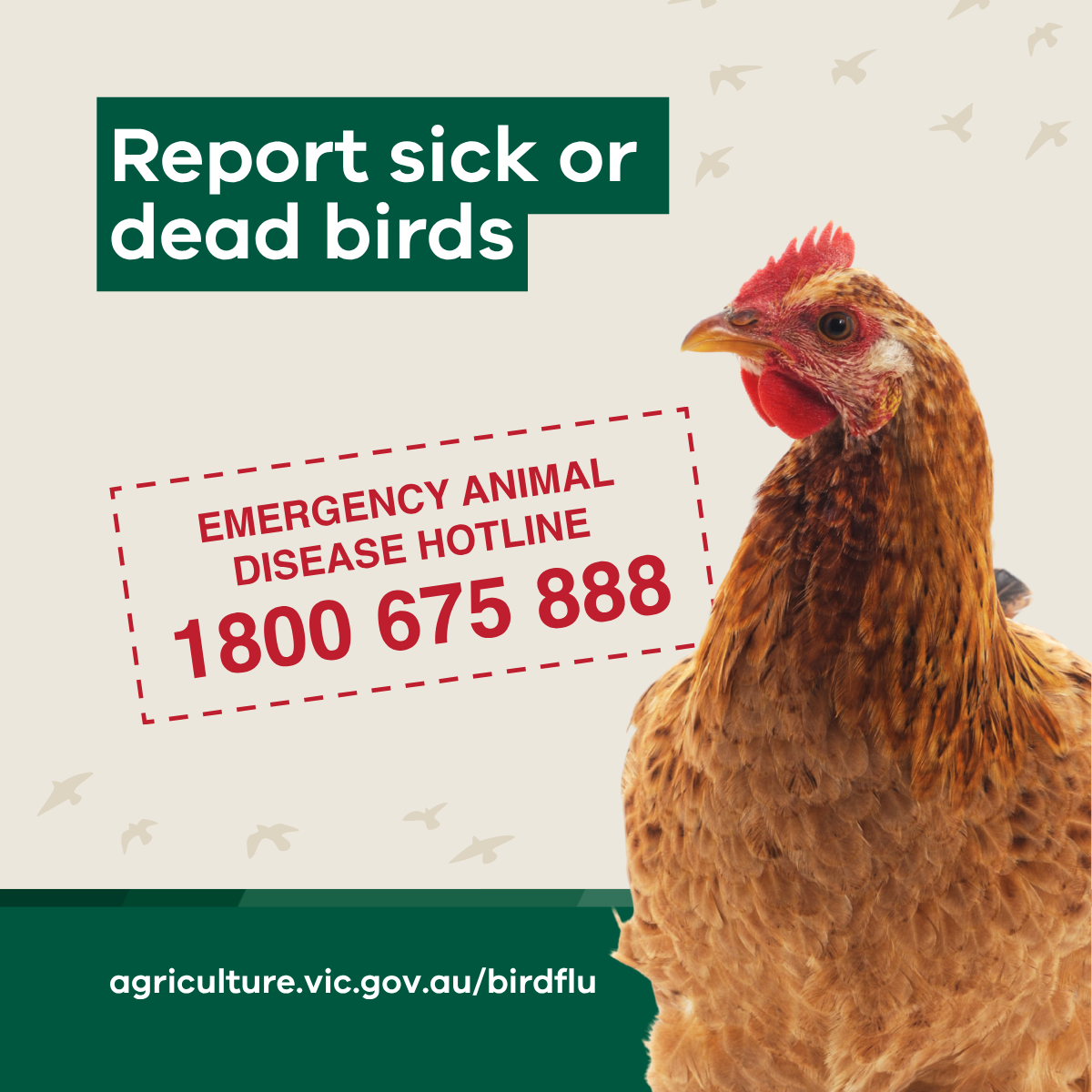
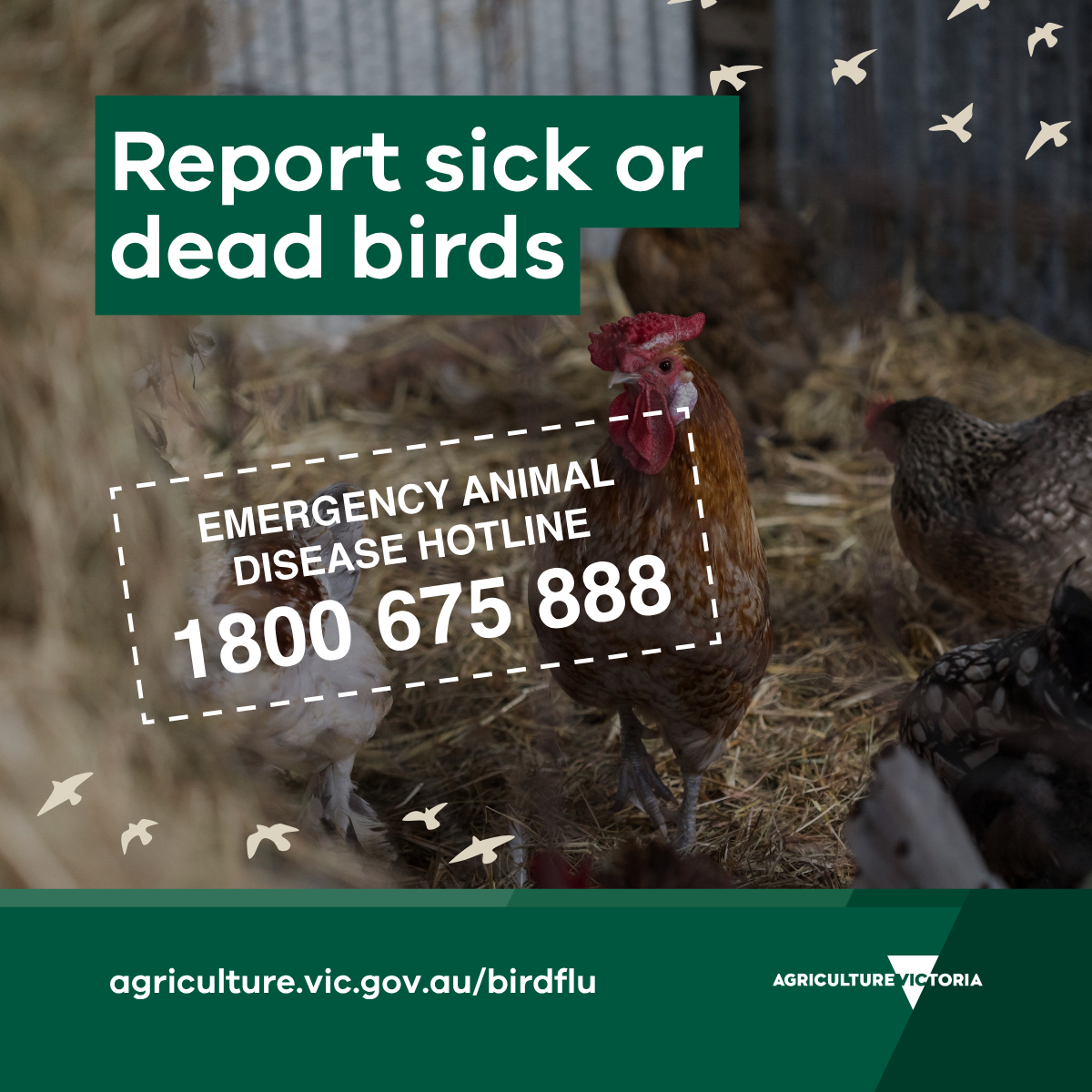
- Report sick or dead birds – option 1 [Image - 1.0 MB]
- Report sick or dead birds – option 2 [Image - 1.9 MB]
- Poultry producer biosecurity resources [Image - 1.9 MB]
- Information for poultry producers – square [Image - 2.3 MB]
- Information for poultry producers – banner [Image - 2.6 MB]
Fact sheets
- Keep your birds safe [PDF File - 4.4 MB]
- H5 bird flu information for poultry producers [PDF File - 445.6 KB]
- Advice for handling of sick or dead birds (Australian Government bird flu resources)
Posters and signage
- Avoid, Record, Report - A0 print size [PDF File - 268.6 KB]
- Avoid, Record, Report - A1 print size [PDF File - 267.4 KB]
- Avoid, Record, Report - A2 print size [PDF File - 266.5 KB]
- Sick wildlife – testing underway [PDF File - 207.4 KB]
- Public land temporarily closed - A2 print size [PDF File - 160.7 KB]
- Bird flu detected in this area - A2 print size [PDF File - 161.3 KB]
- Come Clean, Go Clean [PDF File - 1.8 MB]
- H5 bird flu poster for veterinary clinics [PDF File - 443.3 KB]
- Help spot bird flu – A0 print size [PDF File - 1.1 MB]
- Help spot bird flu – A1 print size [PDF File - 1.0 MB]
- Help spot bird flu – A2 print size [PDF File - 1.0 MB]
Postcards
- H5 bird flu: how you can help [PDF File - 889.1 KB]
- Guidance for backyard biosecurity [PDF File - 9.3 MB]
- Protect your flock from H5 bird flu [PDF File - 342.6 KB]
Website content
Videos
Watch the H5 bird flu video playlist on YouTube
Transcript
H5 Bird flu is a disease primarily of birds. The risk to humans is very low. Infected birds shed the bird flu virus in Secretions, might be through their respiratory tract, through nasal secretions, might be through faeces. Some birds are more susceptible to the virus than others. Waterfowl such as Swans, for example, are highly susceptible, but ducks may carry the virus but not necessarily suffer the impacts from it.
Once it's in, wildlife is there to stay and so we can expect that now in Victoria there may be outbreaks continuing to happen.We need to start thinking and planning for a living with H5 in Victoria, looking at it from the perspective of another threat that's operating on our wildlife. What we've seen from overseas as well though is that some species are able to recover and adapt and some species are able to build some natural immunity to the virus, but it's very species dependent and and and hard to predict.
With the spring breeding season arriving, we have migratory species coming from the northern hemisphere and local species that are breeding in wetlands and waterways and estuaries.
The more that people can observe what they're seeing, recorded and reported, the more that we understand how this virus is spreading and its potential impact on wildlife species.
Transcript
The risk to humans from H5 is low in terms of contracting the disease.The reason that we're seeing people in PPE is these are people who are dealing with probably multiple dead birds.
We are certainly entering a a different situation now that we're seeing H5 bird flu over large parts of southern Victoria.
This shouldn't mean that people need to change their behaviour if they're wanting to go out to parks or or other areas where there might be wild birds.
The risk is extremely low if if you're not handling dead or or sick birds.
When a member of the public is needing to remove a dead bird or dispose of it, it's perfectly OK to be handling that bird and disposing order as long as you're applying appropriate bio, security and PPE.
That means wearing a pair of gloves, picking up the bird with a shovel or or tongs, placing it into a bag, double bagging that, putting it in your red bin or in in a public waste bin.
Transcript
H5 bird flu is primarily a disease of of birds, but there is a very low risk to pet dogs and cats.
The key thing is to prevent your pet from accessing dead or or sick birds.
That is the most important step.
That might mean if you're out and about, stay at a beach, keeping your dog on a lead for your cat, maybe keeping your cat indoors, particularly if you are in an area where there might be dead or sick birds present.
If your dog does pick up a dead bird accidentally, say down to the beach.
What I would recommend is that you try and remove the dead bird from the from the dog's mouth, wash your hands, maybe use hand sanitizer, and then monitor your dog for any unusual symptoms.
Transcript
Watching animals suffer is distressing.The best thing that people can be doing is recording what they're seeing, obviously staying away, avoiding contact and report to the emergency animal disease hotline.
Animals that are suffering from the virus obviously in in a state of stress. Human intervention is only going to potentially increase their suffering.
Wild animals don't like to be near humans or handled by humans.Euthanasia is a tool that can be used in a very small amount of cases.
First of all, it needs to be done by someone who's authorised to do that. We've seen elsewhere in the world that populations have the ability to recover to some extent and potentially build some immunity.
Euthanasia does run a bit of a risk that if you are applying that broadly, that you may be euthanizing animals that may actually recover from the virus. We appreciate that people are really concerned about seeing dead birds and obviously people would like to see things done in terms of clean up.
The reality is that amongst the dead birds there are also living wildlife that can lead to fly offs from a flock that can increase the spread the risk of the virus. But once the animal's dead, the shedding reduces and of course the animal's not mobile.
The biggest risk of spread is in animals that are asymptomatic but are carrying that virus to other locations. Having lots of dead wildlife in areas which are visited by the public is not desirable.
There'll be times where it makes sense to be cleaning up wildlife.
Transcript
The community surveillance and reporting that we've seen since the virus has arrived in Australia has been huge and really, really important.
Cases that are reported through the emergency animal disease hotline are then triaged and if it's a new species or it's a new location, then that may be prioritised for for testing.
If the virus is well established in local populations of birds, then a lot of those animals won't be tested simply because we know that it's already prevalent in that population and we in that location, we can assure people that their reports matter.
People are our eyes on the ground.
We're still at the kind of an early stage of this virus in Victoria.
The more that people can observe what they're seeing recorded and reported, the more that we understand how this virus is spreading and its potential impact on on wildlife species.