Future ready agriculture: A research and innovation strategy 2026–30
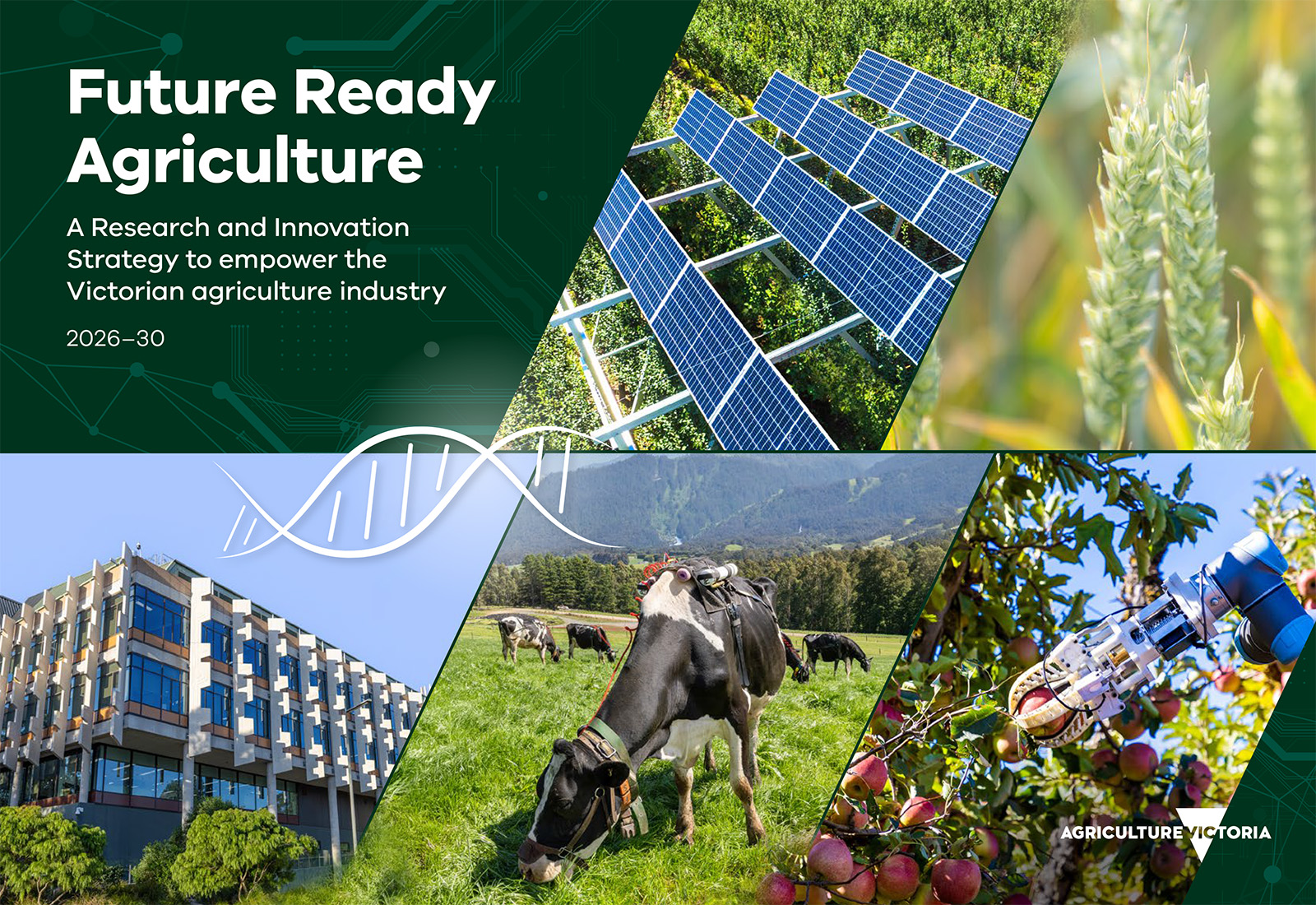 A research and innovation strategy to empower the Victorian agriculture industry 2026–30
Powering the future of Victorian agriculture
The story of agriculture in Victoria is one of ingenuity, driven by an industry dedicated to producing the world’s best food and fibre, constantly seeking new and better ways of operating.
This innovative thinking powers formidable performance. Agriculture contributes more than $22 billion to Victoria’s economy annually and is the state’s number one export. On just 3% of Australia’s land, Victoria delivers 28% of the nation’s food and fibre exports. The sector employs more than 150,000 people and is the lifeblood of rural and regional communities. By any measure, it is a world‑class performer.
Agriculture will rely on this spirit of innovation as it continues to perform at the highest level into the future. The challenges ahead are complex – biosecurity threats, a changing climate, more frequent extreme weather and natural disasters, along with rising costs, fluctuating prices, volatile global markets, workforce pressures and competition for land and resources.
Many of these challenges are familiar, and what we continue to see is a sector undaunted. Farmers and the ecosystems that support them beyond the farm gate and along the supply chain, understand that global demand for sustainable, high-quality food and fibre is growing, and that enormous opportunities exist.
Meeting that demand, in a globally competitive environment, will require the best minds, cutting-edge research and the latest technology.
As a government organisation, Agriculture Victoria is uniquely placed to lead research and innovation (R&I) that can tackle long-term challenges for the benefit of the agriculture sector while delivering broader societal value in the public interest.
We can look beyond the barriers that often limit individual organisations or sectors, bringing together government bodies, industry, universities and communities to lean into the challenges and deliver real-world solutions.
This strategy sets a clear direction for how Agriculture Victoria’s Agriculture Science and Technology division, along with industry and partners will support the future of Victorian agriculture.
The result will be stronger farms and industries, thriving rural and regional communities, and a more productive and sustainable agriculture sector. In doing so, this strategy will help ensure Victoria continues to produce world-class food and fibre, delivering a stronger economy and lasting value for every Victorian.
Beth Jones
Deputy Secretary and Chief Executive,
Agriculture Victoria
Leading the next era of agricultural science and innovation
The Agriculture Science and Technology (AST) division of Agriculture Victoria is proud to present our roadmap for the next chapter of agricultural science and technology in Victoria.
Agriculture is entering a period of rapid change. Climate pressures, evolving biosecurity risks, shifting markets and accelerating technologies are reshaping how food and fibre are produced, traded and valued. Navigating this complexity requires science and innovation that is not only excellent, but mission-driven, and scalable.
This strategy sets the direction for how government-led science, technology and partnerships will support Victoria’s agriculture sector to grow, innovate and remain globally competitive. It articulates Agriculture Victoria’s unique role within the innovation system – addressing challenges, managing risk and delivering public‑good outcomes that individual organisations cannot achieve alone – while balancing ambition with disciplined public investment and effective system stewardship, positioning AST as a trusted government partner.
Investment in agricultural research and development delivers strong returns for farmers and the broader economy. With the Australian Bureau of Agricultural and Resource Economics and Sciences (ABARES) estimating a return of $7.82 AUD for every dollar invested over 10 years, strategic investment in science and technology is fundamental to sustaining productivity, profitability and resilience across the sector.
Our world-class facilities at AgriBio and 5 regional SmartFarms in Ellinbank, Horsham, Tatura, Hamilton and Mildura connect laboratory science through to the field with practical outcomes on farms. Together with Agriculture Victoria Services, we champion long-term, collaborative partnerships that provide clear pathways to translate scientific discoveries into technologies, tools and services that strengthen the sector.
Building on strong foundations, this strategy strengthens what works, while giving us the agility to tackle what lies ahead. At the heart of this strategy is a commitment to impact and economic growth. We focus on 4 interconnected Focus Areas - productivity and profitability; climate mitigation and adaptation; biosecurity, pests and diseases; and sustainable growth and resource efficiency - enabled by world‑class infrastructure, exceptional people and strong partnerships. This integrated approach ensures our research and technology efforts are aligned with state and national priorities and responsive to emerging challenges.
Through it, the Victorian Government will continue to set the benchmark for how public agricultural science and technology positions the agriculture sector to grow, adapt and thrive, now and into the future.
Professor Simone Warner
Head of Agriculture Science and Technology
In summary – Future ready agriculture: A research and innovation strategy 2026–30
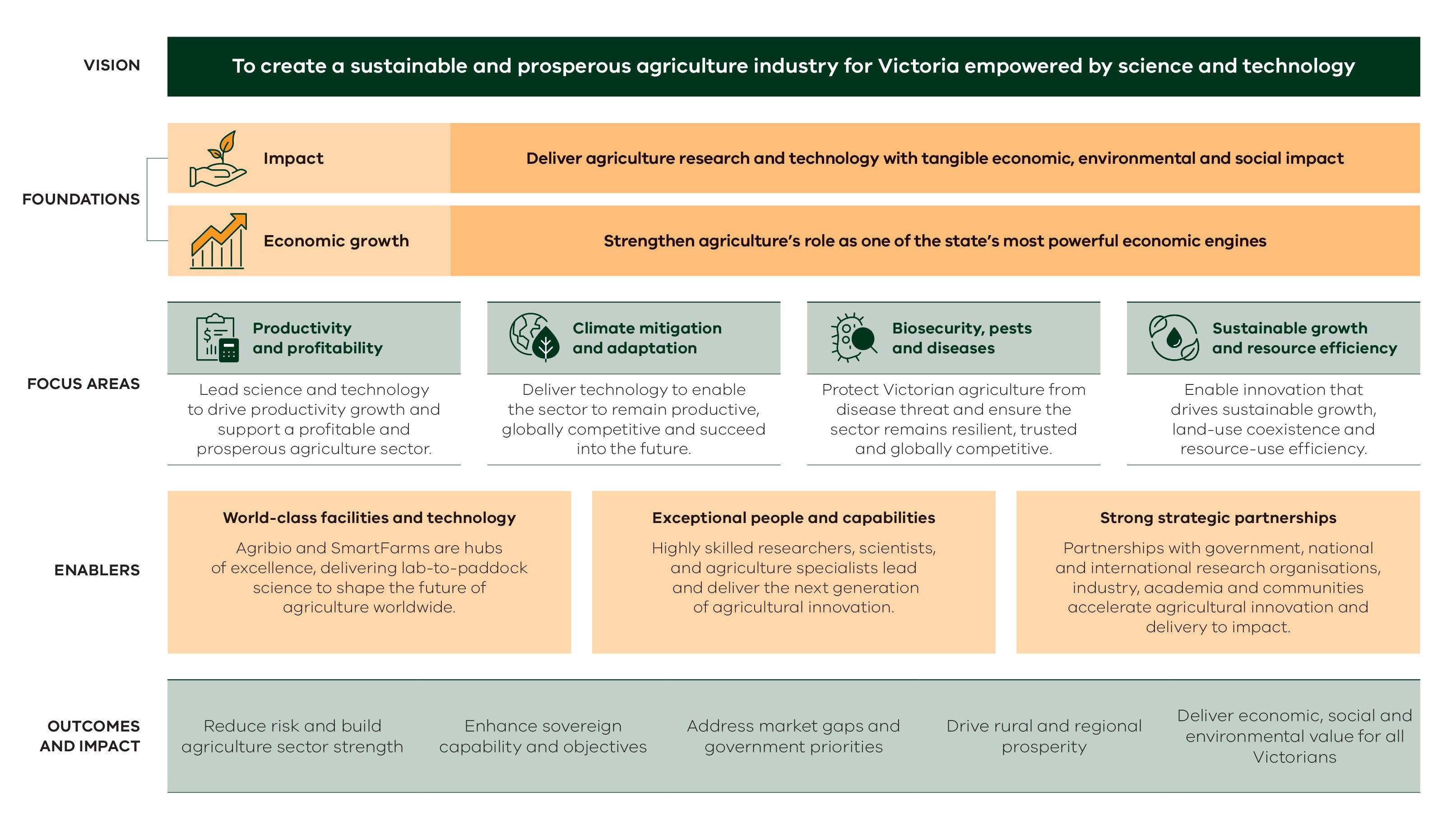
Vision
To create a sustainable and prosperous agriculture industry for Victoria empowered by science and technology
Foundations
- Impact: Deliver agriculture research and technology with tangible economic, environmental and social impact
- Economic growth: Strengthen agriculture’s role as one of the state’s most powerful economic engines
Focus areas
- Productivity and profitability
Lead science and technology to drive productivity growth and support a profitable and prosperous agriculture sector.
- Climate mitigation and adaptation
Deliver technology to enable the sector to remain productive, globally competitive and succeed into the future.
- Biosecurity, pests and diseases
Protect Victorian agriculture from disease threat and ensure the sector remains resilient, trusted and globally competitive.
- Sustainable growth and resource efficiency
Enable innovation that drives sustainable growth, land‑use coexistence and resource‑use efficiency.
Enablers
- World-class facilities and technology
AgriBio and SmartFarms are hubs of excellence, delivering lab-to-paddock science to shape the future of agriculture worldwide.
- Exceptional people and capabilities
Highly skilled researchers, scientists, and agriculture specialists lead and deliver the next generation of agricultural innovation.
- Strong strategic partnerships
Partnerships with government, national and international research organisations, industry, academia and communities accelerate agricultural innovation and delivery to impact.
Outcomes and impact
- Reduce risk and build agriculture sector strength
- Enhance sovereign capability and objectives
- Address market gaps and government priorities
- Drive rural and regional prosperity
- Deliver economic, social and environmental value for all Victorians
Our vision and strategic priorities
Agriculture Victoria’s Future ready agriculture: A research and innovation strategy 2026–30 sets a bold vision to deliver science and technology with tangible economic, environmental and social impacts. The strategy aims to create a sustainable and prosperous agriculture industry for Victoria, empowered by world-leading science, technology and collaboration.
The strategy identifies 4 focus areas that address the opportunities and challenges shaping agriculture over the next decade.
These include:
- Productivity and profitability
Lead science and technology to drive productivity growth and support a profitable and prosperous agriculture sector.
- Climate mitigation and adaptation
Deliver technology to enable the sector to remain productive, globally competitive and succeed into the future.
- Biosecurity, pests and diseases
Protect Victorian agriculture from disease threat and ensure the sector remains resilient, trusted and globally competitive.
- Sustainable growth and resource efficiency
Enable innovation that drives sustainable growth, land‑use coexistence and resource‑use efficiency.
These priorities are supported by 3 enablers:
- It will leverage world-class facilities and technology, including hubs such as AgriBio and SmartFarms that connect laboratory discoveries with practical farm application.
- Agriculture Victoria will invest in exceptional people and capabilities, ensuring highly skilled researchers and specialists drive the next generation of agricultural innovation.
- Strong strategic partnerships with industry, research organisations, government and communities will accelerate innovation and translate research into real-world outcomes.
Together, these efforts will deliver measurable outcomes for all Victorians. These impacts will be seen through strengthening sovereign capability, reducing risks to the sector, addressing market gaps and government priorities, and driving economic growth and regional prosperity.
By advancing science and innovation, Agriculture Victoria will support a productive, resilient and globally competitive agriculture sector that continues to generate economic, social and environmental value for the entire state.
Operating environment for Victorian agriculture
Victorian agriculture operates in a rapidly changing environment shaped by climate pressures, global markets, regulation, technology and community expectations.
- Increasing climate variability and extreme events
Agriculture is operating in an increasingly volatile climate, with more frequent droughts, high temperatures, floods and bushfires.
- Changing global markets
Australian agriculture is strongly export-oriented, and farm profitability is influenced by global demand, rising input prices, trade policies and geopolitical shifts.
- Regulatory settings
Changing community expectations around environmental protection, animal welfare, resource use, chemical use and land management are driving regulatory changes.
- Workforce challenges
Labour shortages and increasing technological complexity are reshaping the agricultural workforce, requiring new skills in data, automation and digital farm management.
- Biosecurity, pests and biological threats
Agricultural systems are facing rising biosecurity risks, including invasive pests, diseases and herbicide-resistant weeds that threaten productivity and export markets.
- Statutory responsibilities
Agriculture Victoria operates within a framework of statutory responsibilities relating to biosecurity, animal welfare, chemical use, food safety and plant health.
- Competition for land and natural resources
Agriculture faces pressure from alternative land uses including urban expansion, renewable energy infrastructure, and mining.
- Pressure to reduce emissions
Agriculture faces growing expectations to reduce emissions through carbon sequestration, low-emissions livestock systems, and& energy-efficient farm operations while continuing to deliver food and fibre efficiently and economically.
A world-leading science and technology ecosystem already rolling
Agriculture Victoria’s research infrastructure, expertise and partnerships are delivering practical innovations that strengthen Victoria’s agriculture sector and regional communities.
World-class research capability – AgriBio
Victoria’s leading agricultural bioscience facility brings together scientists, advanced laboratories and cutting-edge technology to address critical challenges including pests, diseases, genetics and production systems.
Innovation in real farming environments – SmartFarms network
Five regional SmartFarms connect science with practical farm application, testing new technologies and management approaches in real production environments across Victoria.
Commercialising innovation – Agriculture Victoria Services (AVS)
AVS is the state’s commercialisation pathway for agricultural science, accelerating the transition from discovery to application.
Working closely with Agriculture Victoria researchers, AVS helps translate new technologies, products and services into market-ready solutions.
Through strategic partnerships, strong intellectual property frameworks and staged development programs, AVS maximises the return on public research investment, attracts private capital and supports the delivery of innovations that strengthen farm performance and Victoria’s agriculture sector.
SmartFarms network
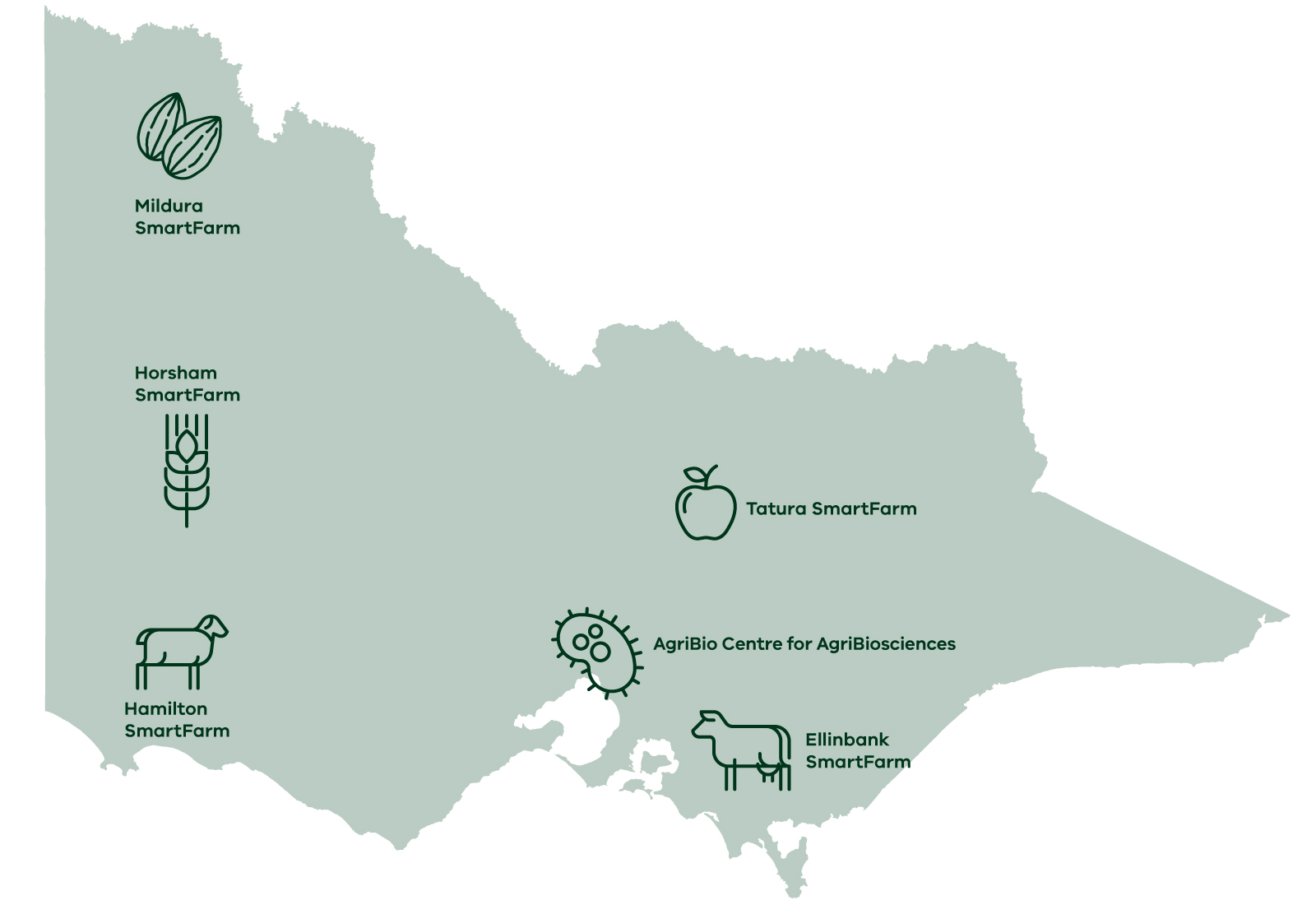
The SmartFarms network is made up of the AgriBio Centre for AgriBiosciences and 5 Victorian regional farms:
Figure 1: Map of Victoria showing the locations of the AgriBio Centre for AgriBiosciences and the 5 Victorian regional SmartFarms
AgriBio Centre for AgriBiosciences
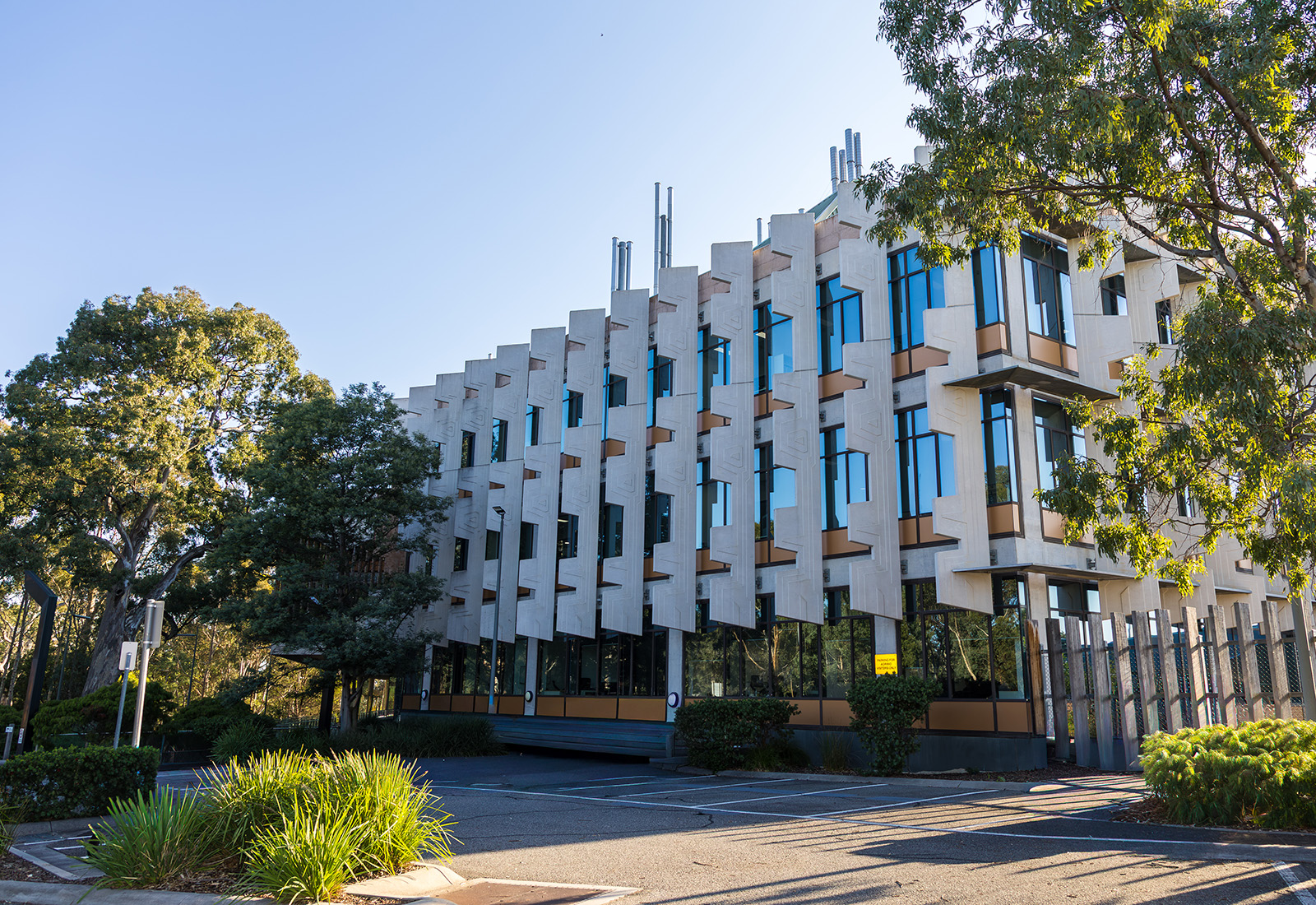 AgriBio Centre for AgriBiosciences is a flagship facility underpinning Victoria’s leadership in agricultural research, innovation and biosecurity.
- State Veterinary and plant and diagnostic services
- Plant and animal phenomics and genomics
- Research commercialisation via AVS
- Medicinal agriculture
- Education centre of the Getinto AgSTEM Program
Horsham SmartFarm
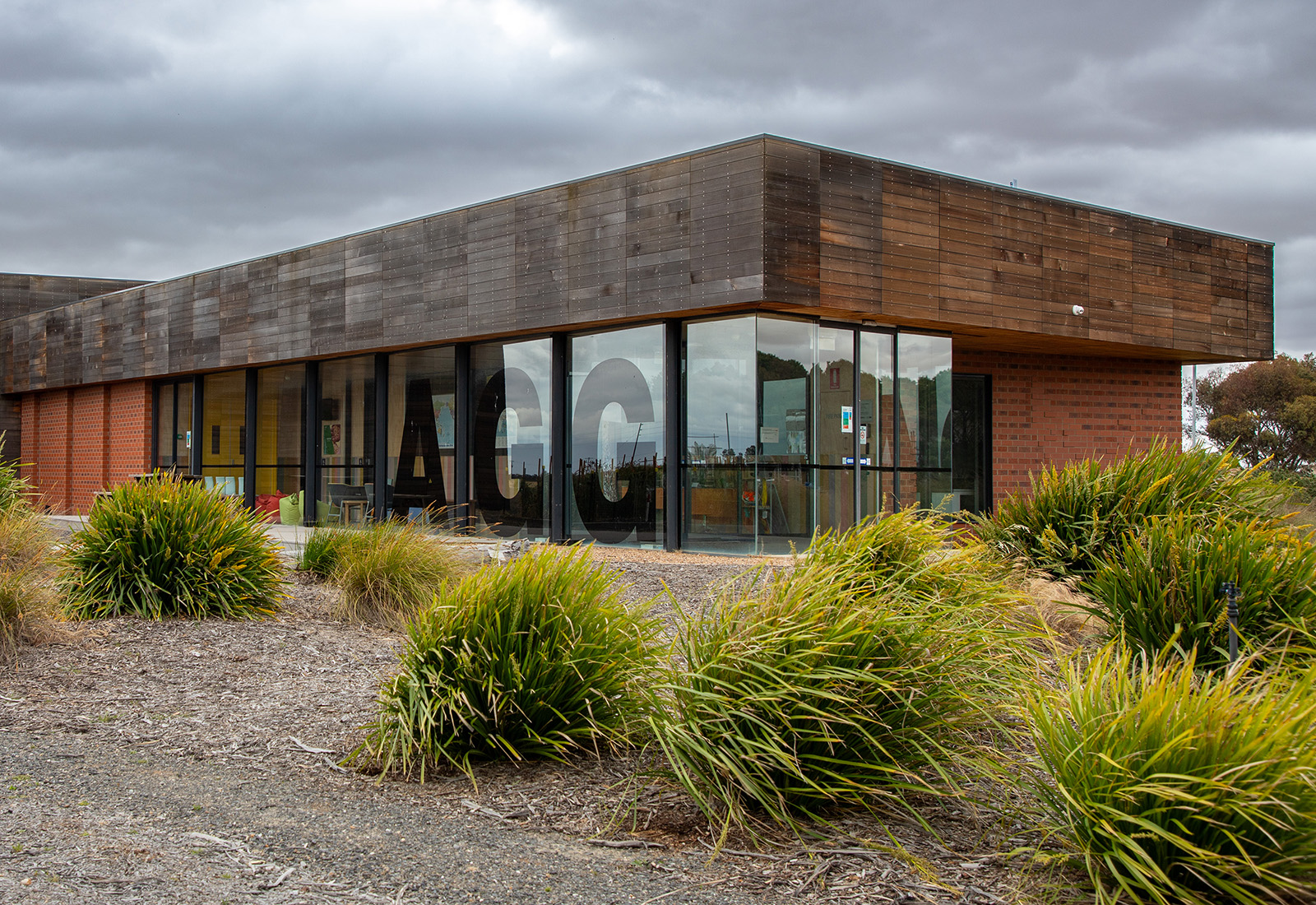 Australia’s grain genetic diversity is preserved at the Australian Grains Genebank, Horsham SmartFarm. Research at this site includes:
- Crop performance and resilience
- Pests, weeds and disease management
- Unlocking crop value from seed bank to processing
- Soil health, agronomy and landscape systems
- Climate‑ready cropping practices
Hamilton SmartFarm
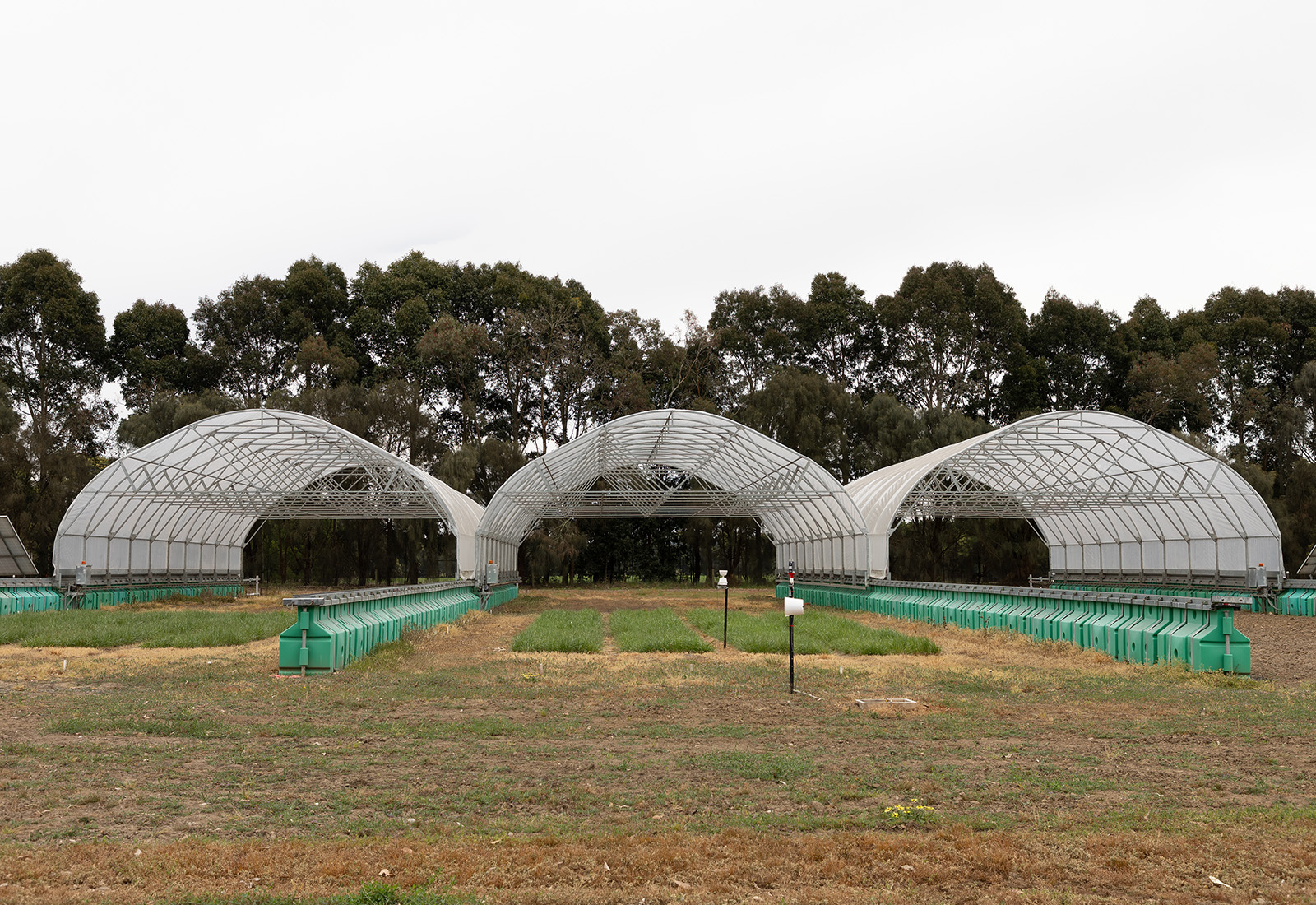 The Rainfall infrastructure at Hamilton SmartFarm is advancing pasture and farming systems research. Research also includes:
- Forage innovations for climate-resilient farming
- Cropping systems for high rainfall zones
- Livestock productivity
- Reducing emissions from livestock
Mildura SmartFarm
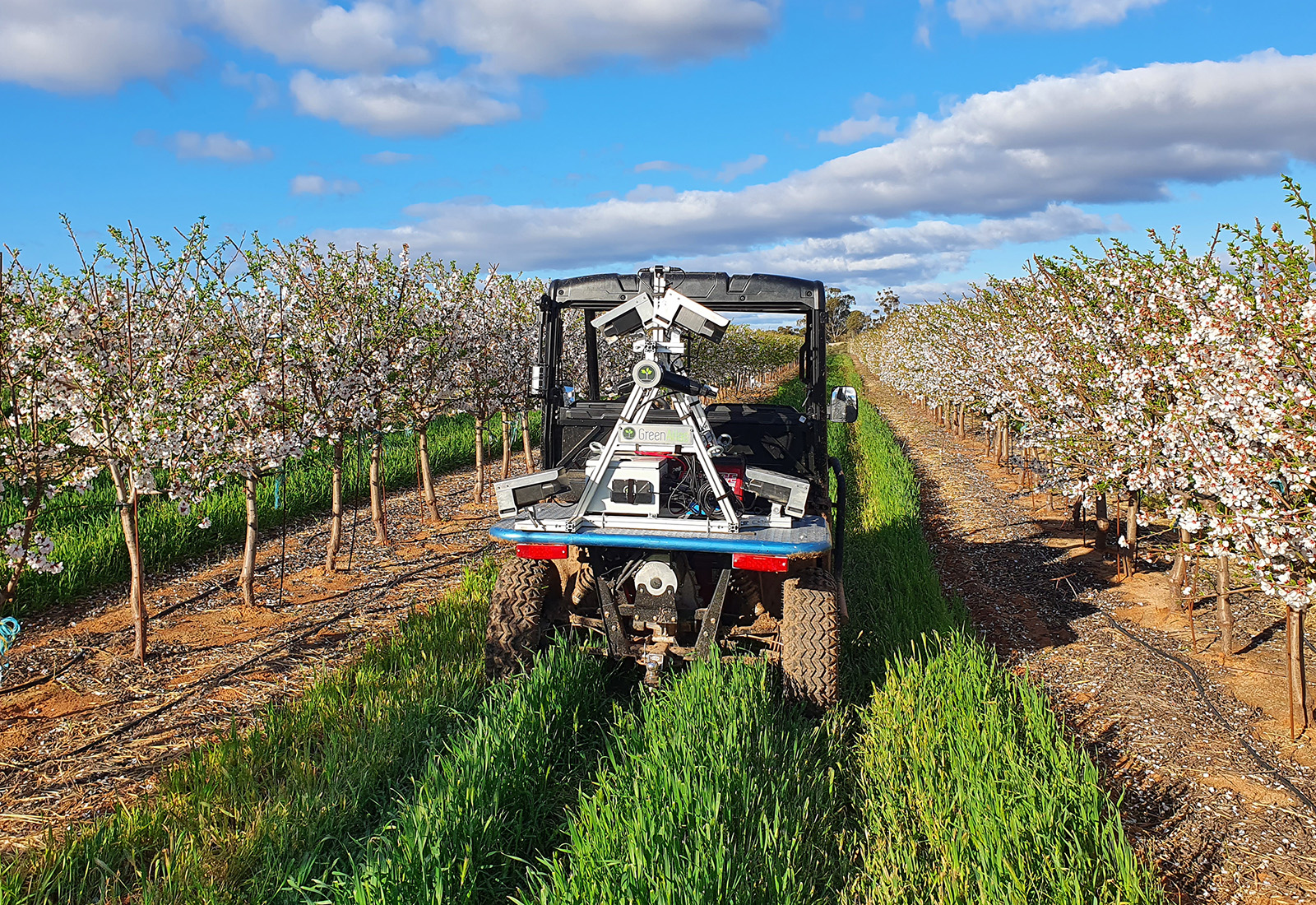 Almond crops at Mildura SmartFarm support research into irrigated production systems. Research at this site also includes:
- Integrated pest and disease management
- New planting systems and orchard design
- Irrigation and fertiliser management
- Tree survival under low water availability
Tatura SmartFarm
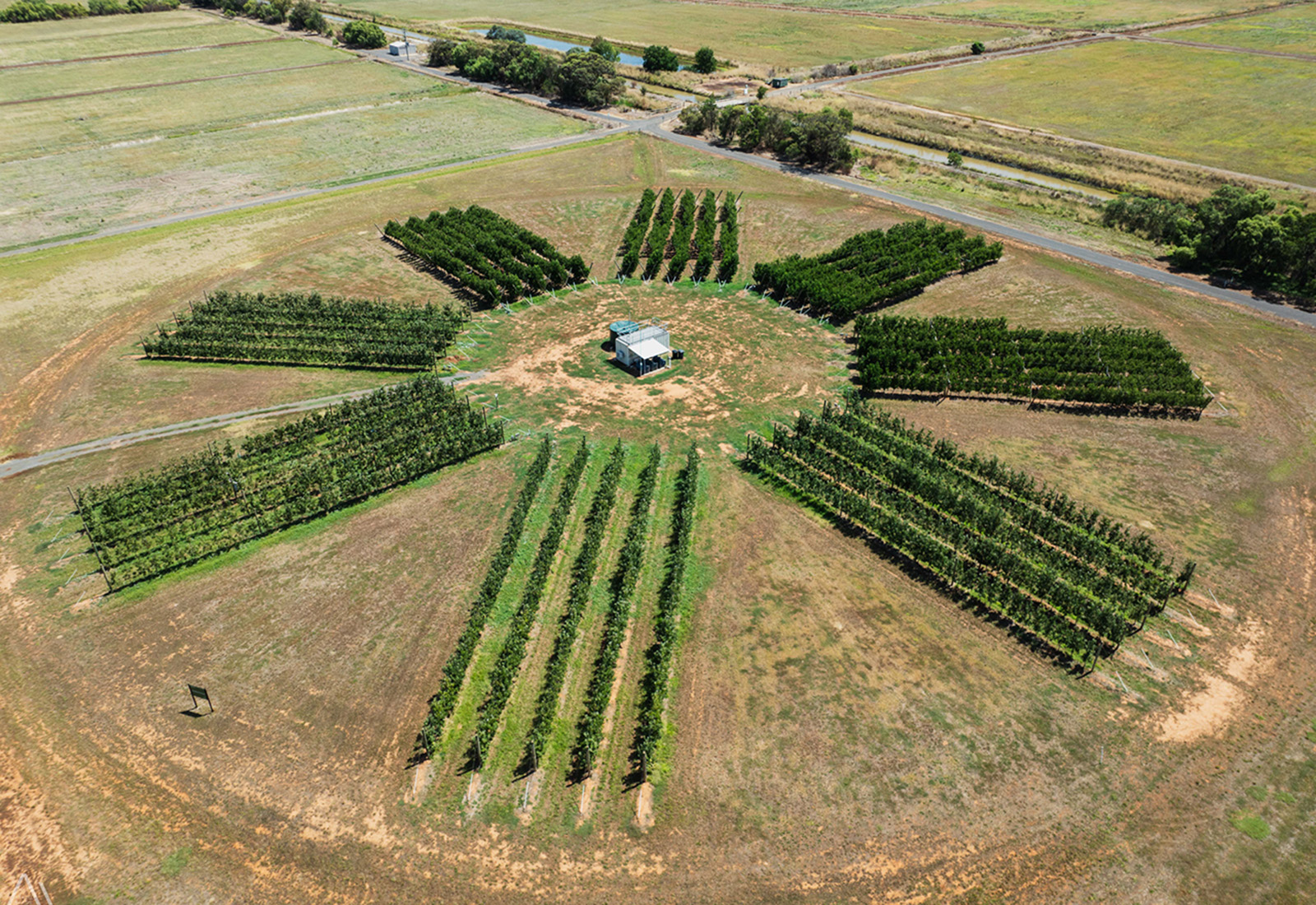 Horticultural field trials at Tatura SmartFarm are captured in the Sundial Orchard. Research at this site includes:
- Fruit quality and production efficiency
- Climate and drought resilience
- Irrigation and water efficiency
- Integrated pest and disease management
Ellinbank SmartFarm
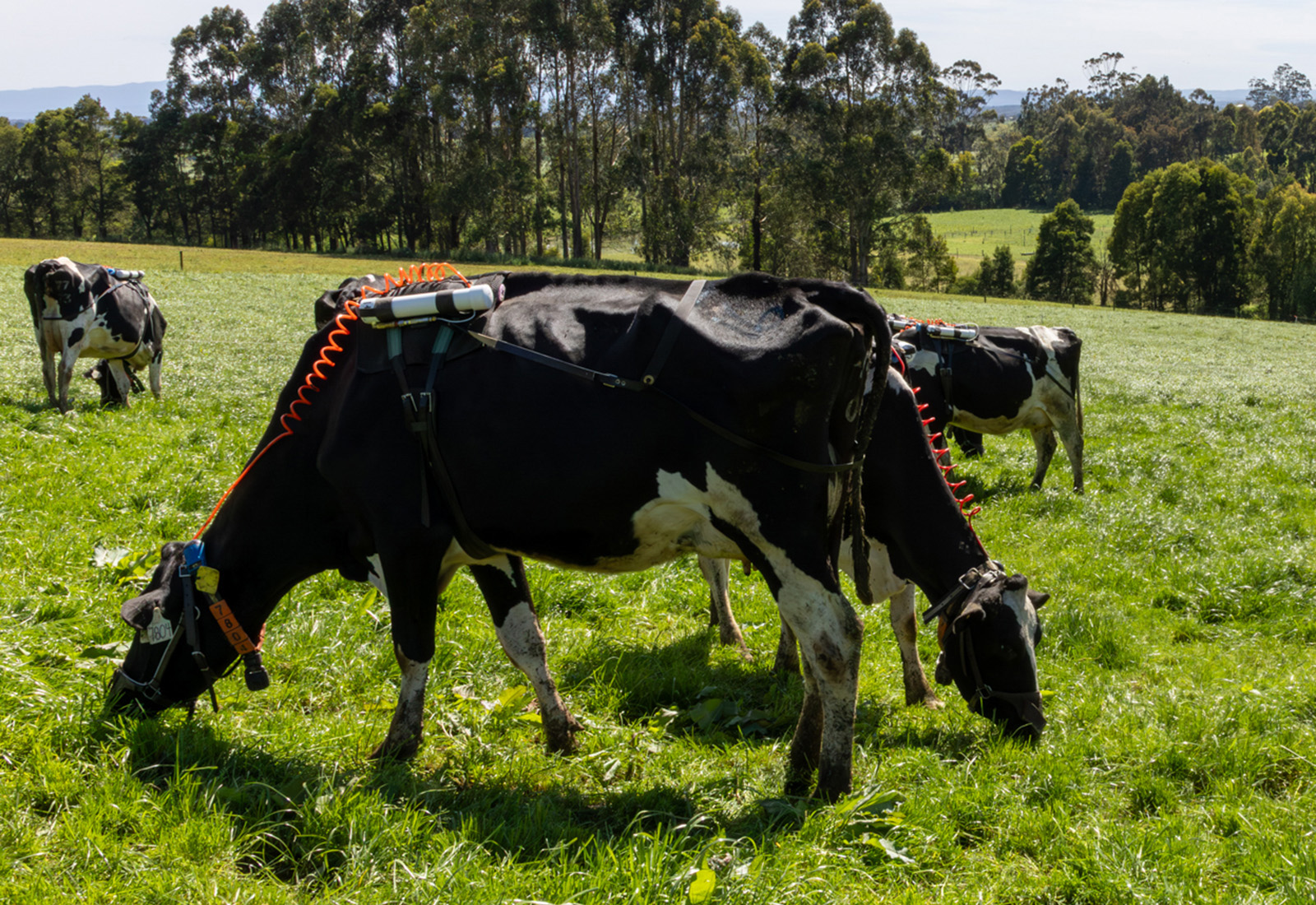 Pasture-based systems research drives herd productivity at Ellinbank SmartFarm. Research at this site also includes:
- Dairy cattle nutrition, health and productivity
- Soil, pasture and farm performance
- Milk production efficiency
- Reducing emissions
- On‑farm energy solutions
Research translates into practical outcomes
Agriculture Victoria researchers are developing new tools, technologies and practices that improve farm productivity, strengthen biosecurity capability and support sustainable agriculture. Note that the last 3 case studies below are not included in the downloadable versions of this strategy on Future ready agriculture.
Genomic tools helping farmers breed healthier cows
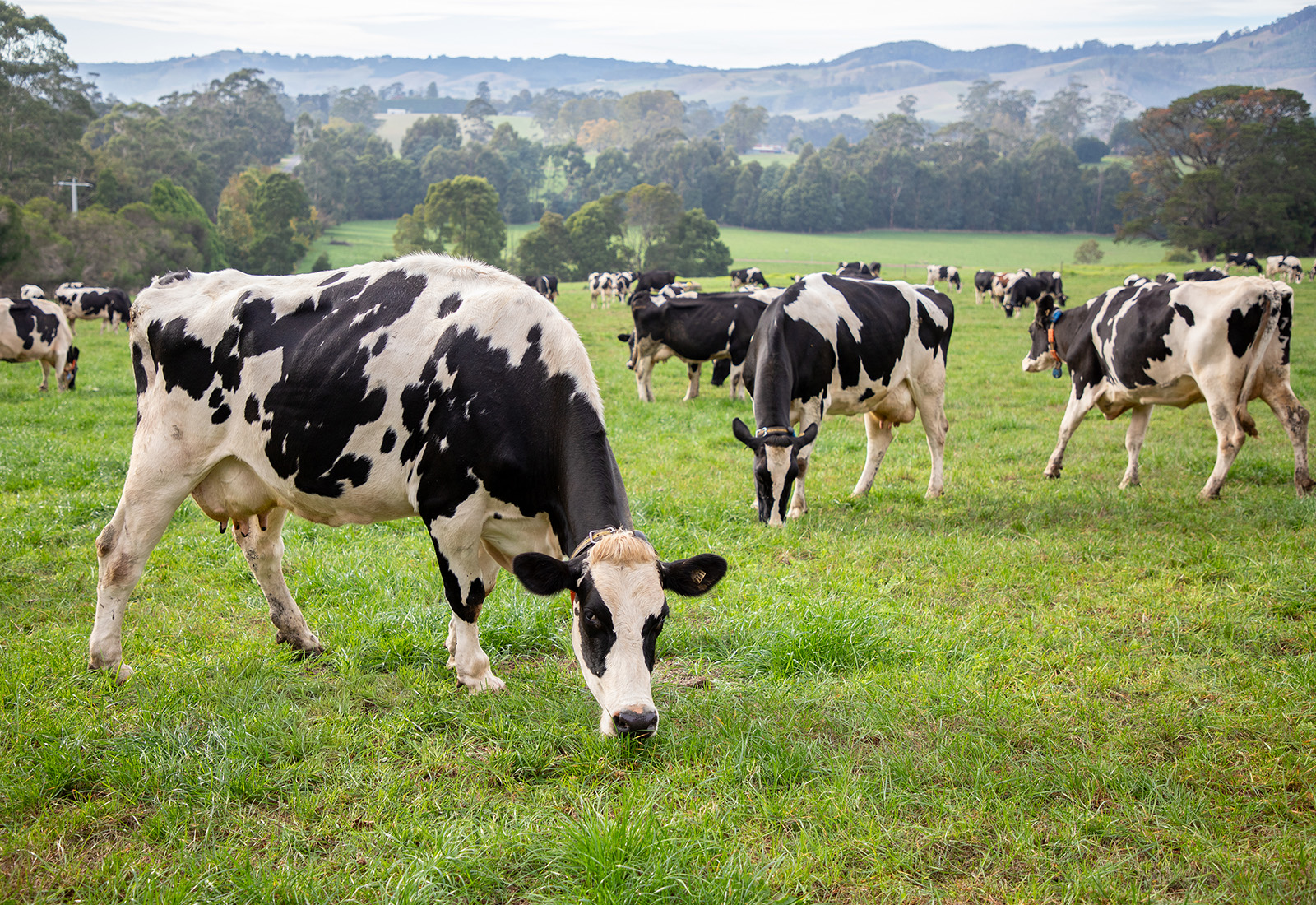 Agriculture Victoria, the dairy industry and DataGene collaborated to introduce genomic selection and the Balanced Performance Index (BPI).
This has enabled rapid genetic improvement in traits vital for profitability, animal welfare and sustainability.
Led by experts in quantitative genetics, bioinformatics and computational biology, Agriculture Victoria has delivered major scientific advances including improved prediction models for key traits such as survival, resilience, health, methane emissions and feed efficiency.
This work enables more accurate Australian Breeding Values, providing the scientific basis for genomic selection and the BPI used across industry.
Thousands of dairy farmers across Australia are reaping the rewards of these innovative genomic tools with an estimated 88% of farmers having used DataGene’s breeding values for faster and more accurate breeding decisions for milk production, survival, fertility and heat tolerance.
The use of these tools will deliver an estimated $1 billion in benefits for the Australian dairy industry by 2053, driving significant economic benefits, enhanced herd health, and improving the long-term viability of Victoria’s dairy industry.
Herbicide-tolerant barley
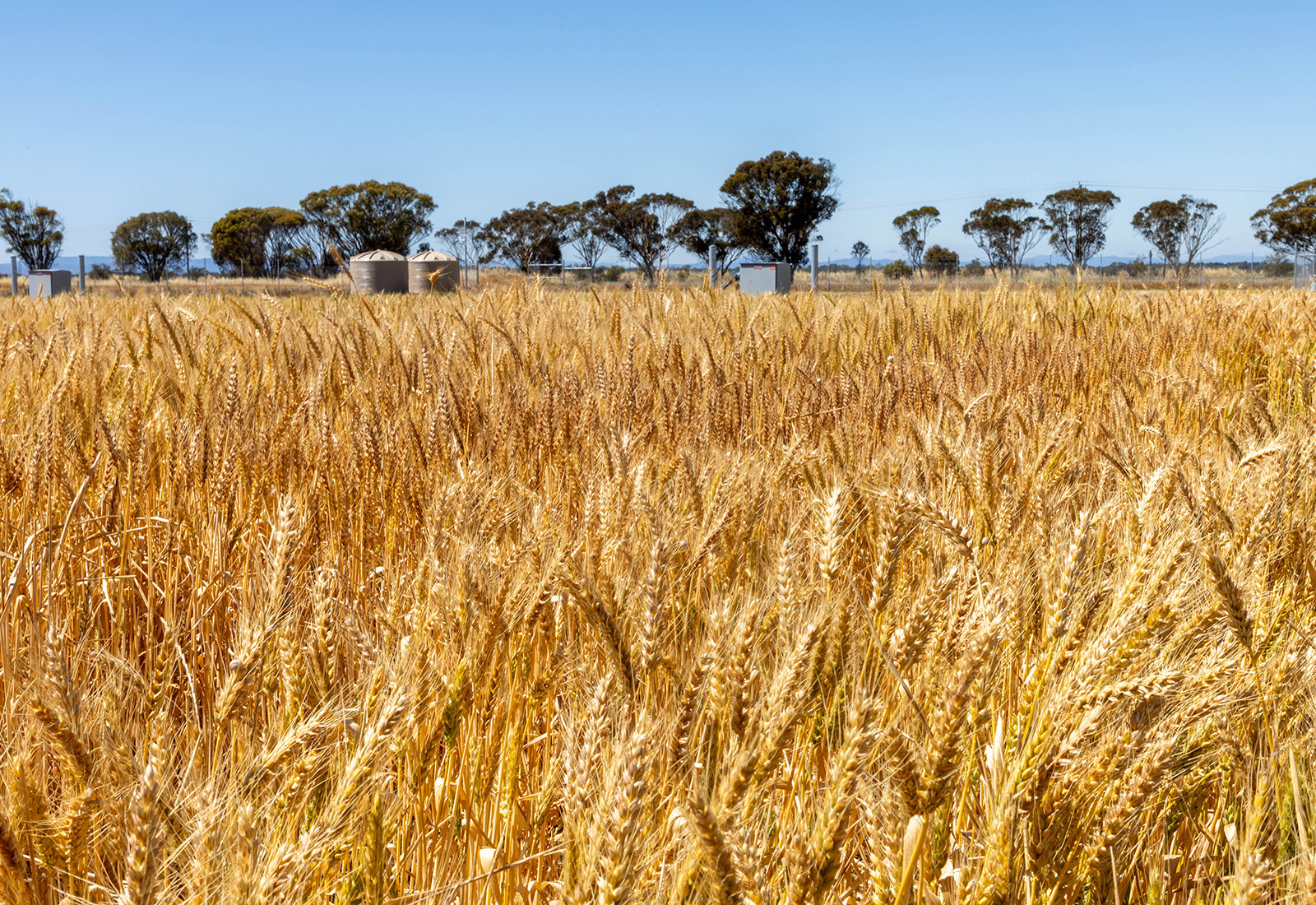 Victoria produces more than 2.33 million tonnes of barley each year, representing 13% of Australia’s production.
However, yields are constrained by brome grass, an aggressive weed that can reduce cereal yields by up to half, making effective weed control essential for maintaining profitability.
In response to this challenge, Agriculture Victoria developed the imidazolinone‑tolerant trait, or herbicide-tolerant trait and the first herbicide‑tolerant (HT) barley variety.
The project was supported by strategic investment and partnership from AVS and delivered a breakthrough innovation that significantly improved brome‑grass control, boosting barley yields by up to 122%.
Through strong industry collaboration and commercialisation, herbicide-tolerant barley has become a cornerstone of Australian production, with 8 herbicide-tolerant barley varieties released, currently accounting for more than 46% of Australia’s barley production and more than 70% of malting varieties. AVS is now focused on extending this significant industry benefit by expanding the HT barley portfolio into international markets.
The innovation has generated $1.4 billion in farm gate value for Victorian agriculture (2012–24), and is projected to deliver $2.1 billion in cumulative value to Australian grain growers as market share continues to grow.
Pheromone technology protecting almond crops from beetle damage
 Carpophilus beetle emerged as a serious pest in Australia in 2013 and can cause crop losses of up to 10% in almond orchards. The beetles damage horticulture crops, particularly ripening almonds, and can also spread brown rot, a fungal disease that rapidly decays fruit.
Agriculture Victoria scientists developed a pheromone lure that attracts and traps Carpophilus beetles, helping to disrupt their mating cycle and reduce crop damage. The technology was developed using Agriculture Victoria’s research expertise at AgriBio and successfully trialled at the Mildura SmartFarm.
The lure provides growers with a targeted pest management tool that could help prevent up to $82.5 million in almond crop losses each year nationally.
Following successful research trials and to further extend this tool to industry, Agriculture Victoria Services is preparing the technology for commercial release through industry partnerships. This will support potential use in Australia and other major almond-producing regions internationally.
The innovation also creates opportunities to export or licence the technology overseas, including to major almond-producing regions such as California and Argentina. There is also potential to extend the technology to other susceptible horticultural crops, including pistachios, walnuts and stone fruit, further increasing its value to growers and the agricultural sector.
Trusted land-use intelligence enabling evidence-based planning across Victoria
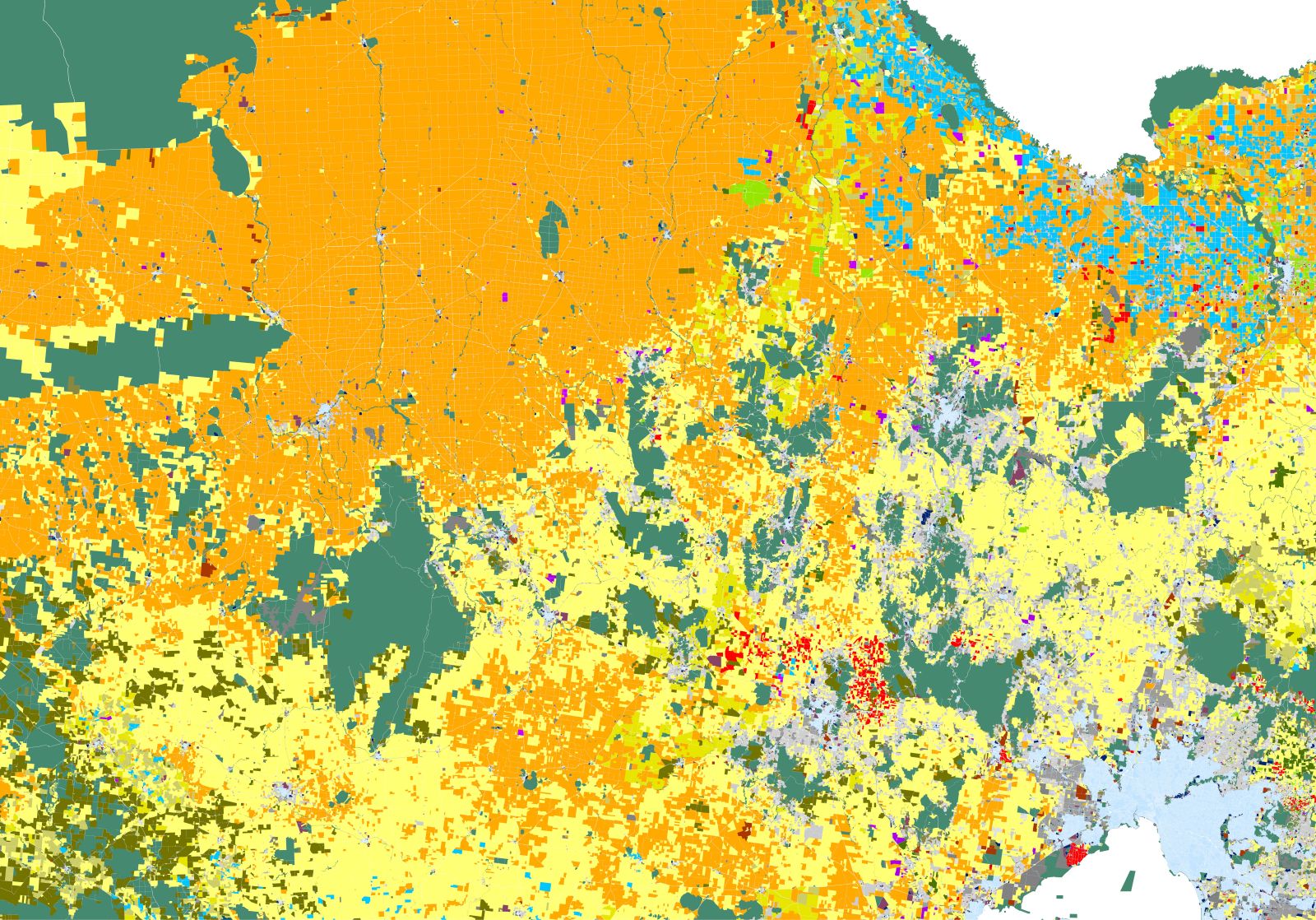 Competition for land is increasing as Victoria responds to changing agricultural, environmental and economic demands.
Agriculture Victoria developed the Victorian Land Use Information System, known as VLUIS. This statewide, map-based dataset combines satellite images with government and industry information to support better land-use decisions.
VLUIS maps approximately one million rural and regional land parcels across Victoria. The system brings together information on who owns or manages the land, how the land is used and what covers it. This allows changes in Victoria’s landscapes and environment to be tracked over time.
The data is updated regularly and provides a trusted source of information for government reporting, modelling, natural resource management and long-term land-use planning. It also supports Victoria’s response to climate change by improving our understanding of how land is used across the state.
VLUIS has informed major government work relating to renewable energy, climate change, food security and regional planning, including renewable energy zones, State of the Environment reporting, Plan for Victoria, and Murray–Darling Basin planning.
By providing trusted statewide land-use intelligence, VLUIS supports better decisions about policy, investment and the future use of Victoria’s land.
Rapid biosecurity diagnostics protecting Victoria’s agriculture industry
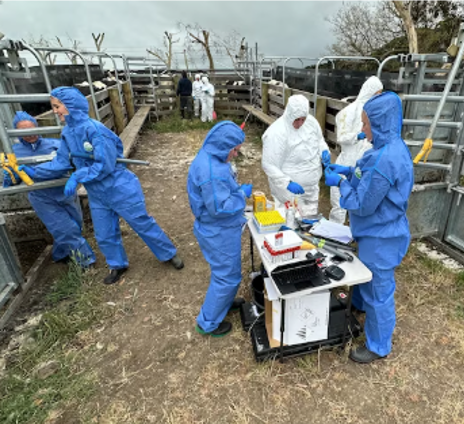 The movement of people, animals and products across national and international borders increases the risk of exotic pests and diseases entering Victoria. These threats could seriously affect agricultural production, trade and access to markets.
Agriculture Victoria has developed advanced diagnostic technologies that identify pests and diseases more quickly and accurately, both in the laboratory and in the field. Faster diagnosis supports earlier action and strengthens Victoria’s biosecurity surveillance and response.
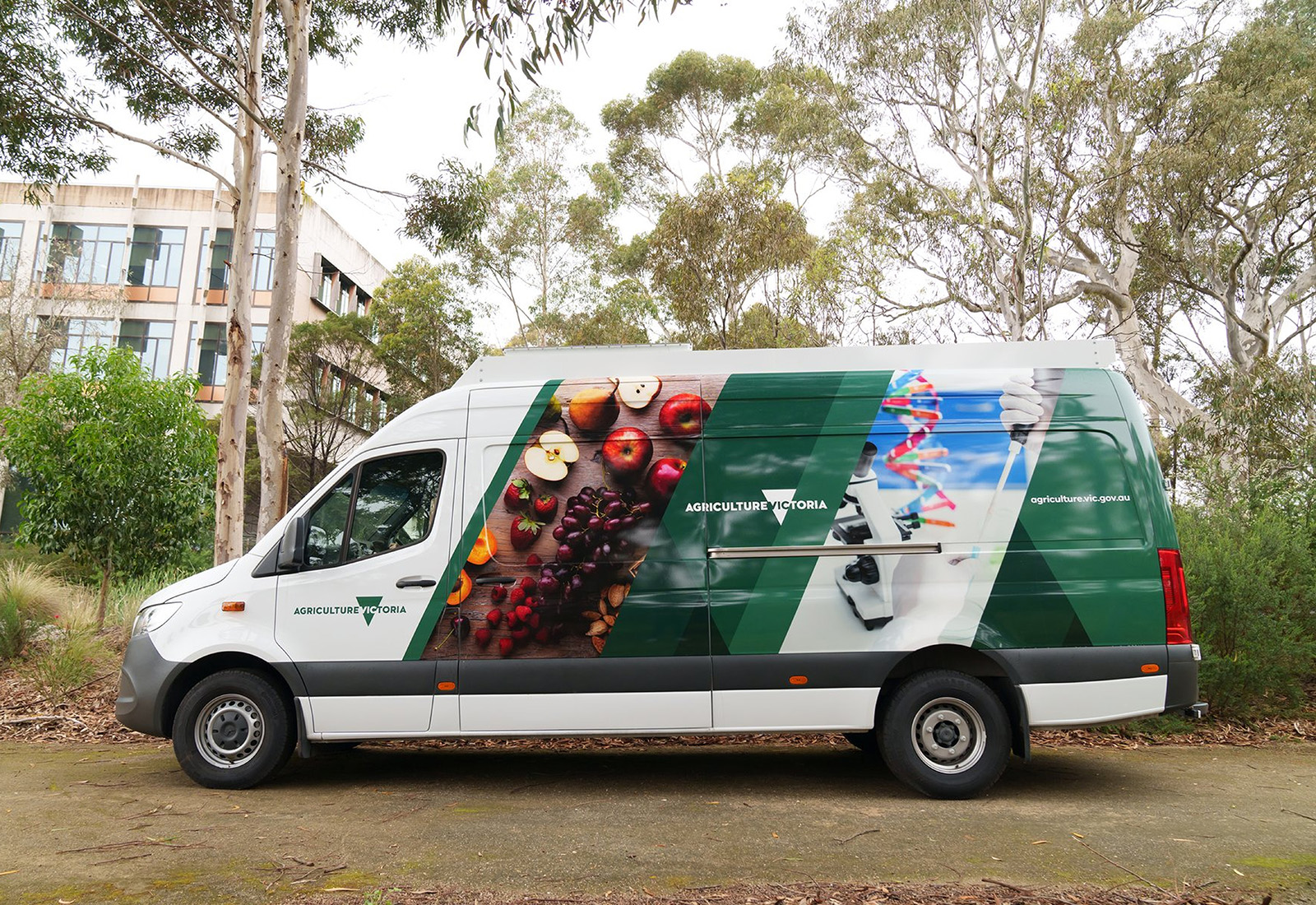
Victoria’s biosecurity diagnostic capability brings together specialist testing for animal and wildlife diseases through Veterinary Diagnostic Services, and plant and crop testing through Crop Health Services, alongside mobile laboratories. The mobile laboratories can take testing directly to biosecurity incidents.
Together, these capabilities enable Agriculture Victoria to rapidly detect, contain and respond to biosecurity threats. This helps protect agricultural industries, maintain confidence in Victorian produce and support access to Australian and international markets.
The diagnostic capability conducts more than 140,000 tests each year and in recent years has supported responses to animal and plant disease outbreaks, including avian influenza (highly pathogenic H5 and H7), tomato brown rugose fruit virus, and Varroa mite surveillance and management activities.
By combining specialist laboratory expertise with field-based testing, Agriculture Victoria is strengthening Victoria’s ability to detect and respond to new biosecurity threats and helping protect the state’s agriculture industry.
Data in these case studies is correct at time of production. Estimates are indicative and subject to change as key variables (price, damage and years of use) vary over time.
Future Ready Agriculture: A Research and Innovation Strategy 2026–30
Our vision
To create a sustainable and prosperous agriculture industry for Victoria, empowered by science and technology.
Our strategic foundations
These strategic foundations guide how research and innovation (R&I) deliver real-world impact and strengthen agriculture as a major driver of Victoria’s economy. As a science-led, government division, Agriculture Science and Technology (AST) plays a critical stewardship role – investing in long‑term capability, managing system-wide risk and delivering public-good outcomes where the market alone cannot.
Impact
Agriculture Victoria’s R&I are focused on delivering tangible outcomes that benefit farmers, industries, rural and regional communities and the broader Victorian economy.
By translating scientific discovery into on-farm solutions, this research will support improved farm productivity, environmental stewardship and resilient agricultural systems, underpinning long‑term economic prosperity and living standards for Victorians.
This approach prioritises practical, landscape scale research that delivers real-world outcomes, from new technologies and management practices to improved decision-making tools, ensuring that investment in science and innovation generates measurable economic, environmental and social value for Victoria.
Economic growth
Agriculture is one of Victoria’s most powerful economic engines. It supports local jobs, rural and regional communities and export markets.
Through targeted R&I, Agriculture Victoria will strengthen the sector’s capacity to grow, adapt to emerging challenges and compete globally.
By improving productivity, accelerating the adoption of new technologies and supporting industry transformation, the strategy will help expand the value of Victoria’s agriculture sector and reinforce its role as a key driver of regional prosperity and statewide economic growth.
Our focus areas
These 4 focus areas ensure Agriculture Victoria’s science and technology investment is targeted, consistent and aligned with the government and sector's priorities.
- Productivity and profitability
- Biosecurity, pests and diseases
- Climate mitigation and adaptation
- Sustainable growth and resource efficiency
Focus area 1: Productivity and profitability

Lead science and technology to drive productivity growth and support a profitable and prosperous agriculture sector.
Agribusiness has been identified in the Victorian Government’s Economic Growth Statementas a key engine of Victoria’s future economy.
Agriculture Victoria’s science and technology capability is critical to lifting productivity and maintaining Victoria’s global edge, helping to generate strong returns for farmers through improved yields, reducing inputs and costs, and improving sustainability credentials and access to premium markets.
This improved productivity and profitability flows directly into the broader economy, strengthening regional communities, supporting local jobs and driving new investment and supply chains, ensuring every research dollar works harder for both the farm sector and the state.
Agriculture Victoria’s commercial arm, AVS, is the state’s unique commercialisation pathway for agricultural science. It accelerates the transition from discovery to application at a landscape scale, bringing cutting-edge technologies, products and services to market faster.
Together, Agriculture Victoria and AVS play a key role in the translation of R&I to boost farm profitability and business resilience, and enhance Victoria’s reputation as a global leader in agricultural innovation, attracting high-value private investment and reinforcing agriculture’s role as a powerhouse of regional development and productivity.
Opportunities and initiatives
Emerging technologies
Continue the development and adoption of emerging technologies, including artificial intelligence, automation, robotics and advanced analytics, which can increase efficiency, reduce production costs and modernise farm systems.
High-value and diversified markets
Expand market opportunities through genetics, crop improvement and agronomy in traditional sectors as well as alternative proteins, native foods and premium products.
This will support Victorian producers to access new domestic and global markets and strengthen the state’s competitiveness in premium export categories.
Food and land security
Leverage modelling capability together with climate and production system expertise to inform future investment decisions.
This evidence base supports strategic planning, reduces risk and creates confidence for investors and industry.
Focus area 2: Climate mitigation and adaptation
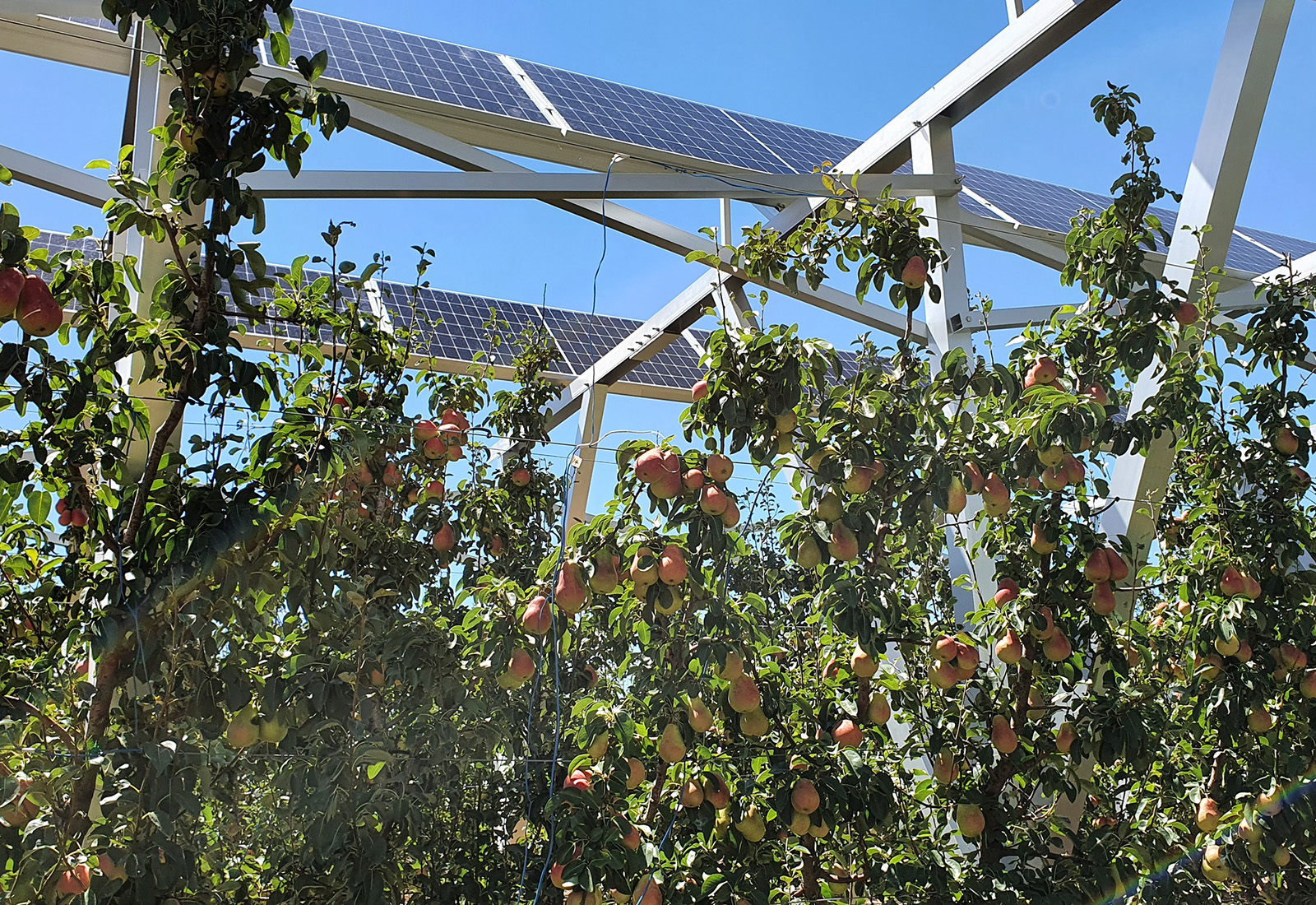
Deliver technology to enable the sector to remain productive, globally competitive and succeed into the future.
Agriculture Victoria’s integrated capability includes climate and biophysical modelling, genetics, emissions‑reducing technologies, digital systems, and advanced land and water management.
These will support the agriculture industry in the transition to verifiable low‑emissions and responsibly produced food and fibre.
Our work aligns with expectations of government, consumers, investors and international markets, and directly contributes to delivering Victoria’s emissions reduction targets and the Agriculture Sector Emissions Reduction Pledge, as well as supporting broader government strategies such as the Climate Change Strategy and sectoral Adaptation Action Plans.
Agriculture Victoria works collaboratively across government, academia, research and development corporations (RDCs), and industry representatives, contributing to key interjurisdictional programs, including the Cooperative Research Centre for Zero Net Emissions in Agriculture (ZNEAg CRC).
Opportunities and initiatives
Climate‑resilient farming
Advance genetics, phenomics and real‑world field experimentation at Agriculture Victoria’s SmartFarms.
This will advance the development of resilient crop varieties, livestock and management practices that maintain performance under heat stress, water scarcity and changing pest and disease pressures.
Additional opportunities will be supported in the development of precision irrigation, soil health improvement and low‑emissions farming systems.
Low‑emissions agricultural systems
Lead and partner in methane reduction, nutrient management, renewable energy integration and circular resource systems. This will improve farm efficiency, reduce environmental impact and help the sector meet state and national emissions targets, while opening access to emerging environmental markets such as carbon credits.
Modelling for land-use optimisation
Support integrated production and resource management approaches that optimise agricultural performance under changing climate conditions.
This includes climate-informed, landscape‑scale modelling to identify where different farming systems are most resilient and productive, informing land‑use optimisation, natural resource protection and long‑term strategic planning.
Focus area 3: Biosecurity, pests and diseases
Protect Victorian agriculture from disease threats and ensure the sector remains resilient, trusted and globally competitive.
Agriculture Victoria provides world-class veterinary and plant diagnostics for the identification and control of pests and diseases, and the development of advanced diagnostic tools and surveillance approaches to protect Victoria’s agriculture sector and support market access opportunities.
Agriculture Victoria undertakes a comprehensive OneHealth approach, considering human, animal and plant health, as well as associated risks to the environment. These functions are delivered in line with statutory obligations and Victoria's Biosecurity Strategy and the National Biosecurity Strategy.
Working in partnership to build sovereign biosecurity capability, reduce system‑wide risk, and protect Victoria’s standing as a trusted leader in biosecurity science, preparedness and innovation.
Opportunities and initiatives
Agriculture Victoria has the capability and strategic position to lead the way in next‑generation biosecurity at a national level while influencing international management.
Advanced detection and surveillance
Expand mobile and field‑deployable diagnostics to enhance Victoria’s ability to contain risks and give producers and regulators timely, evidence‑based insights.
This will be supplemented through advanced predictive surveillance integrating real‑time data, climate intelligence and sensor networks.
Innovation in integrated pest and disease management (IPDM)
Drive development of landscape‑scale IPDM models for major threats affecting Victoria’s key agriculture sectors.
This will include combining chemical ecology, advanced attractants, sensor‑based monitoring, and data analytics to reduce pest numbers and chemical reliance, while improving grower and consumer confidence.
Regional biosecurity capability building
Enhancing surveillance, diagnostics and emergency preparedness across Australia’s neighbouring countries, thereby strengthening Victoria’s own biosecurity and positioning the state as a global leader.
Mosquito surveillance program benefits agriculture and health sectors
Each year, AgriBio undertakes morphological identification and genomic screening techniques to process more than 1 million mosquitoes.
This supports the detection and response to arboviruses that pose a threat to agricultural and public health including Ross River virus, Barmah Forest virus, West Nile virus (Kunjin subtype), Murray Valley Encephalitis and Japanese Encephalitis.
Smart surveillance tools developed at AgriBio are pivotal in the detection and identification of these arboviruses, continuing the long-running Victorian surveillance program established in the 1970s.
In collaboration with key partners from the health sector, Agriculture Victoria’s research solved an 80-year mystery surrounding the spread of Buruli ulcer, a tropical skin disease that has become an increasing public health concern in Victoria.
This discovery represents a significant advancement in the efforts to curb the spread of Buruli ulcer and protect communities.
Improving resilience against animal disease threats in the South Pacific
Agriculture Victoria is building strong biosecurity systems and partnerships with neighbours across the South Pacific to protect plant, animal and environmental health.
Through the Victorian Government’s animal health partnership and the Department of Foreign Affairs and Trade, Agriculture Victoria provides training to scientists, technicians and farmers in neighbouring countries such as Timor-Leste and the Solomon Islands.
Agriculture Victoria has trained local veterinarians to use diagnostic tools, including a new real-time method for detecting microbial agents in animal samples, and a portable field test for pathogenic viruses.
This builds on significant work since the 2019 outbreak of African Swine Fever in Timor-Leste, where Agriculture Victoria veterinary team members supported the response and formed ongoing partnerships.
The information that local animal health professionals glean from their training and these new diagnostic tools is linked to a national epidemiology system that is used to detect disease outbreaks and create strategies for control of existing animal diseases for Timor-Leste.
Agriculture Victoria also works collaboratively with the Solomon Islands on initiatives to address biosecurity challenges and strengthen their animal health and production.
Focus Area 4: Sustainable growth and resource efficiency
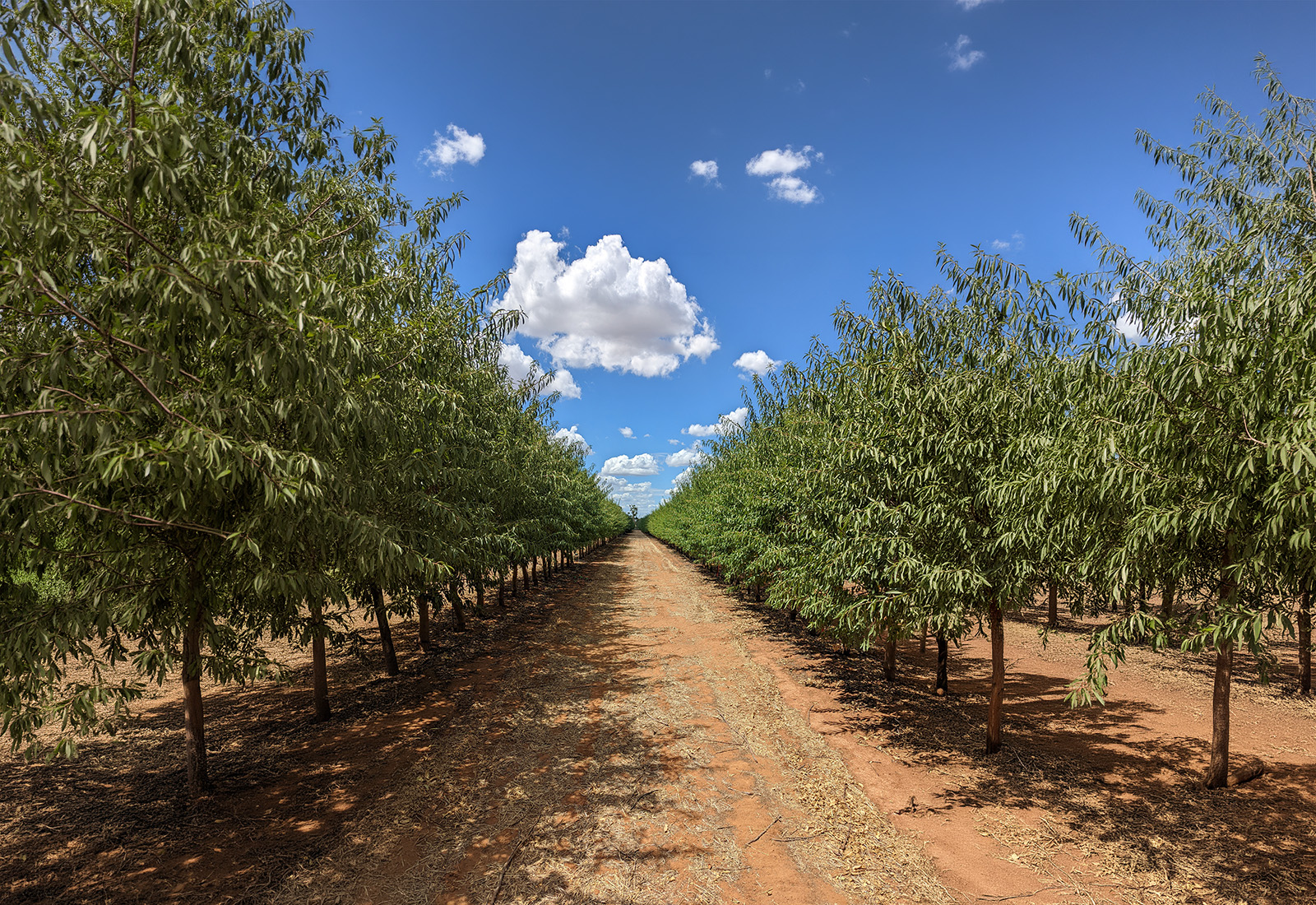
Enable innovation that drives sustainable growth, land-use coexistence and resource-use efficiency.
Agriculture Victoria integrates insights on soils, water, climate, genomics, emissions, and whole‑of‑farm performance to support data‑driven decision making by farmers and government.
By linking farm-level performance with regional and system-level insights, Agriculture Victoria drives sustainable growth, productivity and resilience across farming systems. This is achieved through resource‑efficient approaches that strengthen soil health and landscape function, including improving how nutrients are efficiently converted into animal growth, milk, and fibre to lift productivity while reducing losses and environmental impacts. This evidence supports future-focused government policy, planning and investment decisions in response to climate change, land-use transition and evolving market expectations.
Through spatial modelling and evidence-based scenario analysis, Agriculture Victoria identifies regions with strong future production potential and resilience, assesses where productivity and sustainability gains deliver the greatest benefits for farmers and regional communities, and informs how different land uses can coexist in ways that maintain agricultural capability, reduce conflict and guide long-term public and private investment decisions. Agriculture Victoria’s work provides independent scientific evidence to support decision-making by government, industry and landholders regarding future land-use and investment choices.
Opportunities and initiatives
Productive and sustainable farming systems
Advance R&I that improves nutrient-use efficiency, water productivity, input optimisation and emissions performance across crop and livestock systems. This includes improving soil health and natural capital, and enhancing how livestock convert nutrients into milk, meat and fibre through advances in nutrition, genetics, feeding systems and management practices. Together, these efforts will lift productivity per unit of input while reducing nutrient losses and environmental impacts across farming systems.
Trusted sustainability data and market access
Build consistent, transparent, sustainability data and metrics that support reporting requirements. This will enable participation in carbon, biodiversity, and natural‑capital markets, and maintain access to high‑value domestic and international supply chains.
Land‑use coexistence and landscape‑scale planning
Provide integrated, spatially explicit evidence to support coexistence between agriculture, environmental assets, energy infrastructure and other emerging land uses.
This evidence will inform land-use planning and investment decisions that maintain agricultural capability, reduce land-use conflict and inform long‑term regional and statewide investment and planning decisions.
Enablers
World-class infrastructure, expert capability and strong partnerships enable Agriculture Victoria to deliver leading agricultural science and innovation.
Enabler 1: World-class facilities and technology
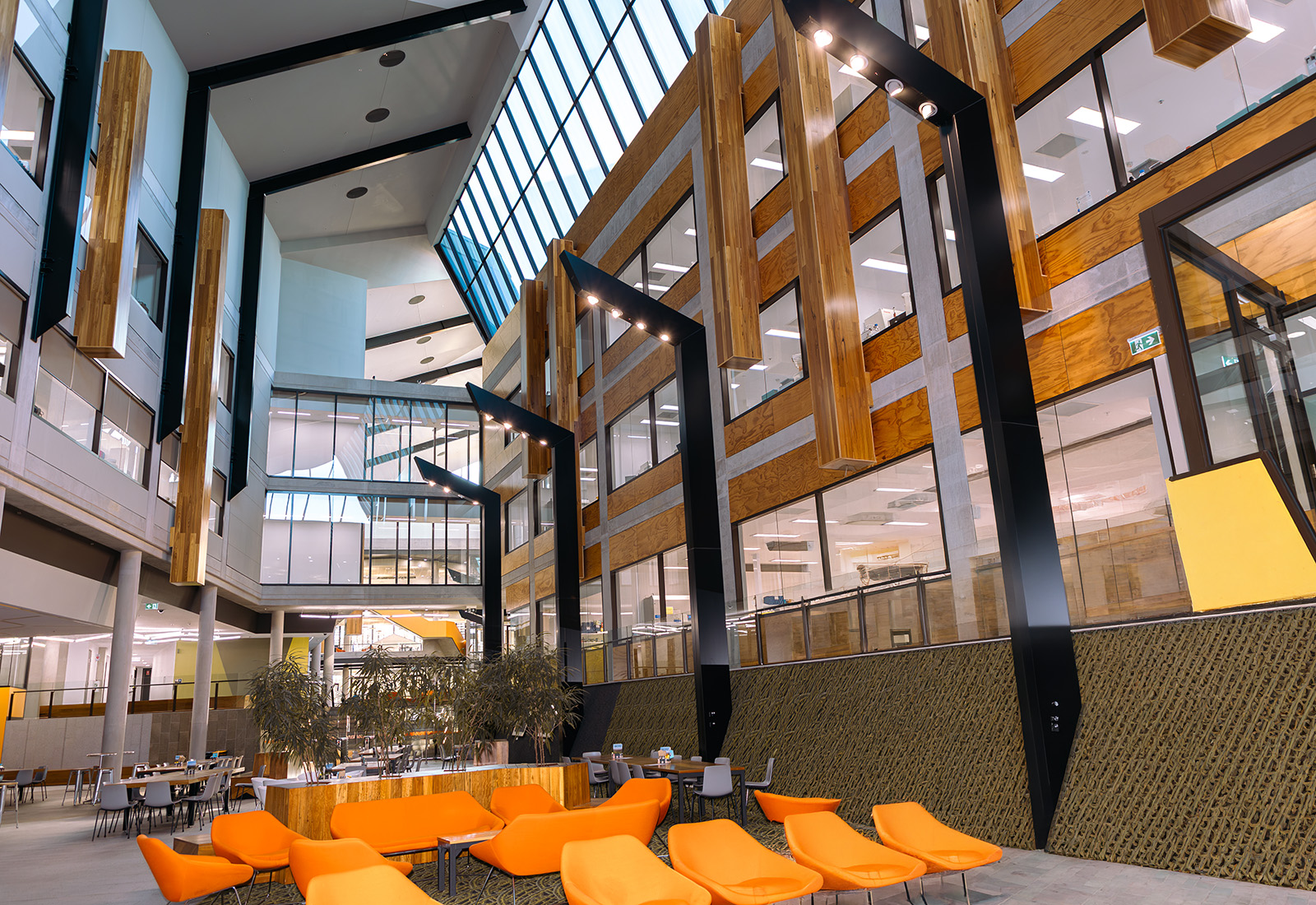
AgriBio and the SmartFarms are hubs of excellence, delivering lab-to-paddock science to shape the future of agriculture worldwide.
AgriBio is Australia’s leading integrated agricultural systems biology research centre and one of the nation’s premier agribioscience facilities. Strategically positioned within Melbourne’s northern biotechnology precinct, AgriBio thrives at the intersection of agriculture, medical research, and biotechnology, creating a dynamic environment that attracts world-class researchers, students, and collaborators.
AgriBio delivers cutting-edge research through advanced science programs, state-of-the-art technology platforms, and globally recognised expertise. It fosters collaboration and innovation, ensuring Victoria remains at the forefront of agricultural science, biosecurity and big data capabilities.
AgriBio is a joint initiative between the Victorian Government through Agriculture Victoria and La Trobe University. Agriculture Victoria also leads the La Trobe University School of Applied Systems Biology to extend our strong science capability to the next generation.
AgriBio operates as the hub of Agriculture Victoria’s R&I ecosystem, complementing 5 regionally based SmartFarms located at Ellinbank, Tatura, Horsham, Hamilton and Mildura. Together, AgriBio and the SmartFarms form an integrated innovation system that connects discovery science with field‑based testing, validation and adoption.
The SmartFarms harness regional strengths to deliver place‑based innovation aligned to local farming systems, climate conditions and industry needs.
Through real‑world trials, demonstration and partnerships with industry and communities, SmartFarms translate science into practical, adoption‑ready solutions, accelerating the uptake of new technologies and practices across Victoria and beyond.
Science and technology ecosystem driving climate innovations
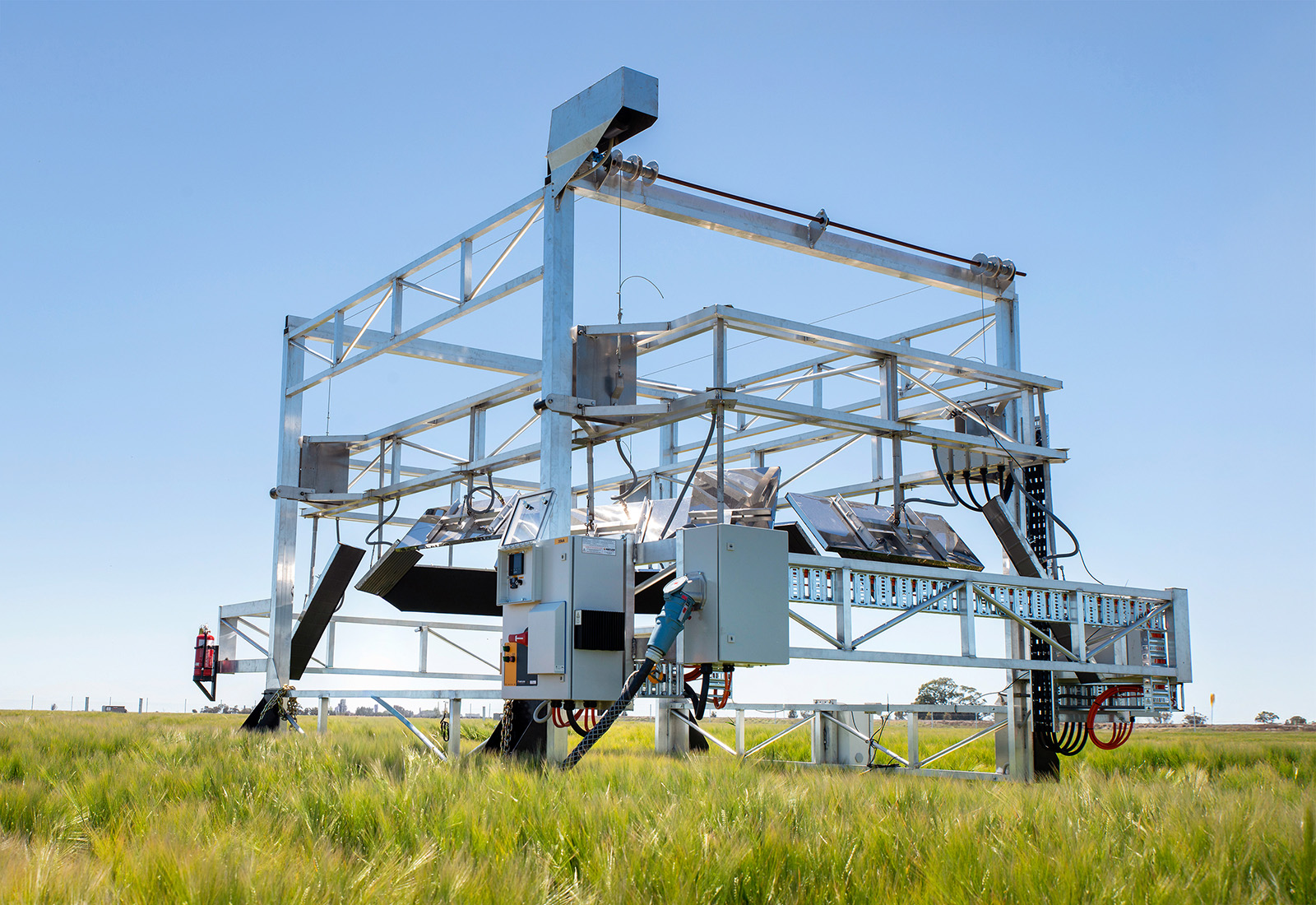 Agriculture Victoria’s science and technology ecosystem is a critical driver of the state’s climate-change response, linking AgriBio’s world-class genomics and analytics capabilities with the SmartFarms’ real-world testing environments to rapidly turn research into climate solutions and breeding values.
At the Ellinbank SmartFarm, cutting-edge methane measurement systems, including, gold standard respiration chambers, in vitro gas laboratories, GreenFeed and SF6 tracers generate high precision emissions data.
This innovation supports the development of low-methane dairy genetics, directly targeting one of agriculture’s most significant greenhouse gas sources.
The data from this infrastructure is transformed at AgriBio into breeding values and genomic insights, accelerating climate-smart herd improvement.
At Horsham’s SmartFarm, sophisticated crop‑phenomics platforms, including the Free Air Temperature Extreme (FATE) facility for simulating heatwaves, frost and drought, deliver essential performance data that AgriBio integrates through advanced genomics to identify stress‑tolerance traits and fast‑track climate‑resilient crop varieties.
Together, this connected system positions Victoria as a leader in agricultural climate innovation, reducing emissions, strengthening resilience, and ensuring a productive, sustainable future for the sector.
Enabler 2: Exceptional people and capabilities
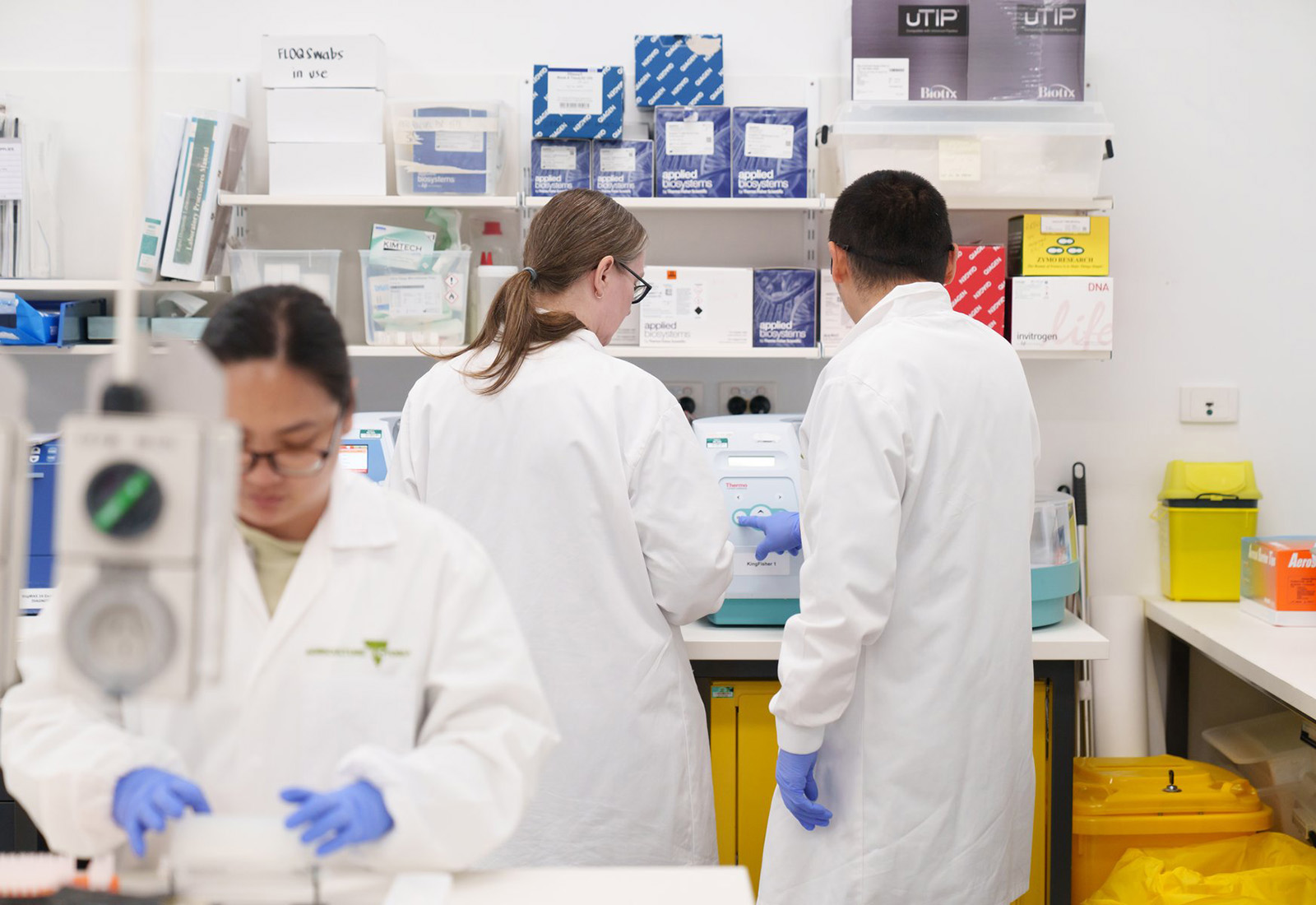
Highly skilled researchers, scientists, and agriculture specialists lead and deliver the next generation of agricultural innovation.
Agriculture Victoria has a long-standing reputation for pioneering agricultural innovation. Our global impact is driven by an expert team of researchers, technologists, and practitioners recognised through national and international collaborations, scholarly publications, awards, and competitive research funding.
We will continue to build an inclusive workforce that reflects the diversity of the communities we represent. Currently staff and students from more than 25 countries contribute to a culture where different perspectives fuel creativity and innovation and where women represent more than 52% of the workforce.
Agriculture Victoria offers unique opportunities to build STEM capabilities across science and technology disciplines, including:
- Higher degrees by research – postgraduate education and training in agricultural sciences.
- Academic partnerships – strong collaborations with metropolitan and regional universities to attract students to undertake their studies at AgriBio and our SmartFarms.
- Career development program – mentoring, training, and seed funding that accelerates emerging capabilities.
- Get into AgSTEM – hands-on STEM workshops with Agriculture Victoria scientists for primary and secondary students.
Enabler 3: Strong strategic partnerships
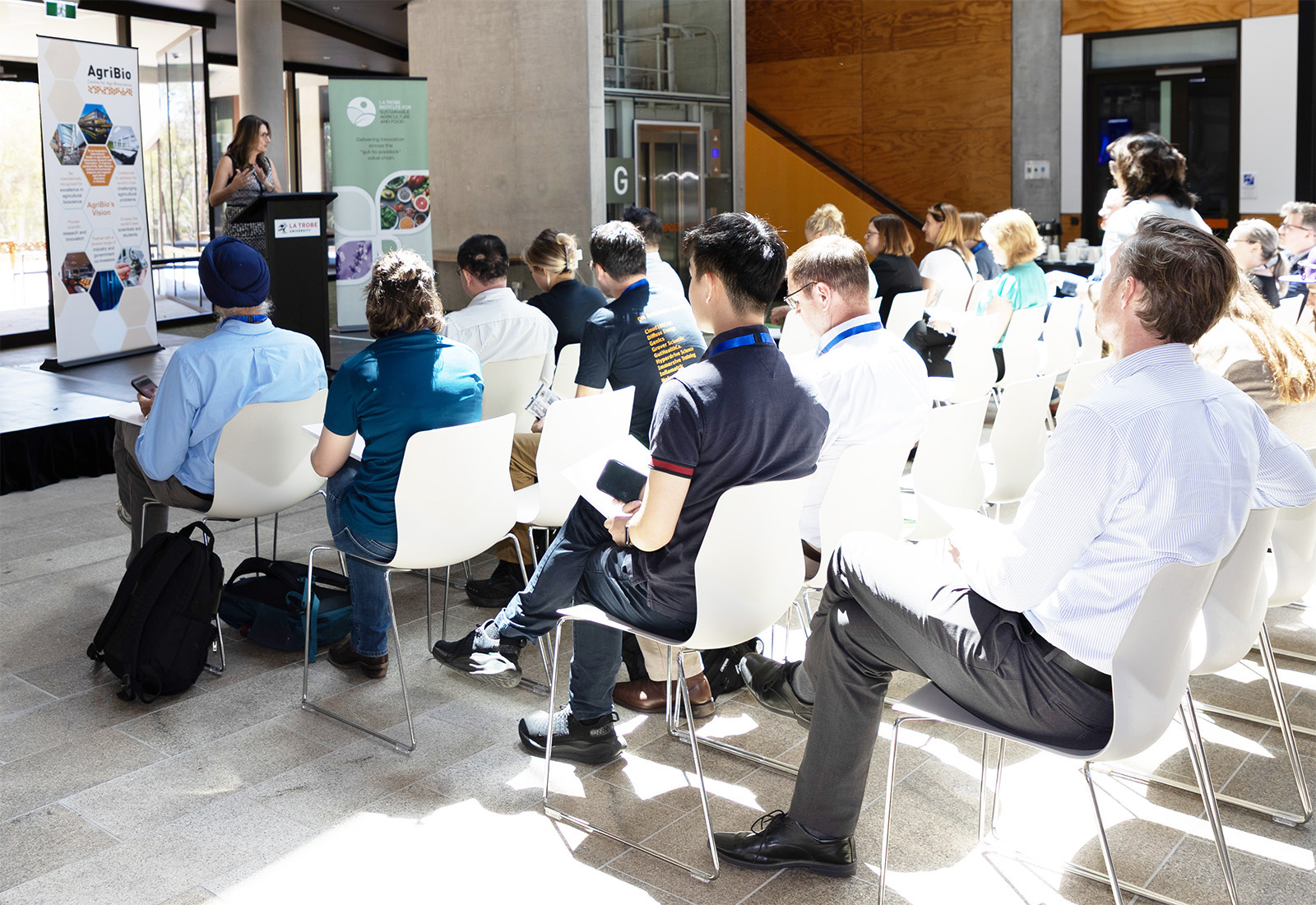
Partnerships with government, national and international research organisations, industry, academia and communities accelerate agricultural innovation, delivery and impact.
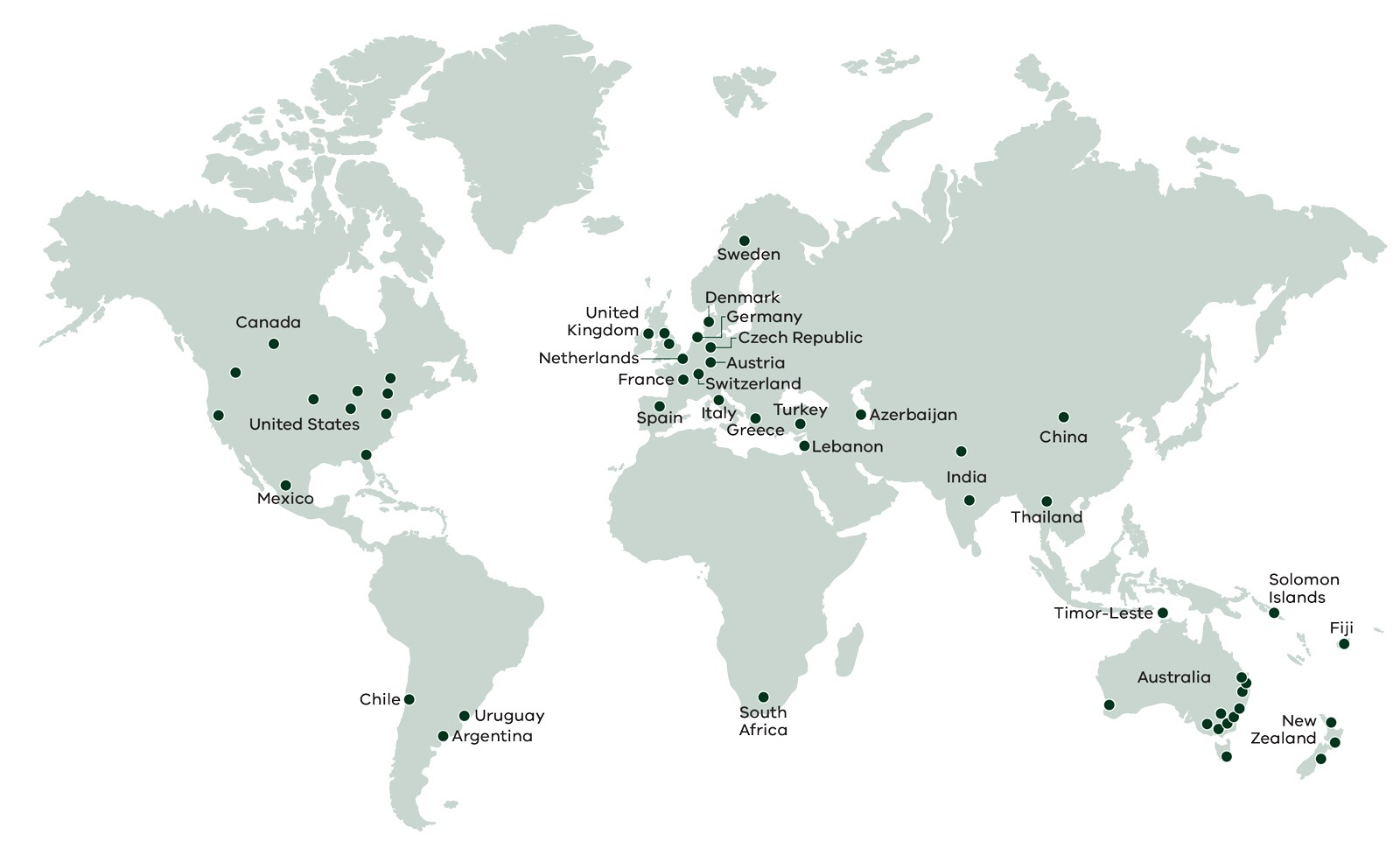
Agriculture Victoria’s leading facilities and scientific expertise position us as a trusted government partner and a global destination for collaboration. Agriculture Victoria collaborates with international counterparts, leading research institutes, established industry leaders and emerging start-ups from across Asia, Europe, North America, Oceania, Africa and South America.
These partnerships (shown overleaf) reflect our international reputation for scientific excellence, agricultural impact and collaborative leadership. Our science and technology networks span more than 30 countries, enabling over 140 national and international partnerships that translate innovation into real-world outcomes. Together, these partnerships position Agriculture Victoria to contribute to, and leverage from, coordinated R&I efforts where this strengthens outcomes for Victoria.
Through partnerships, Agriculture Victoria:
- drives innovation and impact harnessing the collective strength of partners to create research that is relevant, actionable and scalable.
- optimises expertise and resources to eliminate duplication, maximise returns and enable transformative, cross-sector projects.
- accelerates adoption and relevance co-designing science and technology with end‑users to ensure solutions translate from concept to practice.
- broadens reach and diversity with diverse cultural and sectoral perspectives, including strong partnerships with Traditional Owners, to support representative research and new opportunities.
- strengthens trust and credibility, building long‑term relationships that enable integrated planning and shared stewardship of Victoria’s agricultural systems, natural resources and economic opportunities.
National and international partnerships
Figure 2: World map showing national and international partnerships
Impact and value
Agriculture Victoria’s Future ready agriculture: A research and innovation strategy 2026–30 delivers measurable impact by providing rigorous, independent and reliable science that strengthens the agriculture sector and creates lasting value for all Victorians. It sets out a clear, defensible value proposition for ongoing public investment in agricultural science and innovation, supporting confident and informed decision‑making by government.
Opportunities and initiatives undertaken by AST over the next 5 years will focus on delivering the following impacts:
- A stronger and more capable agriculture sector
Science and technology will strengthen farm productivity, manage emerging risks and support a competitive and capable Victorian agriculture sector. - Enhanced sovereign capability in agricultural science
Maintaining leading expertise, infrastructure, research and diagnostic capability will ensure Victoria can respond to emerging challenges and protect critical agricultural systems. - Innovation addressing market gaps and government priorities
Leveraging public investment and working with AVS to support research translation where markets alone cannot deliver outcomes, ensuring alignment with strategic government priorities and sector needs. - Stronger rural and regional prosperity
Agricultural innovation supports farm performance, industry development and employment, contributing to thriving regional communities across Victoria. - Economic, environmental and social value for all Victorians
Agricultural science and technology supports sustainable production, responsible resource use and a strong economy that benefits the whole state.
Strategic investment for agricultural innovation
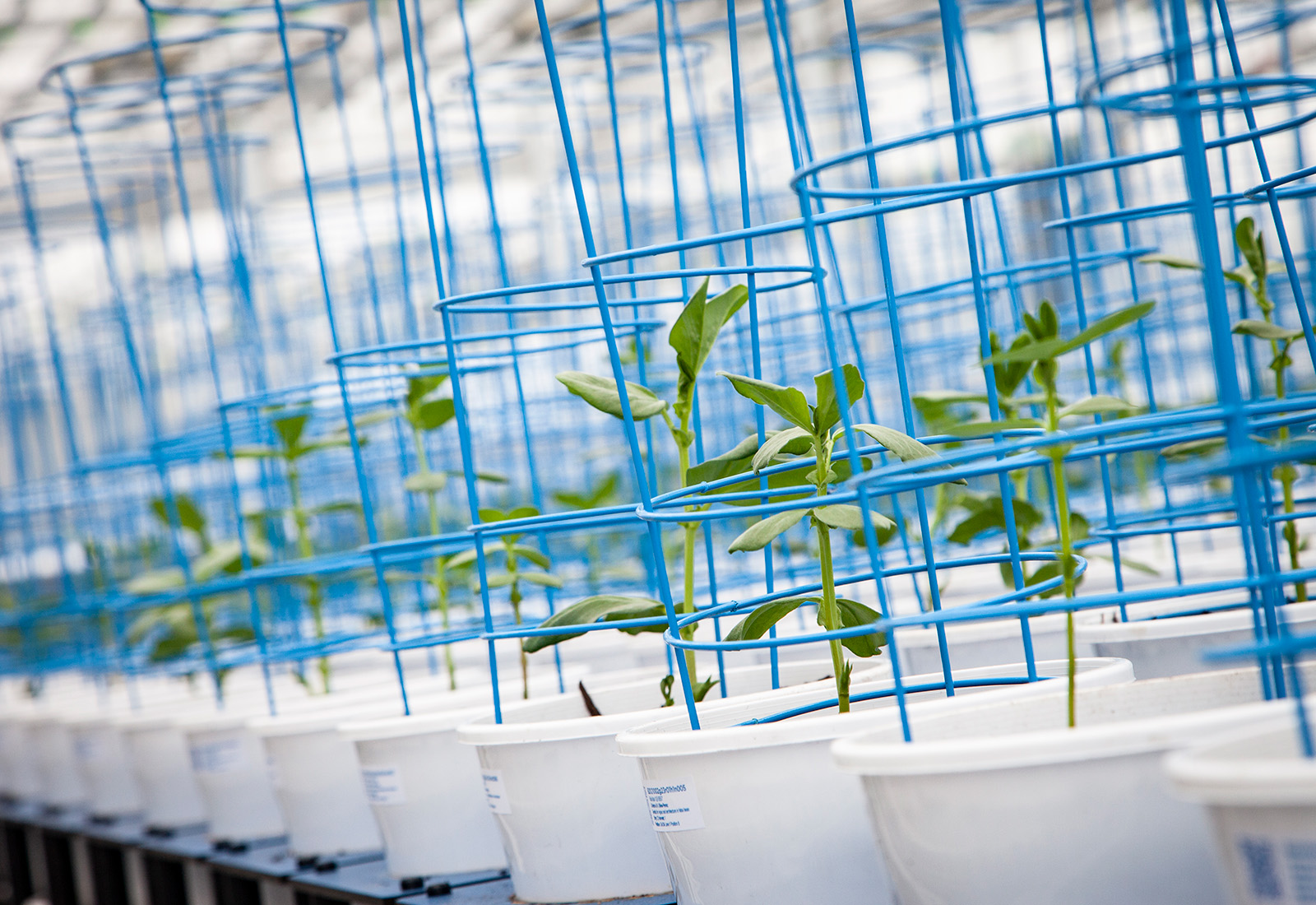
A clear investment framework ensures research funding is targeted, disciplined and focused on delivering practical outcomes for Victorian agriculture.
A clear and disciplined investment framework guides Agriculture Victoria’s R&I investment, ensuring public funding is targeted to deliver practical outcomes for Victorian agriculture and demonstrable economic, environmental and social returns for Victoria.
Investment decisions are informed by public-value considerations, system‑wide risk, alignment with government priorities, and the capacity for science to deliver scalable, adoption‑ready outcomes that deliver the greatest impact for Victorian agriculture.
We invest where there is strong potential for economic, environmental and social return, and where science can be translated into practical outcomes for farmers, industry and the broader community. This includes maintaining critical capability, supporting innovation the market alone cannot deliver, and aligning with national efforts where this strengthens outcomes for Victoria.
Agriculture Victoria will regularly review priorities to remain responsive to emerging challenges and opportunities, ensuring investment remains targeted, affordable and focused on results.
Funding models include:
- Direct investment: Government funding that delivers research for public good. This maintains critical capability, infrastructure and long-term strategic science, including biosecurity diagnostic capability.
- Co-investment: Government funding that leverages partner contributions, multiplying the reach and effectiveness. Typically with industry, RDCs, universities and other organisations.
- Fee-for-service research: Client-driven research such as product trials, validation studies, or bespoke investigations. These typically support short-term applied innovation and regulatory requirements.
- Fee-for-service diagnostics: Rapid testing, pest and disease identification, and independent data services to support decision-making, to meet urgent or specialised needs, or for market access requirements.
- Commercial investment: Long-term partnerships and joint ventures to drive system-wide innovation and accelerated commercialisation, often in partnership with AVS. These can include venture capital, philanthropic sources and investment funds.
Agriculture Victoria will not invest or undertake research in areas that:
- duplicate other research programs.
- lack clear adoption pathways.
- don’t present clear outcomes for public benefit.
- represent low‑value, fee‑for‑service activity.
- maintain legacy projects that don’t align with strategic priorities.
Measuring success
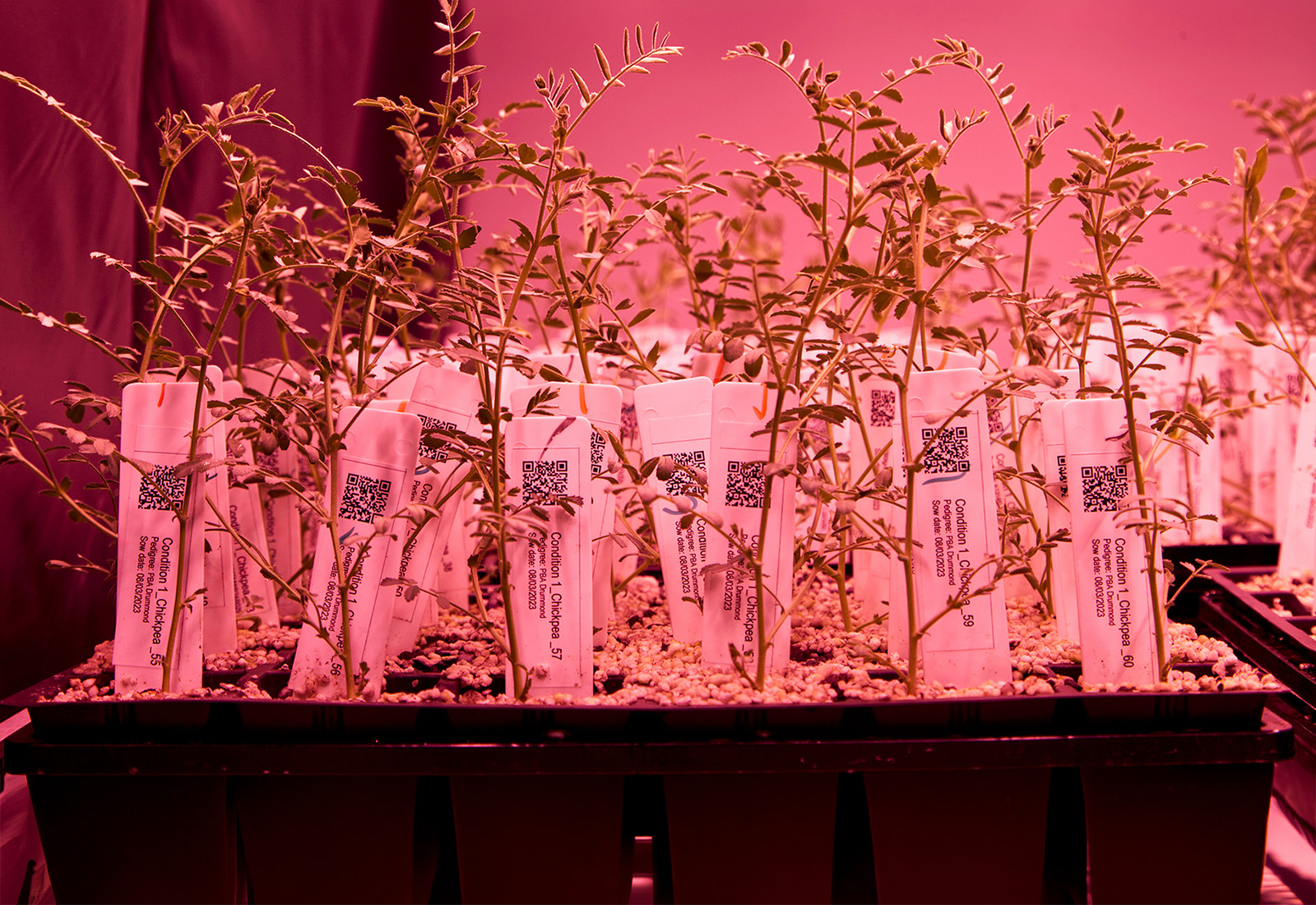
Driving accountable, transparent and high-impact agricultural science and technology.
The impact of this strategy will be assessed through demonstrating improvements to science capability and research collaboration, contributions to government priorities and policies, and the effective translation of science and technology to market using the following measures:
- Innovative and sustainable farming systems that employ new approaches and technologies (Ag Tech) that improve farm profitability, reduce greenhouse emissions, promote climate adaptation and sustainable use of resources for dairy, livestock, grains and horticulture businesses.
- Better informed government policy and resource management, including through evidence-based sustainability and land-use insights to inform policy and regional planning.
- Improved sector preparedness and capacity to respond to biosecurity threats.
- Enhanced strategic partnerships and research collaborations.
- Strengthened commitment to commercial route to market and partnering with private industry.
- Highly skilled agriculture research sector through training of post graduate students and visits by international scientists.
These supplement existing key performance indicators, including:
- Joint investment with external partners on government-priority research.
- Citation impact in peer-reviewed journals.
- Positive public and business sentiment of AST.
- Intellectual property (IP) generated from future science platforms and total IP revenue.
- Student participation in postgraduate study.
- Site visits by industry, investors, national and international delegations.
- Pest and disease diagnostic tests delivered within agreed timeframes.
- Development and enhancement of the professional and scientific R&I workforce of the future.
Publication information
Acknowledgement of Victorian Traditional Owners
We acknowledge and respect Victorian Traditional Owners as the original custodians of Victoria’s land and waters, their unique ability to care for Country and deep spiritual connection to it.
We honour Elders past and present whose knowledge and wisdom has ensured the continuation of culture and traditional practices.
DEECA is committed to genuinely partnering with Victorian Traditional Owners and Victoria’s Aboriginal community to progress their aspirations.
Copyright
© The State of Victoria Department of Energy, Environment and Climate Action, July 2026.
Creative Commons
This work is licensed under a Creative Commons Attribution 4.0 International licence, visit the Creative Commons website.
You are free to re-use the work under that licence, on the condition that you credit the State of Victoria as author. The licence does not apply to any images, photographs or branding, including the Victorian Coat of Arms, and the Victorian Government and Department logos.
ISBN 978-1-76176-938-2 (print)
ISBN 978-1-76176-939-9 (PDF/online/MS word)
Disclaimer
This publication may be of assistance to you but the State of Victoria and its employees do not guarantee that the publication is without flaw of any kind or is wholly appropriate for your particular purposes and therefore disclaims all liability for any error, loss or other consequence which may arise from you relying on any information in this publication.
Accessibility
To receive this document in an alternative format, phone the Customer Service Centre on 136 186, email customer.service@deeca.vic.gov.au, contact the National Relay Service on 133 677 or visit the National Relay Service website. This document is available on the DEECA website.