Determining soil texture using ribboning
Soil texture describes the relative proportions of sand, silt and clay particles in a soil. Texture can be determined by soil analysis in a laboratory or determined more readily in the field using ribboning. Soil texture has a major influence on how much water the soil can hold, how much is readily available to plants, and how easily water may drain through the profile.
How to texture soil
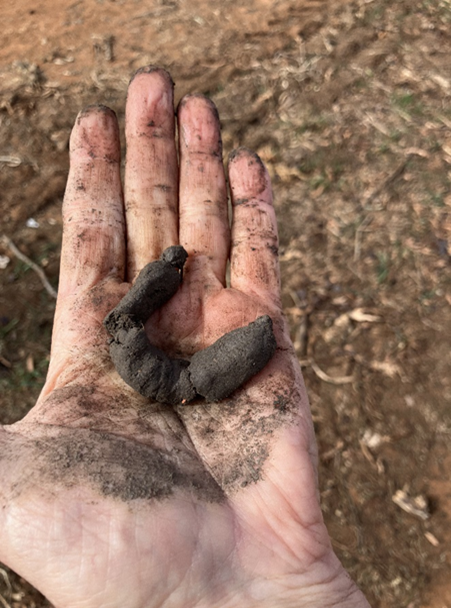
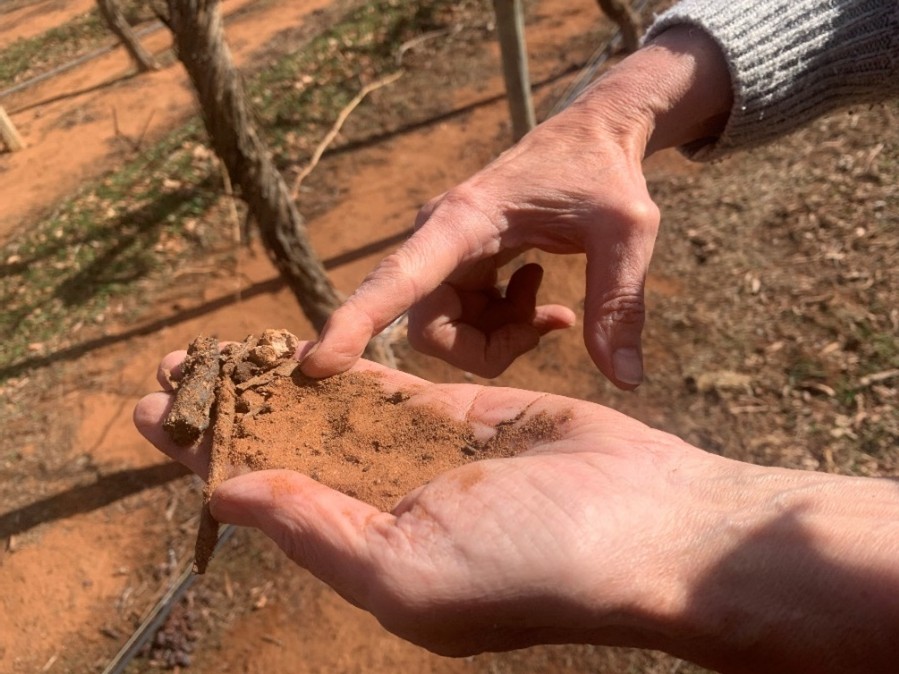
Take a sample of soil to comfortably fit in the palm of your non-dominant hand, removing any stones and debris (Figure 1).
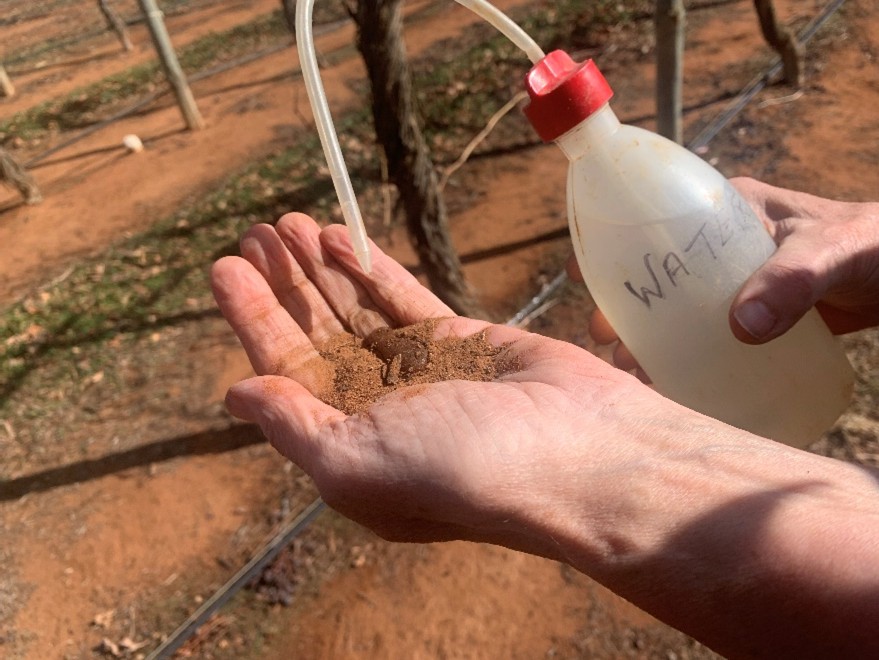
Slowly moisten the soil and knead it until a ball of soil or bolus forms and just fails to stick to the fingers (Figure 2).
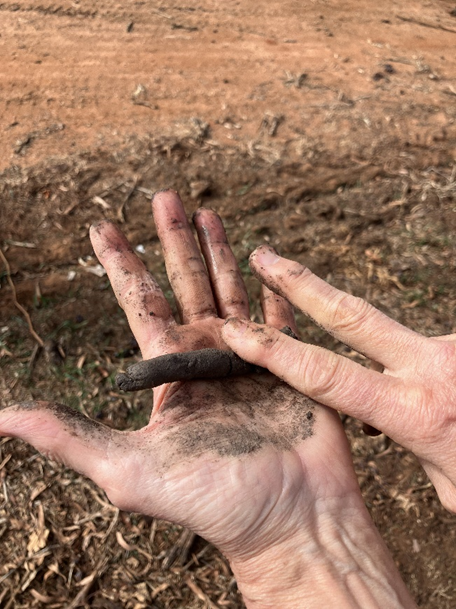
Continue kneading and wetting the soil bolus until it is uniform (this should take no longer than one to 2 minutes). Transfer the bolus to your dominant (clean) hand and work the soil between your thumb and forefinger, gently pressing it into a ribbon 3–5 mm thick and allow to hang over your forefinger (Figure 3).

Let the ribbon naturally break onto your non-dominant hand and measure the length of this ribbon (in mm) from the tip to this natural break (Figure 4).
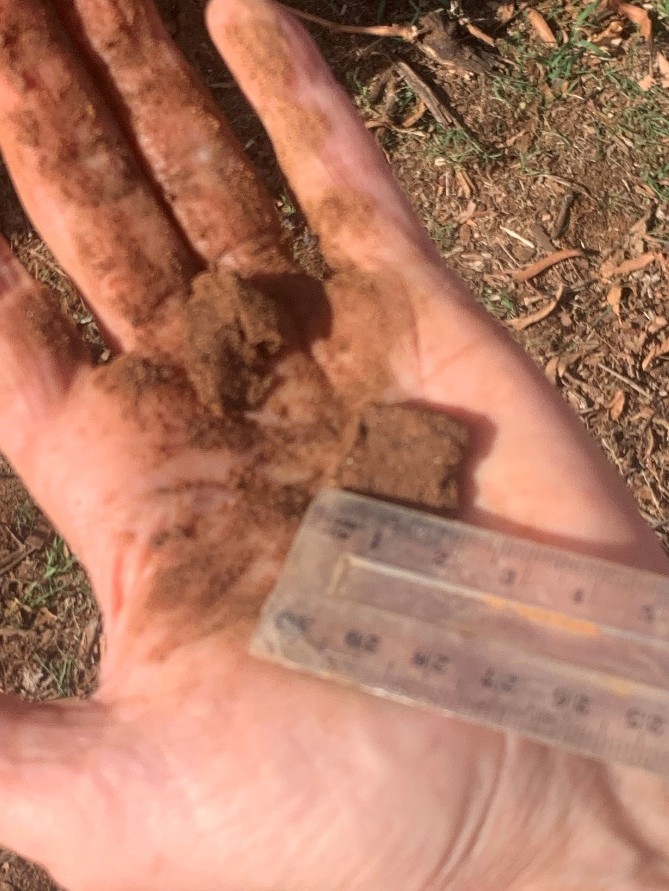
Repeat this several times to ensure the ribbon length is repeatable and consistent. The more sand in your sample, the shorter the ribbon will be, while more clay results in a longer ribbon (Figure 5).
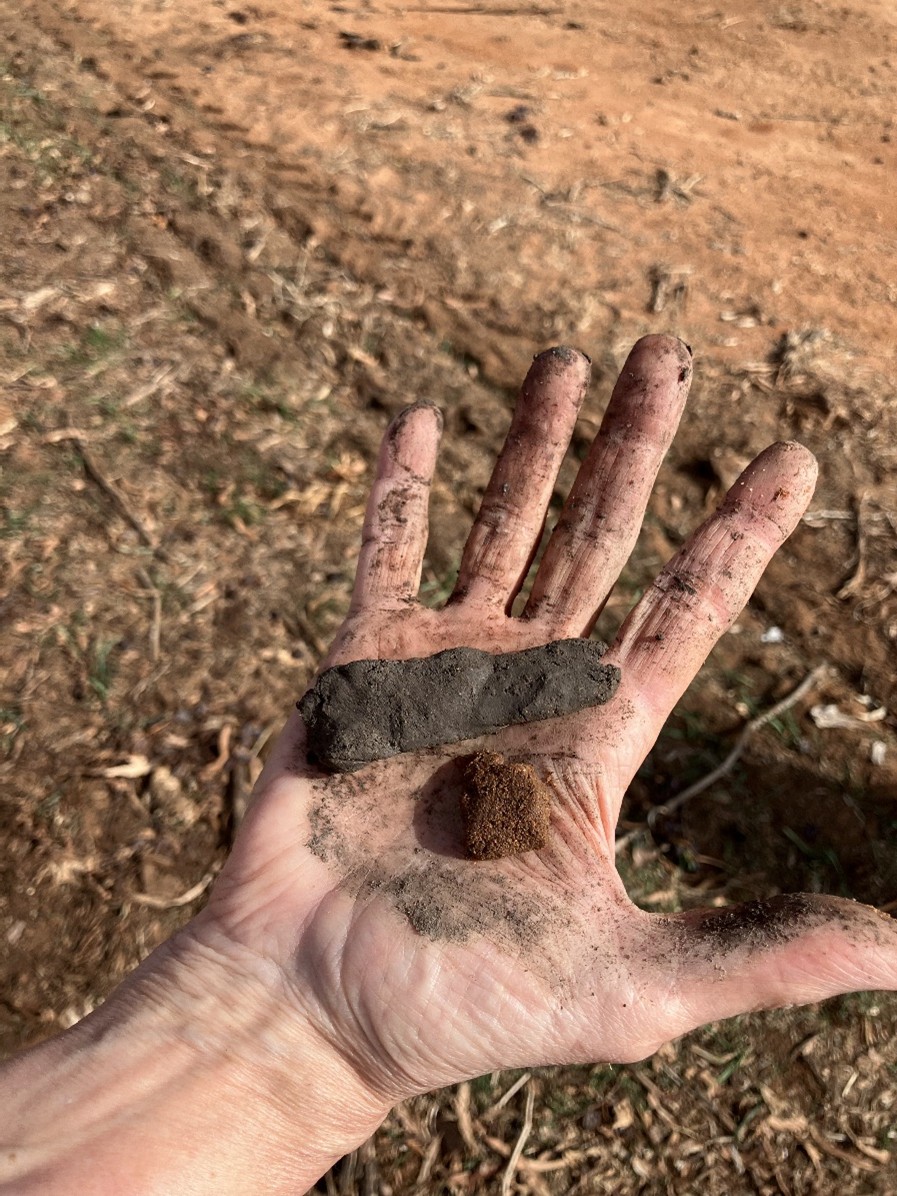
Using Table 1, locate the ribbon length to determine the field texture of your soil. Repeat this process for each identified soil layer.
Table 1: Soil textures using the ribboning technique
Ribbon length | Texture | Comments |
|---|---|---|
0 mm | Sand (S) | Cannot be moulded, single grains stick to fingers, nil to slight turbidity when puddled. |
5 mm | Loamy sand (LS) | Slight coherence, definite turbidity when puddled. |
5–15 mm | Clayey sand (CS) | Slight coherence, sticky when wet, discolours fingers with clay stain. |
15–20 mm | Sandy loam (SL) | Bolus just coherent and sandy to touch, sand grains visible |
20–25 mm | Light sandy clay loam (LSCL) | Bolus moderately coherent but sandy to touch, sand grains easily visible |
25 mm | Loam (L) | Organic matter visible, bolus coherent and spongy, no obvious sandiness |
25–40 mm | Sandy clay loam (SCL) | Bolus strongly coherent, sandy to touch, sand grains visible |
40–50 mm | Clay loam (CL) | Bolus strongly coherent and plastic and smooth to touch |
50–75 mm | Sandy clay or light clay (SC or LC) | Plastic bolus, slight resistance to shearing Sandy clay – can see and feel sand grains Light clay – smooth to touch Puddling can be used to help differentiate between sandy clay and light clay. |
75–85 mm | Light medium clay (LMC) | Plastic bolus smooth to touch, moderate resistance to shearing between thumb and forefinger |
85–100 mm | Medium clay (MC) | Smooth plastic bolus, handles like plasticine and can be moulded into rods (see technique below) |
100 mm+ | Heavy clay (HC) | Handles like stiff plasticine, can be moulded into rings without breaking, has firm resistance to ribboning shear (see technique below) |
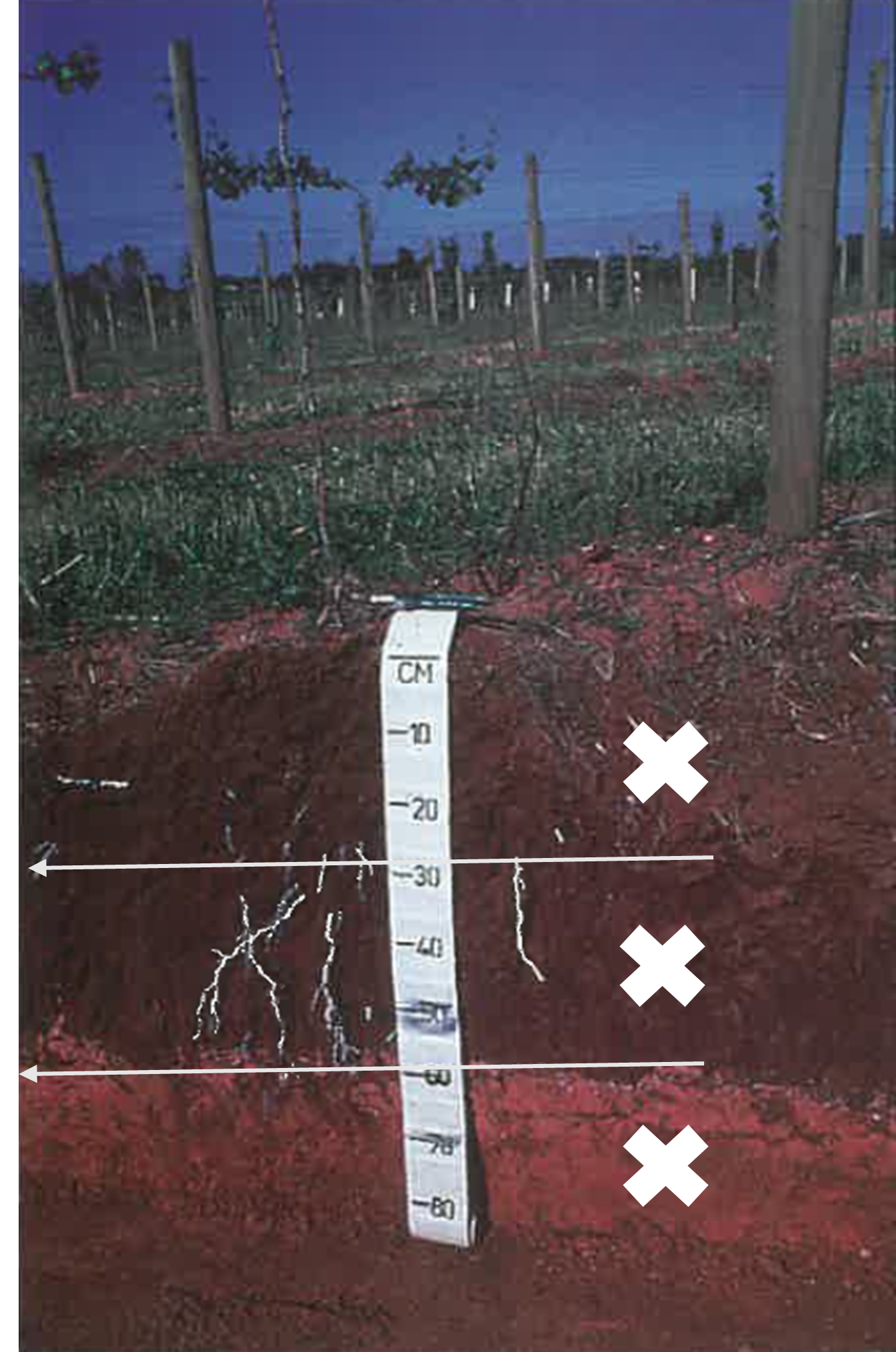
It is important to determine the texture of all soil layers within the rootzone of the crop (Figure 6). Always take the soil sample to be textured from the middle of each layer. Determining the soil textures below the rootzone is also recommended as it can help identify drainage hazards.
Clay soil can be further categorised using the following techniques.
Puddling
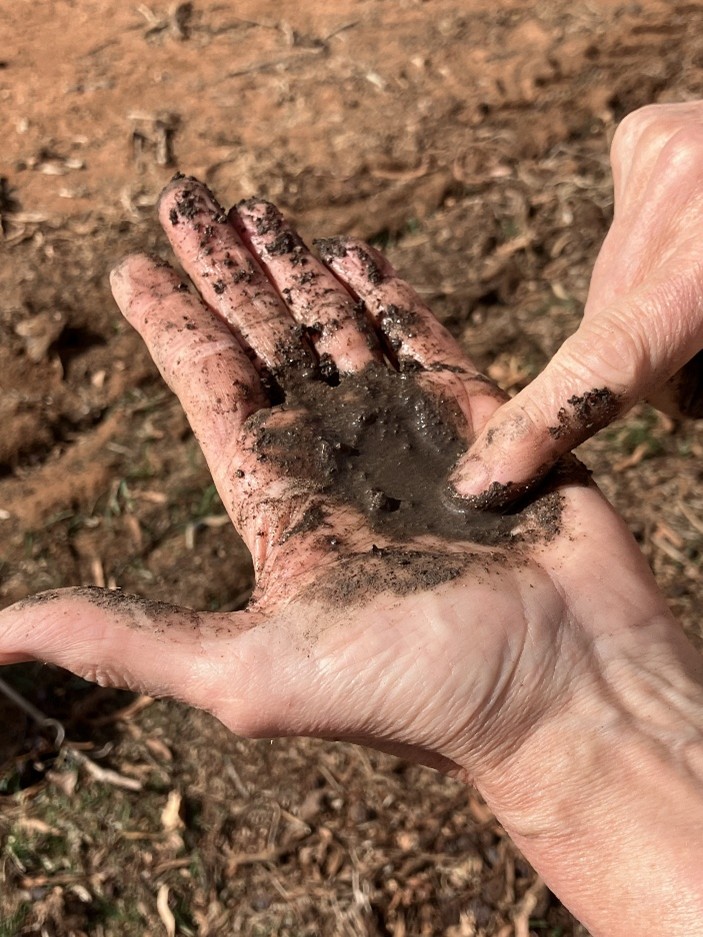
This can be used to help differentiate between sandy clay and light clay. Take a small amount of soil (about a teaspoon) and wet it up so it sits in a puddle in your hand. If sand grains are visible, it is sandy clay. If the puddle becomes discoloured, it is light clay (Figure 7).
Rods
Rods can be made to help identify heavier clay textures (Figures 8 and 9). Roll the soil into a tube shape and try and bend the rod. If the soil texture is light to light-medium clay it can be only rolled into rods. If it is medium or heavy clay, the rods can be bent into rings.