Knowing how many lambs – gold!
Alison Desmond, Agriculture Victoria, Benalla
Last year saw some very high scanning numbers due to green feed at joining, followed (for most) by low pasture availability for lambing. It was a stark example of how knowing what ewes were bearing multiples, singles and none – was like gold – to help make management decisions. This year (as with most) this information will also be invaluable, with scanning rates to date, at much lower numbers.
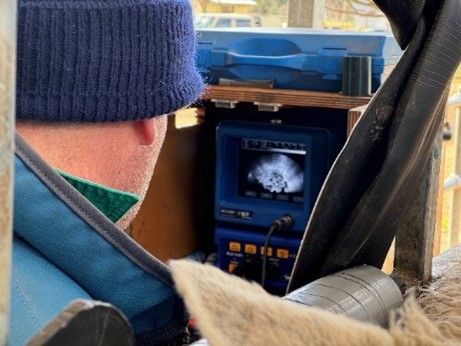
The greatest improvement in profit from investing in pregnancy scanning comes from scanning for multiples, removing the passenger (dry) ewes and managing the needs of single and multiple-bearing ewes based on the number of lambs they are carrying.
Pregnancy scanning for multiples is a vital management tool for optimum ewe and lamb survival, through managing nutritional demands with differential feed and paddock allocation and condition targets. It also enables you to understand where the biggest opportunity is to improve the reproductive performance of your flock – conception rate, scanning percentage or marking percentage.
Scanning for multiples will:
- forecast potential lamb numbers for both financial and feed budgeting
- identify dry ewes to remove (may provide some cash flow) and increase reproduction rates
- allow more flexibility in poor conditions, by prioritising resources (feed, shelter and labour) to the different groups of ewes
- in good years, identifying and managing single bearing ewes can reduce lamb loss from dystocia
- troubleshoot for possible causes of failed reproduction
- enable allocation of resources to optimise lamb and ewe production.
Does it pay?
Australian Wool Innovation (AWI) and Meat and Livestock Australia (MLA) have produced new extension material that clearly demonstrates the value in pregnancy scanning to increase farm profitability.
A benefit-cost-analysis (conducted in 2024) demonstrated that pregnancy scanning for multiples (and implementing optimal management to ewes based on this) is profitable across all regions, breeds and times of lambing. The average benefit was estimated at $5.55 per ewe scanned, and an average return on investment of 400%. Scanning for pregnancy status only returned an average of $2.65 per ewe scanned.
In the winter dominated rainfall regions, the value of scanning was higher when lambing in autumn and slightly less if lambing in spring. This is because empty ewes in the earlier lambing flocks are identified before the main feed shortage, which increases the value of adjusting their nutritional management or from selling them after scanning. The lower value of scanning associated with later lambing does not equate to lower profit overall, as these flocks are often the most profitable because of the better match of pasture supply with the nutritional requirements of the ewes.
To capture the benefits of pregnancy scanning, producers need to use information collected at scanning and make management changes based on this. This includes removing the dry ewes (passengers) from the breeding flock and managing singles and multiple bearing ewes differently to meet their separate nutritional needs. Table 1 shows the breakdown of where the benefits can be made.
Table 1: The value of management options from scanning ($/ewe)
Management | Scanning for | Scanning for pregnancy status | $/ewe |
|---|---|---|---|
Sell the passengers | Yes | Yes | $1.85 |
Feed allocation: | |||
to pregnant ewes | Yes | Yes | $0.80 |
to multiples | Yes | No | $1.00 |
Paddock allocation | Yes | No | $0.95 |
Replacement selection | Yes | No | $0.95 |
Total value per ewe | $5.55 | $2.65 |
|
Source: The value of pregnancy scanning: A benefit-cost analysis.
Capitalising on the results
Removing passengers
Identification of passengers (ewes scanned empty) is essential, as it allows those that have failed to conceive to be managed differently to those scanned with single or multiple lambs.
By removing passenger ewes from the breeding flock, feed resources can be prioritised to pregnant ewes. Ewes may scan empty due to the impacts of management factors such as poor ewe and ram nutrition prior to joining or condition score (CS) at joining. If more than 15% of ewes are not pregnant in the target joining time, an investigation to determine the reason for ewes failing to conceive is necessary. Offloading dry ewes may supply some needed cash flow.
Managing nutritional requirements
The nutritional requirements between single and twin bearing ewes are quite different, therefore you are essentially managing very different animals. For example, feeding single bearing ewes too much during pregnancy can lead to large lambs and problems with dystocia.
Feeding twin bearing ewes too little can lead to low lamb survival (due to low birth weight and milk production), low growth rates, poor ewe recovery and potential pregnancy toxaemia.
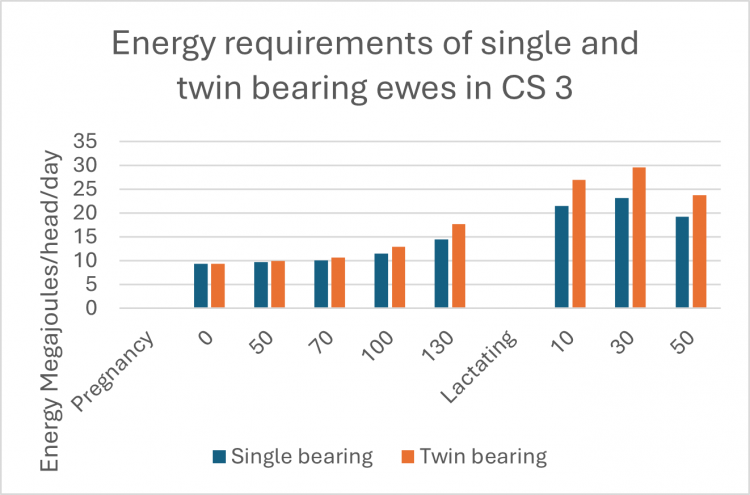
The figure below shows the energy requirements of single and twin bearing ewes (60kg ewes in CS 3) from the beginning of pregnancy (dry) to day 50 of lactation (Source Lifetime Ewe). The higher energy needs of the twin bearing ewes increase in late pregnancy and during lactation to 25-28% more than single bearing ewes. Or compared to dry ewes, in late pregnancy (last 6 weeks), single bearing ewes need almost 40% more energy and twin-bearing ewes need 76% more.
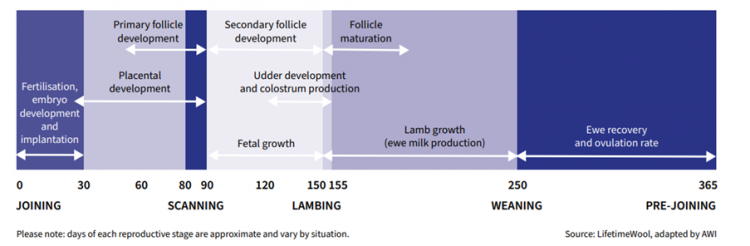
This is why is why scanning for multiples and managing the reproductive potential of your ewes can make such a difference. The more you know about your sheep the better the results can be.
The figure above shows the reproductive stages of the ewe and key events i.e. scanning should occur between 80-90 days after joining (when rams go out with the ewes).
Condition score (CS) targets
The Lifetime Ewe project developed some clear targets for CS of ewes over pregnancy for good lambing performance. Condition scoring is a quick and reliable tool for managing ewes to meet production targets and enable timely decisions to optimise reproduction rates. The essential times to condition score are at weaning, pre-joining, pregnancy scanning and lamb marking. The autumn 2024 edition of SheepNotes works through how to condition score plus resources listed at the end.
In the lead up to scanning, producers should be targeting a CS of 3 for all ewes from joining to scanning.
The CS during early to mid-pregnancy (Day 1-90) affects lamb birth weight, fleece weight and fibre diameter, and these effects on the developing lamb are permanent. Ewe nutrition in early pregnancy will affect the ability of the ewe to reach late pregnancy condition targets.
Starting from a very low condition in early pregnancy will not give the ewe enough time to gain condition in time for lambing, potentially reducing the chances of lamb and ewe survival. It’s much more cost effective to maintain CS than to put CS on, so if your ewes are in good condition make sure you keep them there.
When ewes have been scanned, assess single and multiple bearing ewes separately for condition score. Targets from scanning through to lambing is CS 3 for single bearing ewes and CS 3.3 or better for multiple bearing ewes.
Other factors
Other key factors for lamb survival especially of multiples include shelter and privacy. Twins and triplets are generally born lighter and so are more at risk in poor weather. Choosing paddocks that have better feed availability and/or shelter is always a balance.
Ewes that give birth to twins in close proximity to each other can get interrupted during the bonding period leading to mismothering of lambs. Mismothering can also occur due to disruption when feeding. Producers can manage paddock and mob size to reduce the risk of this. Mob sizes of twin bearing ewes has been recommended to be between 100-250 ewes per paddock.
Regular feed budgets and monitoring ewe condition will help to ensure targets are being met between scanning and lambing.
Resources:
This article references information from the recently released AWI MLA pregnancy scanning extension material on pregnancy scanning. You can find more information, guides and a ewe management and pregnancy scanning checklist