Water first approach works
David Mckenzie, Yea
David Mckenzie farms merinos and Angus cattle in North East Victoria near Yea. The home block is 200 ha with another 170 ha at Murrindindi and 240 ha leased locally.
David started leasing the Yea block in 2003. The farm was very run down and the owner was interested in making improvements, so was open to suggestions and negotiating lease costs to do this.
David decided the first priority was water, then soil fertility and then pasture improvement. The farm had a large 8-9 ML dam at the bottom of the farm and some scattered small ‘sheep’ dams. The local belief was the soil type didn’t allow for bigger dams as the soil is ‘gritty’ gravel and leaks if dams are made too deep, hence numerous small dams.
Stock
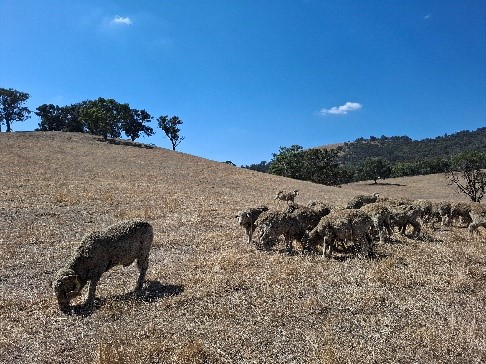
Most farmers in the area run cattle, but David has always and still does have, a love for merinos. This is despite having laboured through footrot, lice and Ovine Johnes disease. He shears 2000 merinos and runs 130 Angus cows. Some of the best steers are kept and grown out as bullocks to sell at 390-420 kg carcase weight. Both cattle and sheep start lambing/calving on July 10.
Water
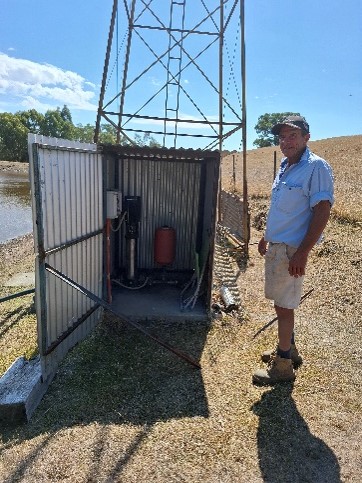
The first improvement was to install tanks with 37,000 L capacity on a hill above the house. Water is pumped up from the large dam and gravity fed to troughs across the farm. The tanks also provide water for the garden. The house is at 270 m and the tank at 330 m above sea level. The pump is electric and can be set to automatic with a timer and shuts off when tanks are full. The pump can run for about 4 -7 hours/day depending on cattle numbers and time of year. Troughs are spread across paddocks to reduce track formation, leading to erosion. David prefers the concrete troughs as these, and the inflows, are less likely to be damaged by cattle. Though the system is working really well, things can still go wrong and need to be monitored regularly. A broken pipe or inflow valve could lead to a big loss in water if not picked up and fixed quickly.
Tanks on the hill
In Figure 2, the red circle marks the location of a trough on the opposite hill from the tanks, only just below the height of the troughs but has good water pressure.
David purchased the property in 2017 and has installed another tank (total capacity of both tanks is 64,352 l and new dams as back up. He has cleaned out some of the existing dams to be 25 to 50% bigger.
Kerri Goschnick, Agriculture Victoria, has provided advice on improving the water supply for the farm. David has learnt he can build bigger dams without them leaking, despite the gravelly soil, if he does this in the wet years. He has since built 5 new deeper dams which don’t leak.
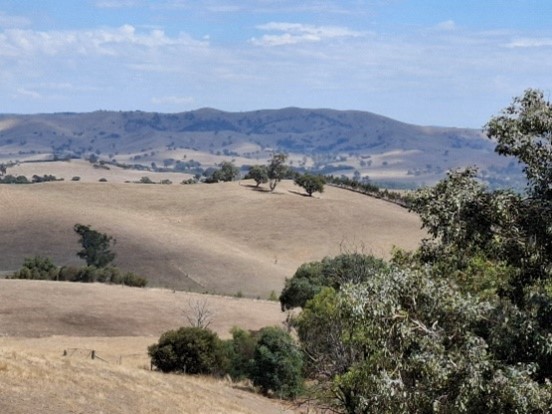
Paddocks are quite small – 2 are 30-40 ha but the rest about 10 ha. The gravity fed trough system and back up dams have therefore allowed him to have more smaller paddocks with reliable clean water. This helps with grazing management and in reducing erosion. Research also indicates cattle may have better growth rates when water is provided in troughs rather than dams.
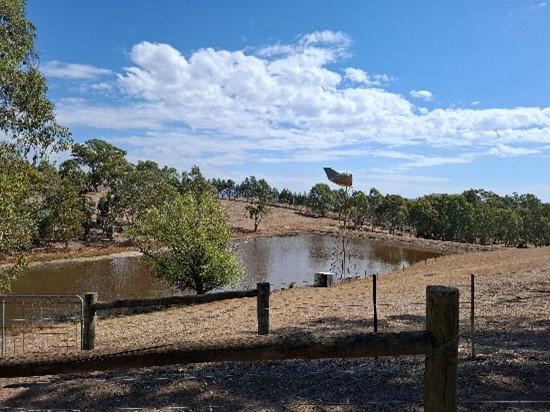
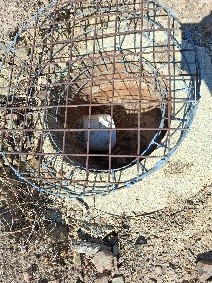
The most recent dam is about 3 Ml and is situated with a huge catchment, so on advice he installed a trickle pipe which releases water before it overflows the bank. This reduces erosion of the banks when there are high inflows.
Pastures
David improved soil fertility with superphosphate, starting when he was leasing the property, and maintaining since. Improved pastures are cocksfoot and Phalaris, and some Wimmera ryegrass (when he can get it). Cattle are useful in pasture management and establishment as they don’t graze as low as sheep, but also good at managing dry feed (in the good years).
Erosion
The country is prone to erosion, so David has been planting trees in shelterbelts and also as single trees in erosion gullies. Running cattle means the guards have to be robust. Subdividing hilly paddocks also helps in managing the erosion as they can be grazed more strategically.
Summary
- The hilly country provides plenty of opportunity to capture large amounts of water
- Gravity fed troughs have enabled smaller paddocks, so with increased soil fertility and improved pastures, grazing management and pasture production has improved whilst limiting soil erosion
- The installation of the tanks and gravity fed troughs has allowed accessibility to good clean and fast flow water to many paddocks across the farm
Building the infrastructure is certainly costly but initiating some of the core parts in the lease phase has helped to build this up over time.