Getting pastures back on track – post fire or drought
Lisa Warn, Lisa Warn Ag Consulting
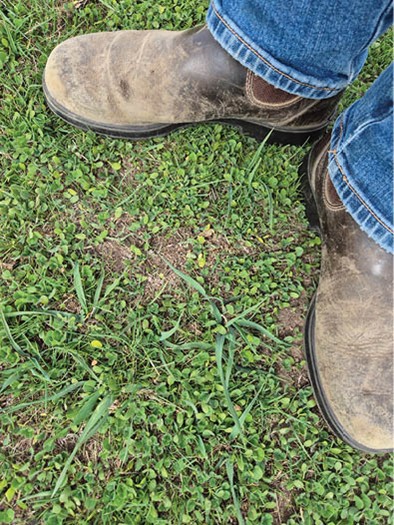
With most parts of the state impacted by drought over the past 2 years, and some areas by fire in January 2026, many producers are asking, ‘Will my pastures recover and what can I do now?’
Many of the important decisions and options for boosting pasture recovery following drought and fire are similar.
Use stock containment areas/sacrifice paddocks
In drought, use of stock containment areas or sacrifice paddocks allow adequate ground cover to be kept on other paddocks to reduce risk of loss of valuable topsoil, pasture species, organic matter and nutrients, through wind or water erosion. Similarly, after fire, keep stock off burnt paddocks to protect what ground cover you have left.
After the autumn break, wait for several weeks before releasing stock from containment areas/sacrifice paddocks, to allow pastures to recover some leaf area before grazing (e.g. 800 kg DM/ha green, 2 cm green).
Don’t rush into re-sowing – assess pastures
Assess paddocks individually to assess the chance of the pasture recovering.
Many districts received enough rain in early March to get some germination of sub clover, other annuals and for surviving perennial grasses to shoot. Make some assessments now to determine what action to take.
If you have at least 10 plants/m2 phalaris, cocksfoot and fescue or at least 20 plants/m2 for perennial ryegrass you don’t need to re-sow (Note: 1 plant per square foot is close enough to 10 plants/m2). You can use fertiliser, grazing tactics, and perhaps some herbicide manipulation on weeds, to improve the perennial grass content over time (see summer 2025 edition of Sheep Notes for details on pasture manipulation options available on the Agriculture Victoria website).
Observations of your paddocks last spring can also help your decisions about what to do this year. After spring rain in 2025, many producers were surprised by the number of desirable species that had survived the drought. Common observations were that phalaris survived well, perennial ryegrass did not, and barley grass was very dominant. If you observed gaps in the pasture last spring, these pastures could warrant re-sowing/over-sowing.
Paddocks used as sacrifice paddocks will be the highest priority for re-sowing. If paddocks were grazed very bare, topsoil and seed may have been lost. Pasture density and production will be reduced.
After fire, the level of pasture recovery will depend on the intensity of the burn and the species that were present. In many situations the pasture will recover but the density/carrying capacity may be reduced over the next 12 months. You can assess each paddock now if you have had enough rain, or monitor after the autumn break, to determine what action to take.
Paddocks that had short grass before the fire would have suffered a cool – moderate burn and pastures should recover. Well-established perennial grasses such as phalaris, fescue, cocksfoot, perennial ryegrass, as well as native grasses, will recover. Sub clover, broadleaf weeds and bent grass will recover. Annual grasses will have a reduction in viable seed, so you will see less barley grass and silver grass. Paddocks that suffered a hot burn (i.e. had long grass) will have reduced density/productivity and need to be monitored while those that suffered a very hot burn (e.g. adjoining bush, under hay bales) will need to be re-sown.
If you haven’t had enough rain yet to assess what species have survived, wait until the autumn break to determine what action to take. Another option is to water up a few spots in a paddock to see what comes back. To do this, form a metre square with soil bunded up to hold water, pour on 20 L of water (e.g. a drench drum of water). Come back a few days later and add another 20 L water. Then wait and assess.
Re-sowing options
If stock numbers are lower than normal, the need to boost feed supply may not be a priority. The priority may be to get some ground cover with some quick growing annual species on the drought/fire damaged paddocks you have assessed and prioritised. While stock numbers are lower and if you have the finances, this may be a good opportunity to sow perennial pastures in paddocks you had already planned to improve.
Sod-seeding (i.e. drill seed without any knockdown herbicide) is a technique which can be used to get something into the damaged paddocks early in autumn (as it is done before a full germination of weeds occur) to get some quick feed. This technique should only be tried with species that have vigorous seedlings such as annual ryegrass, Italian ryegrass or cereals like oats. See article from SheepNotes autumn 2024 on what-to-sow-for-quick-winter-feed. Sowing non-regenerating annual species is only a short-term solution – a perennial species will need to be sown the following year. Good weed control is essential before sowing perennial grasses such as phalaris, fescue or cocksfoot.
Nutrients
Consider recent soil tests and feed demand to determine fertiliser priorities. With less pasture grown during drought, less nutrients would have been used. Bought in feed can actually increase soil nutrient levels. This autumn, you could get away with not applying maintenance fertiliser to paddocks with a good fertiliser history (e.g. Olsen P 12–15 mg/kg). If stock numbers can be re-built this year (e.g. purchasing stock, bringing stock back from agistment),feed demand will be high, so plan to fertilise the lower fertility paddocks to increase autumn/winter growth and feed quality.
In some drought affected districts, the spring rain combined with reduced stock numbers, allowed producers to cut silage and hay. Silage and hay remove large quantities of potassium so this will need to be replaced in those paddocks.
Fire can reduce the amount of nitrogen and sulphur available to the pasture. Phosphorus is unaffected and potassium can increase. Paddocks that suffered from a very hot burn will have lost organic matter so as well as requiring re-sowing, applying products like chicken litter that contain a range of nutrients and organic matter, will help recover the productivity.