Polyphagous Shot Hole Borer Surveillance Program

What is polyphagous shot-hole borer?
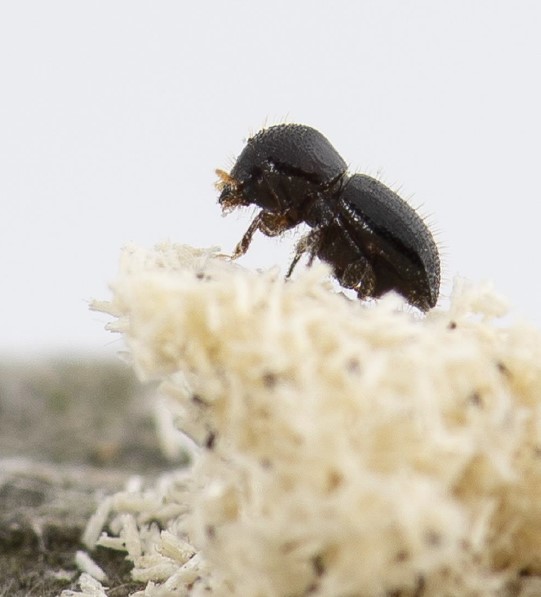
Polyphagous shot-hole borer (PSHB) is a tiny wood-boring beetle native to south-east Asia. It attacks a wide range of trees by tunnelling through tree trunks and branches. Eventually the beetles chew their way out of the wood leaving small (less than 1 mm) shot holes.
In 2021, PSHB was detected for the first time in Australia in Perth, Western Australia where an extensive management and containment program is under way. Polyphagous shot hole borer is not present in Victoria.
Why is it a pest of concern?
PSHB is highly invasive pest with hundreds of host species, many of which are commonly planted as street, amenity and ornamental trees. These include iconic trees gracing parks and botanic gardens.
Managing infestations through pruning or removal would significantly alter Melbourne’s urban landscape and undermine its identity as the Garden State. Trees provide critical urban benefits—shade, biodiversity, pollution mitigation, and aesthetic value. Their loss would reduce property values and increase energy costs for heating and cooling.
Internal trade impacts are also likely, as PSHB can infest wood as small as 2.5 cm in diameter. This will restrict the movement of woody plants and nursery stock across regions.
There is no effective chemical treatment for PSHB. The beetle spends most of its life inside wood, making insecticides ineffective. The best control strategy involves removing heavily infested reproductive host trees, pruning affected branches, and ongoing monitoring around high-risk sites.
What is the Polyphagous shot hole borer surveillance program?
The City of Melbourne, Royal Botanic Gardens Victoria and Agriculture Victoria are teaming up to conduct early warning surveillance to protect our precious parks and gardens from this pest. This includes sticky traps and lures used for monitoring and surveillance activities.
What is Western Australia doing?
Community outreach activities
Western Australia has announced the availability of capacity-building workshops, industry briefings and a wide range of free printed and digital communication materials. To order printed material please contact pshbpublicinformation@dpird.wa.gov.au
Visit the Department of Primary Industries and Regional Development for more information on PSHB in WA.
WA PSHB eNews
Polyphagous shot-hole borer eNews is produced by the response team at the Department of Primary Industries and Regional Development (DPIRD). If you have any questions or information to share, please email pshbpublicinformation@dpird.wa.gov.au.
Subscribe to Polyphagous shot-hole borer eNews.
Guide for managing PSHB in Perth
Just released is a guide to managing PSHB in the City of Perth, based on ground experience and insights
What are the signs of an infested tree?
Tree monitoring plays a key role in the early detection of PSHB. Unfortunately, the beetle is small and spends most of its life inside a tree trunk or branch, making it hard to spot.
Symptoms to look for that indicate the beetle could be present;
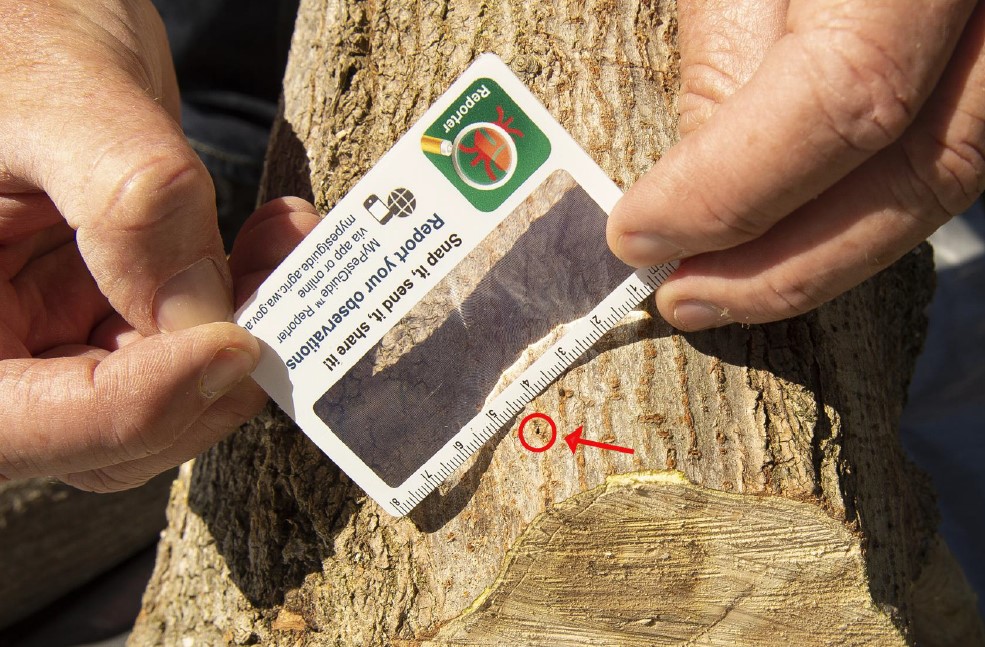
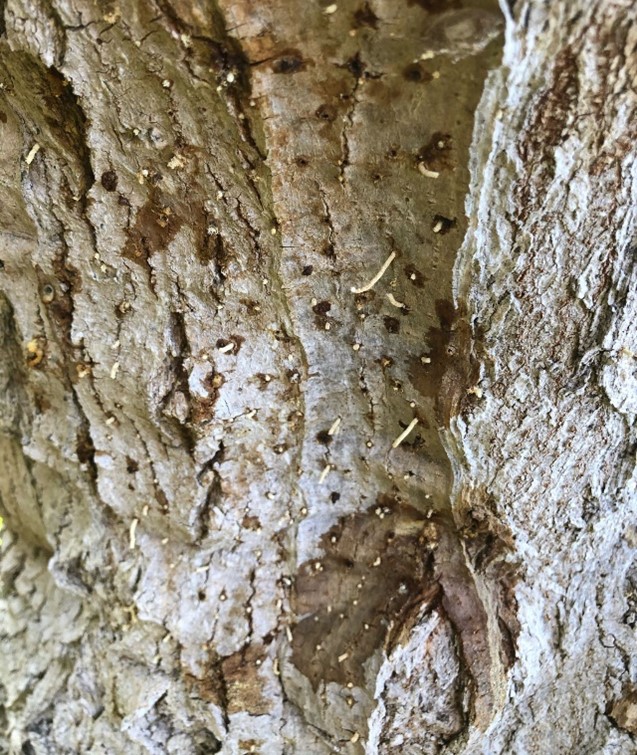
- Shot holes on the trunk or branches of host trees are the size of a ballpoint pen tip (less than 1 mm) (Figure 2).
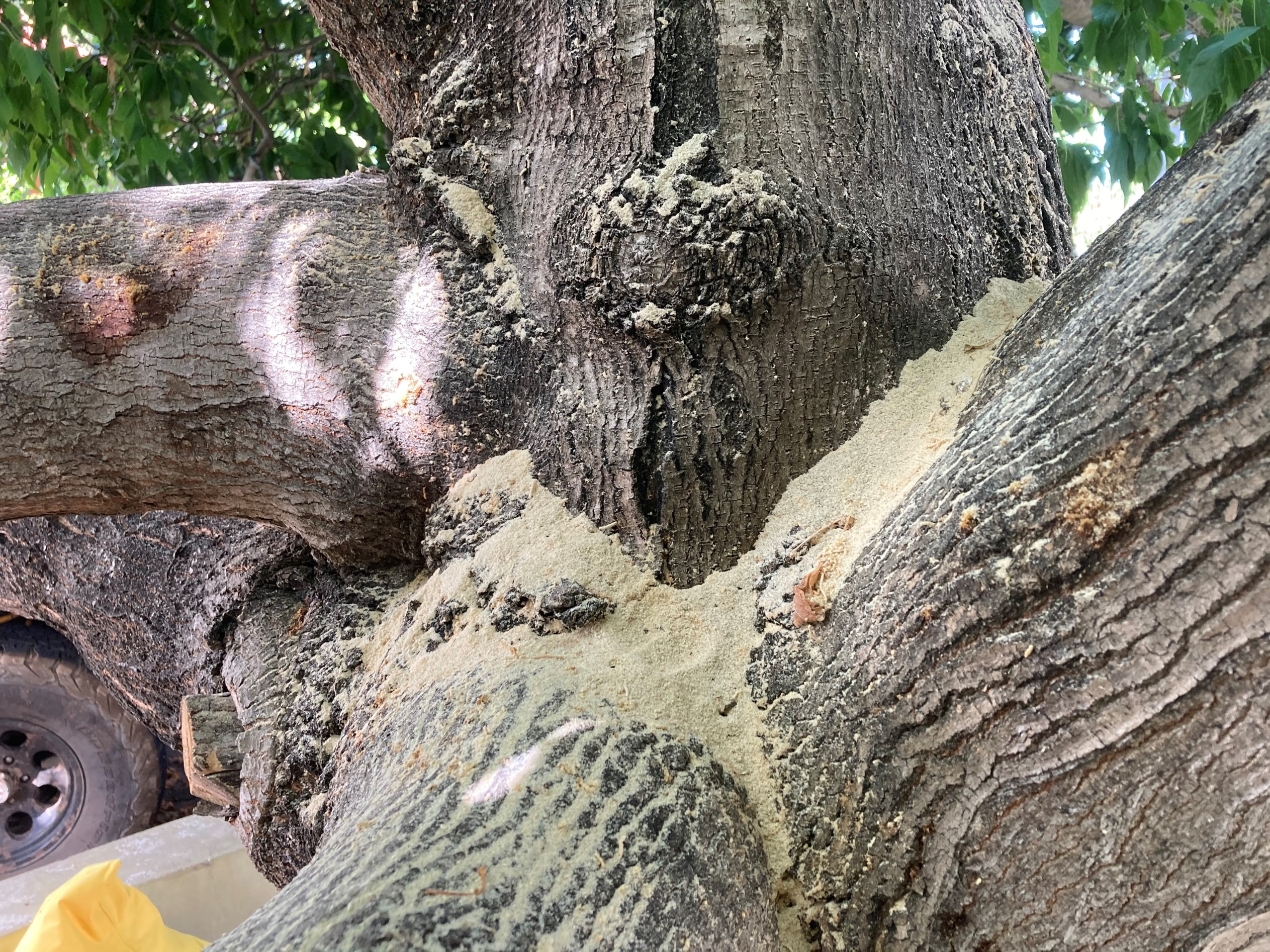
- Frass is fine powdery sawdust-like material produced by the beetles boring through the trees (Figure 3).
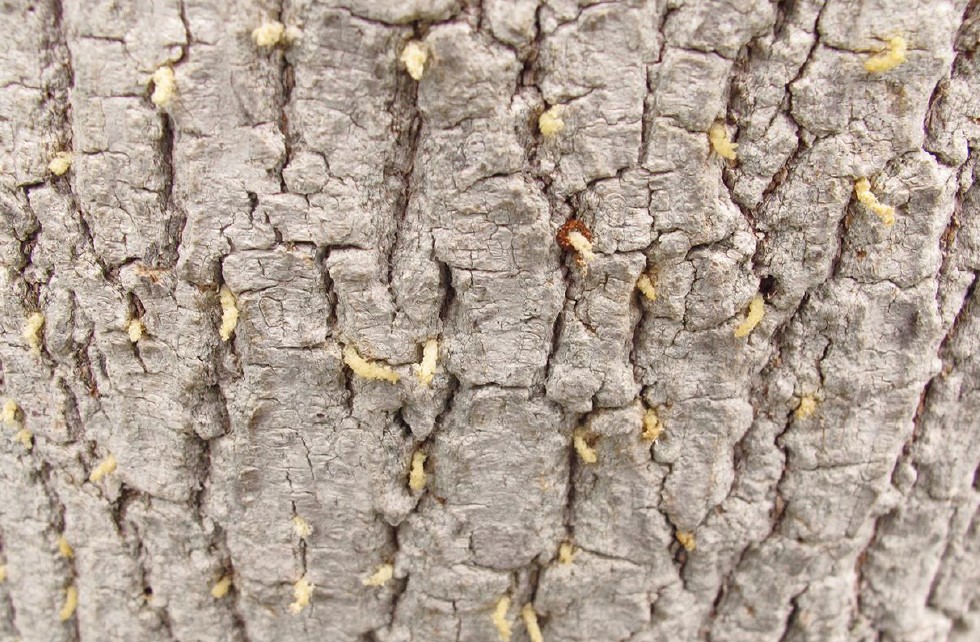
- Noodles are thin tubules of compacted frass emerging from shot holes. This is the sign that the tree is heavily invested (Figure 4).
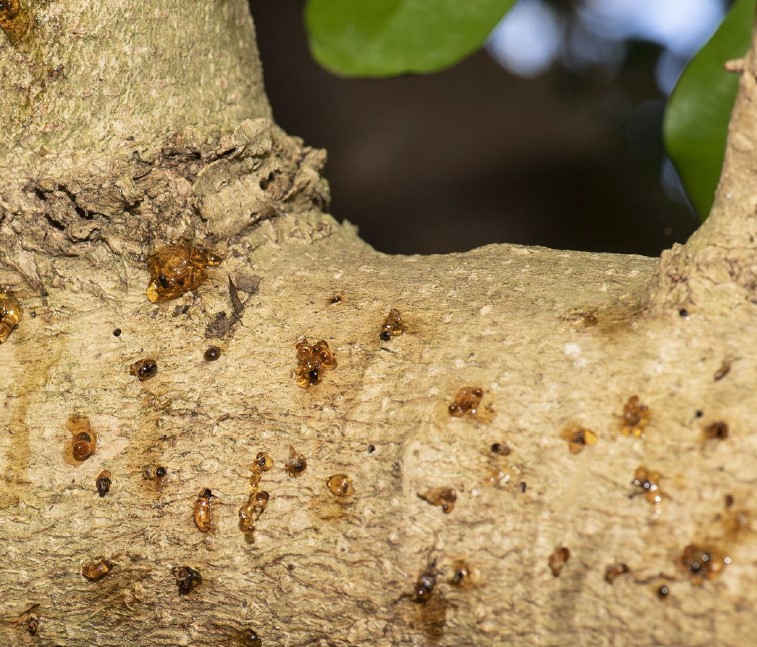
- Gumming is caused by excessive sap (resin) being pushed out of the shot holes. This usually indicates the tree is stressed (Figure 5).
- Staining of the outer bark around the shot holes is caused by excessive resin production (Figure 6).
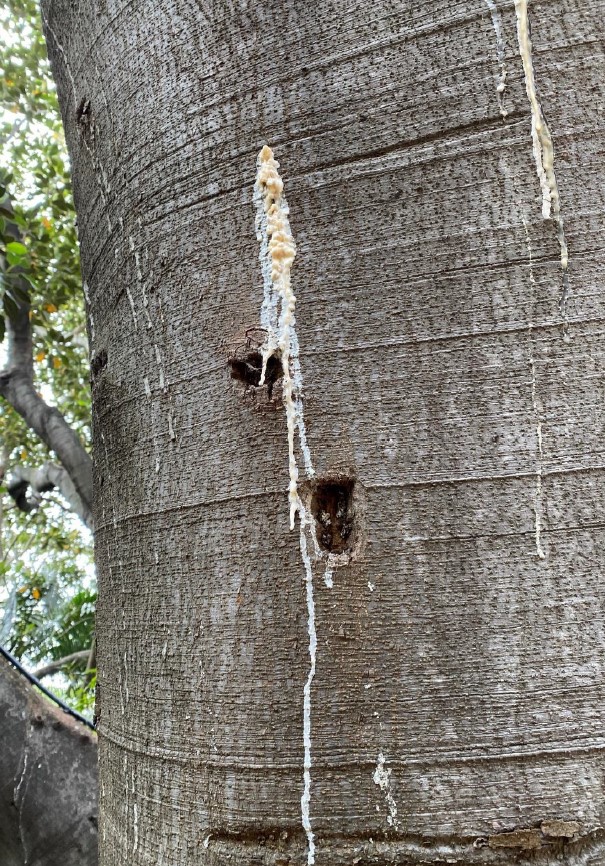
- Sugar volcanoes are caused by a sugary substance oozing from the shot holes. As it dries, it forms a white crystalline stain on the tree (Figure 7).
What trees are affected?
PSHB has a host range of more than 600 tree species. Certain tree species are preferred and are more likely to be heavily damaged through infestation.
WA has found 3 trees that are extremely susceptible to PSHB:
- Box elder maple (Acer negundo)
- Coral tree (Erythrina)
- Black locust (Robinia pseudoacacia)
Other trees with very high susceptibility in WA include:
- Poinciana (Delonix regia)
- Fig trees (Ficus)
- London plane tree (Platanus x acerifolia)
- White mulberry (Morus alba)
- Chinese wisteria (Wisteria sinensis)
- Castor oil plant (Ricinus communis)
- River she-oak (Casuarina cunninghamiana)
- Wedding bush (Ricinocarpos pinifolius)
What should I do if I think I have found PSHB?
REPORT IMMEDIATELY
Use our online reporting form
OR call the Exotic Plant Pest Hotline on 1 800 084 881.
Image credits
All photos courtesy of the Western Australian Department of Primary Industries and Regional Development.