Forest Watch Australia
About the Forest Watch program
 Forest Watch Australia is a national surveillance program for forest and timber pests. These pests pose a risk to native, plantation and urban amenity trees.
We conduct surveillance activities at high-risk areas across Victoria. These are locations where the pest is most likely to enter the country, such as shipping ports or importers of timber goods. Early detection of forest pests gives the greatest opportunity for eradication or containment.
Forest Watch is a formal partnership between the forestry industry, Plant Health Australia, and Commonwealth, state and territory governments.
What pests are we looking for?
Exotic longhorn beetles
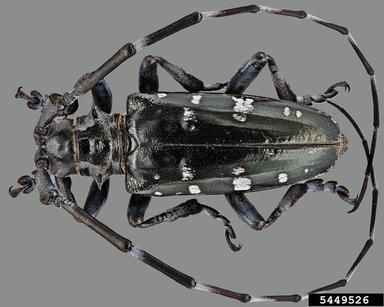
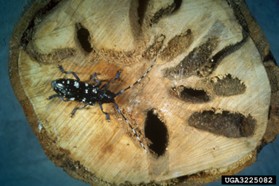
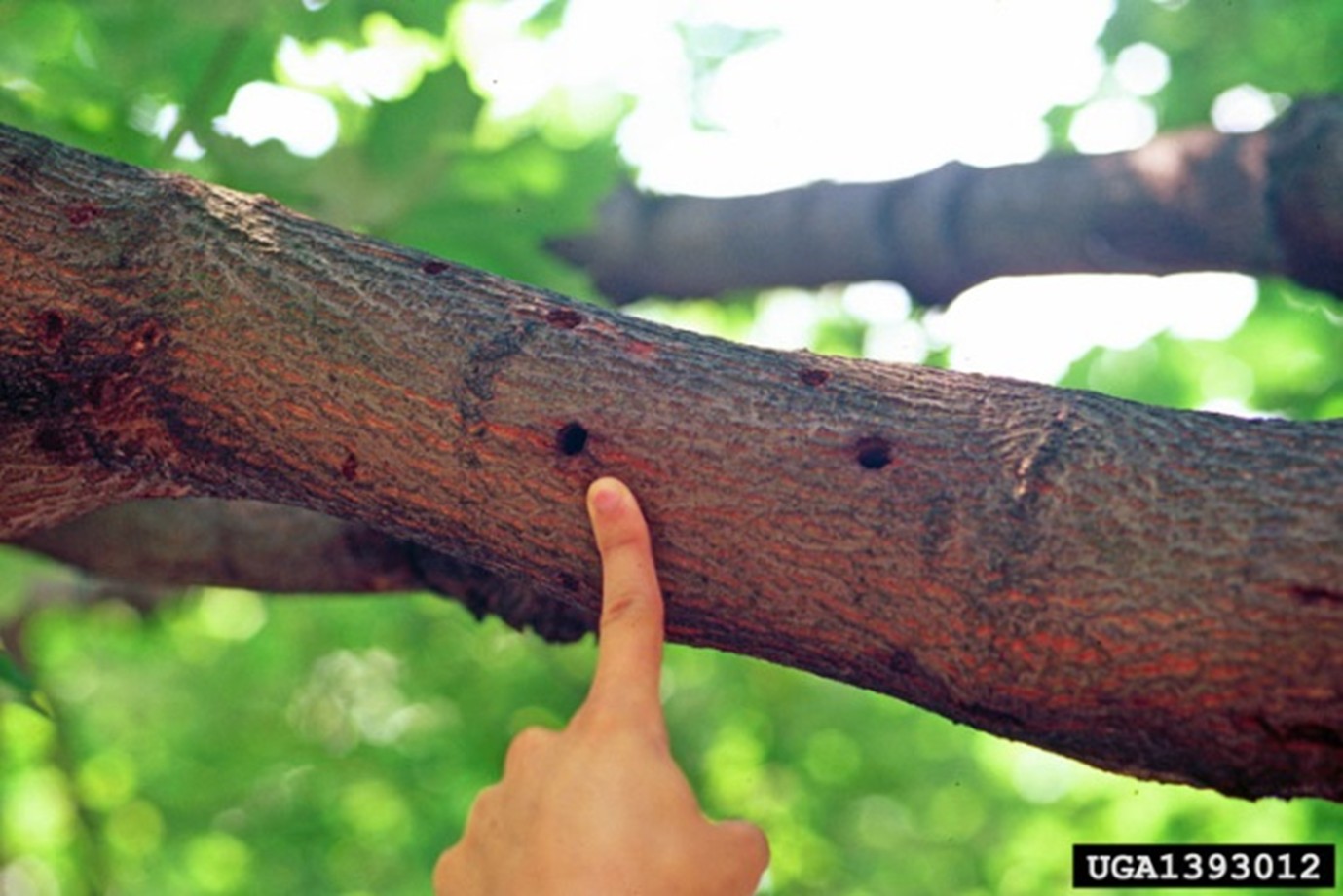
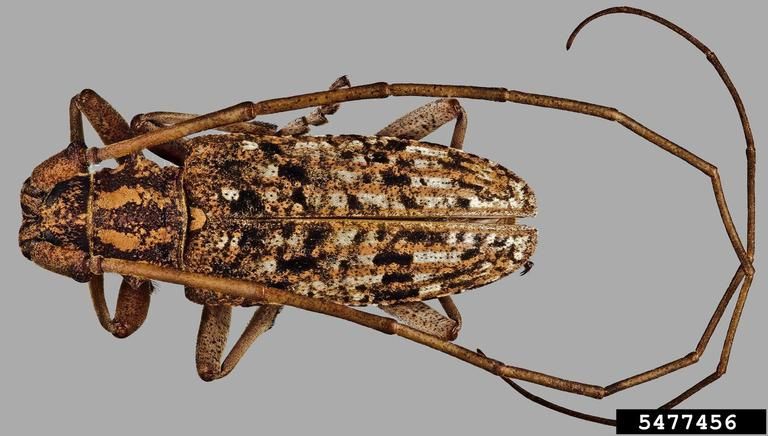
Exotic longhorn beetles (Figure 1) are wood-boring beetles that attack and cause significant damage or death to hardwood trees (Figures 2 and 3).
Sawyer beetles
Sawyer beetles (Figure 4) usually don’t harm healthy trees, but some exotic types can carry tiny worms called Bursaphelenchus nematodes. These worms block water from moving through the tree, which can eventually kill the tree.
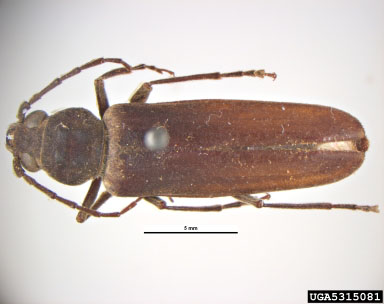
Burnt pine longicorn
Burnt pine longicorns (Figure 5) attack logs, stumps, and pine trees that are dead or dying, especially if they have been damaged by fire. These beetles can make it harder to use infested wood after a fire.
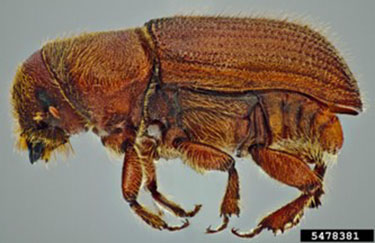
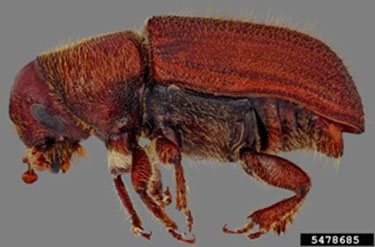
Exotic bark beetles
Bark beetles (Figures 6 and 7) are a threat to coniferous trees and shrubs. Pine trees are a preferred host. Beetles can weaken timber and may spread fungal pathogens that can cause significant disease in trees.
How we do surveillance
We conduct visual surveillance and trapping to detect forest pests.
Traps are designed to attract and capture specific insects.
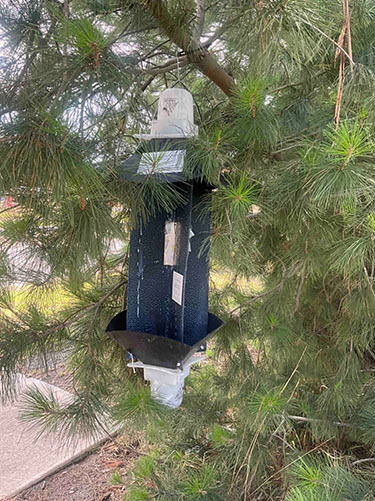
Cross-vane panel traps (see Figure 8) are used to capture a variety of forest pests. The trap has lures and collection buckets. The bottom bucket contains chemicals to preserve specimens.
Chemicals
Traps use different chemicals, which may include:
- lures to attract pests
- fluids to collect and preserve specimens
- coatings that make the trap surface slippery to improve capture.
It is advisable not to touch the traps or contents, due to the chemicals. Further details about the specific chemicals in use are detailed on the trap.
Contact the Agriculture Victoria Customer Contact Centre on 136 186 for further information about the traps.
For urgent advice about chemicals, contact a poisons information centre on 13 11 26 (Australia-wide) or a doctor.
Reporting an unusual plant insect pest or disease
Report any unusual plant pest or disease immediately using our online reporting form or by calling the Exotic Plant Pest Hotline on 1800 084 881. Early reporting increases the chance of effective control and eradication.
Please take multiple good quality photos of the pests or damage to include in your report where possible, as this is essential for rapid pest and disease diagnosis and response.
Your report will be responded to by an experienced staff member, who may seek more information about the detection and explain next steps.
Report onlineImage credits
- Figures 1, 4, 6 and 7: Steven Valley, Oregon Department of Agriculture, bugwood.org.
- Figure 2: E Richard Hoebeke, Cornell University, bugwood.org.
- Figure 3: Dennis Haugen, USDA Forest Service, bugwood.org.
- Figure 5: Pest and Diseases Image Library, bugwood.org.
- Figure 8: Agriculture Victoria.