Victorian exotic fruit fly surveillance program
About the Victorian exotic fruit fly surveillance program
The Victorian exotic fruit fly surveillance program (VEFFSP) aims to provide early and timely detection of exotic fruit fly species. These species of fruit fly are new to Australia or new to Victoria and are some of the world’s most damaging horticultural pests.
We conduct surveillance activities at high-risk areas across Victoria. The VEFFSP helps us detect new threats early. And this gives us the greatest chance to eradicate or contain them.
The VEFFSP also provides data on the presence or absence of fruit fly species. ‘Evidence of absence’ data supports market access, both within Australia and overseas.
What pests are we looking for?
Mediterranean fruit fly
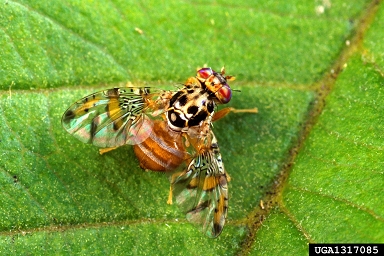
Mediterranean fruit fly (Ceratitis capitata) (Figure 1) attacks a wide range of fruits and fruiting vegetables. It can decrease production and make fruit inedible.
Oriental fruit fly
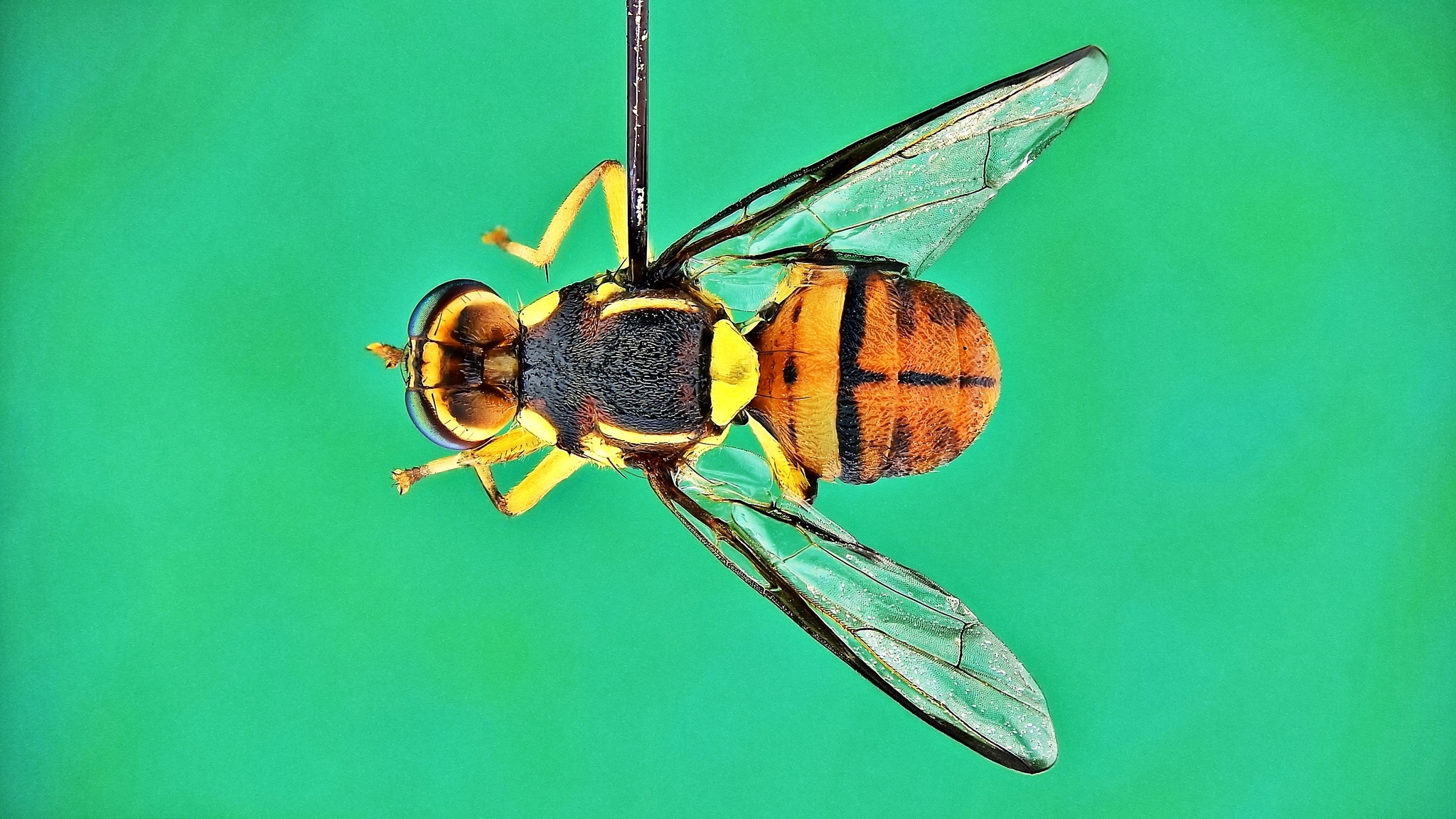
Oriental fruit fly (Bactrocera dorsalis) (Figure 2) is one of the world's most damaging horticultural pests. It impacts over 400 varieties of fruit and vegetables.
Melon Fly
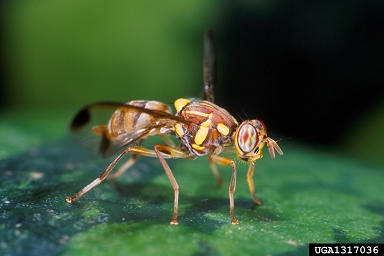
Melon fly (Zeugodacus cucurbitae) (Figure 3) attacks a range of fruit and fruiting vegetables. These include melons, cucumbers, pumpkins, beans and tomatoes.
How we do surveillance
Lynfield traps (Figure 4) are used to lure and capture fruit flies.
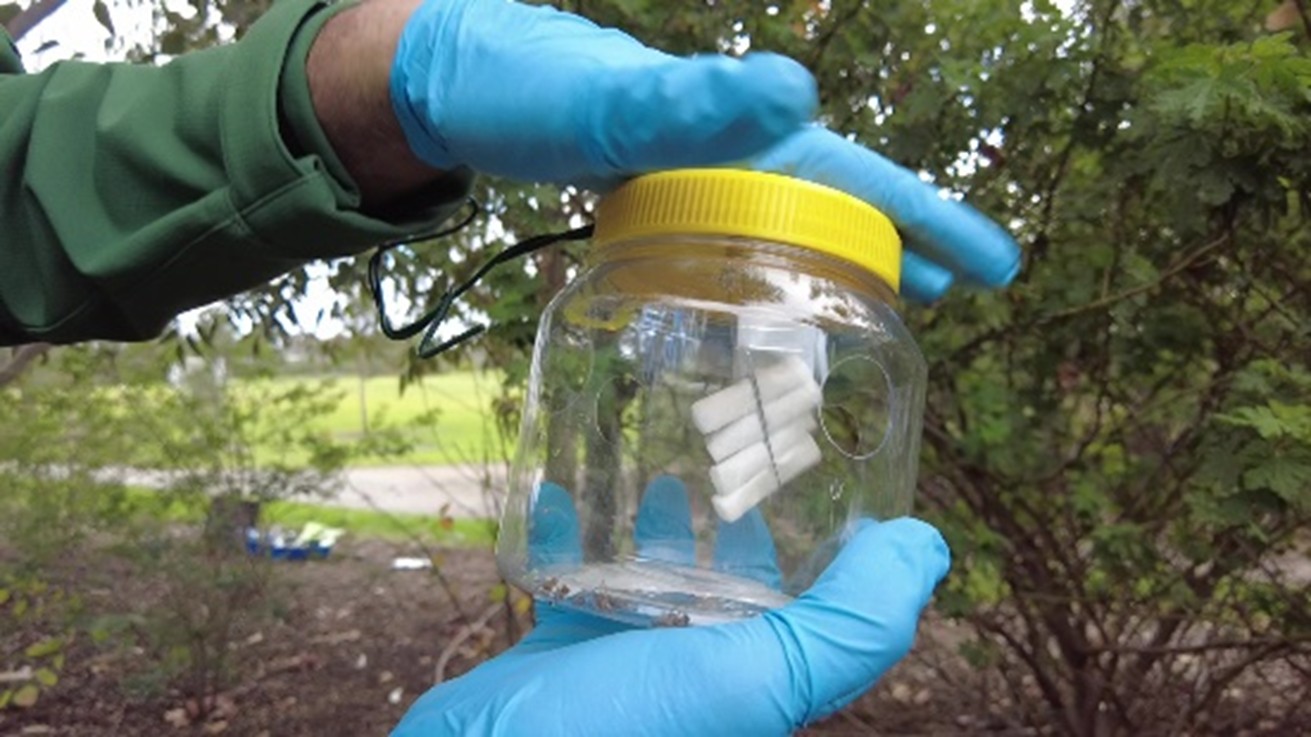
The traps use a lure and insecticide to attract, knock down and capture fruit flies. Traps lids may be red, white or yellow, depending on the targets.
Chemicals
Fruit fly traps use 2 different chemicals:
- Lures to attract pests
- Insecticides to quickly and effectively knock down insects that enter the trap
Be advised, do not touch the traps or contents due to the chemicals. Further details about the specific chemicals in use are detailed on the trap.
Contact the Agriculture Victoria Customer Contact Centre on 136 186 for further information about the traps.
For urgent advice about chemicals, contact a Poisons Information Centre on 13 11 26 (Australia-wide) or a doctor.
Reporting an unusual plant insect pest or disease
Report any unusual plant pest or disease immediately using our online reporting form or by calling the Exotic Plant Pest Hotline on 1800 084 881. Early reporting increases the chance of effective control and eradication.
Please take multiple good quality photos of the pests or damage to include in your report where possible, as this is essential for rapid pest and disease diagnosis and response.
Your report will be responded to by an experienced staff member, who may seek more information about the detection and explain next steps.
Report onlineImage credits
- Figures 1 and 3: Scott Bauer, USDA Agricultural Research Service, bugwood.org.
- Figure 2: Copyright cdhsiao, iNaturalist CC BY-NC 4.0.
- Figure 4: Agriculture Victoria.