Exotic longhorn beetles
EXOTIC PEST – Not wanted in Australia
The Asian longhorn beetle, ALB (Anoplophora glabripennis) and citrus longhorn beetle, CLB (Anoplophora chinensis) pose serious threats to a wide range of hardwood trees, coniferous trees and shrubs and commercial tree crops such as citrus and stonefruit. Feeding can cause extensive internal damage, eventually killing the tree.
Keeping exotic longhorn beetles out of the country is a national priority.
Have you seen this pest?
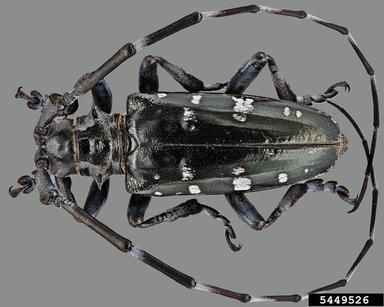
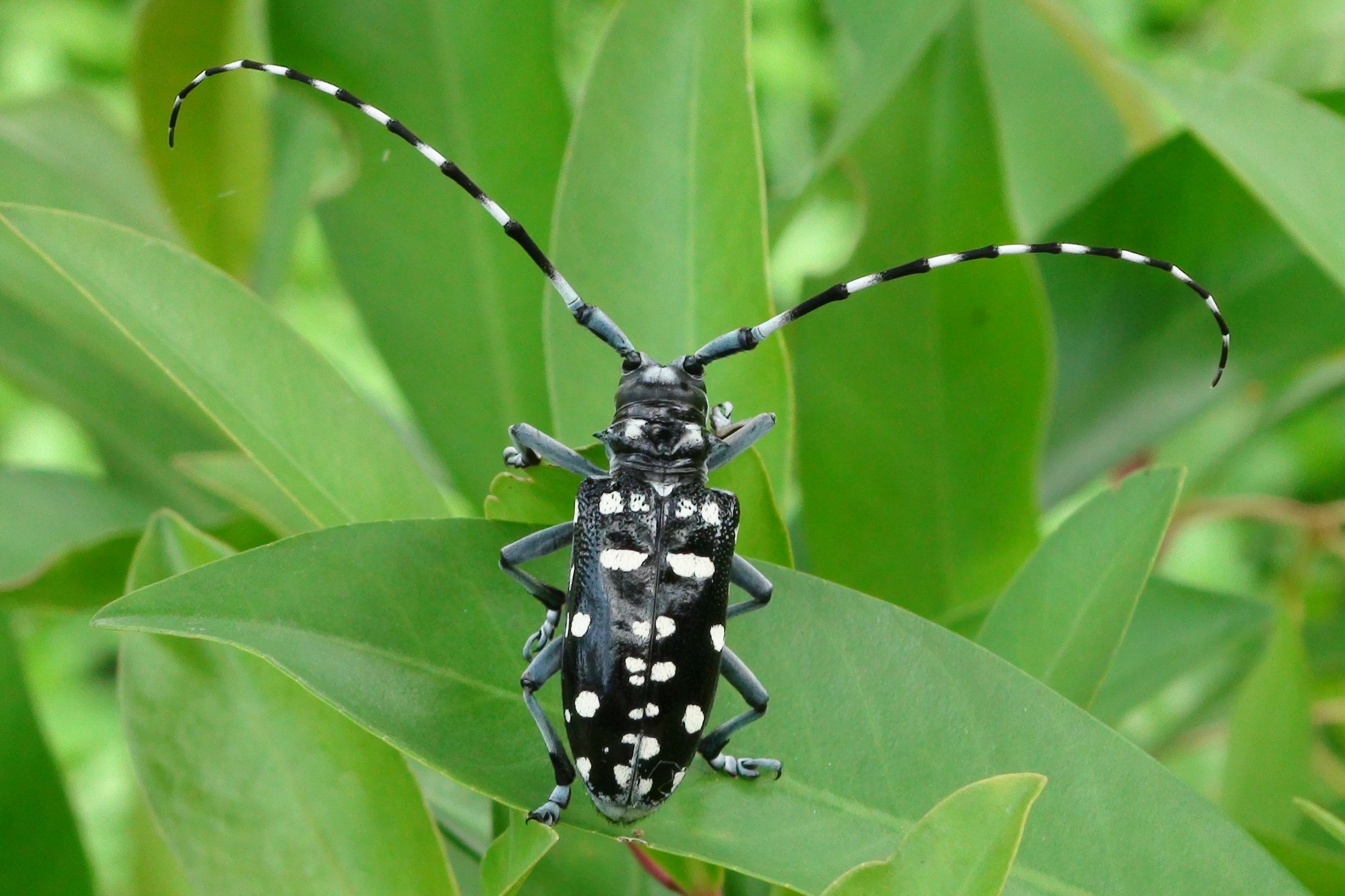
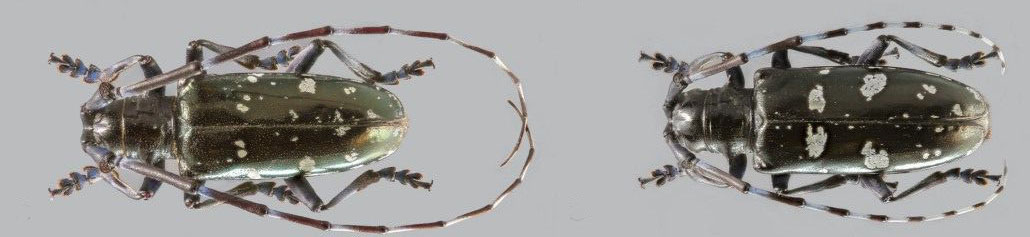
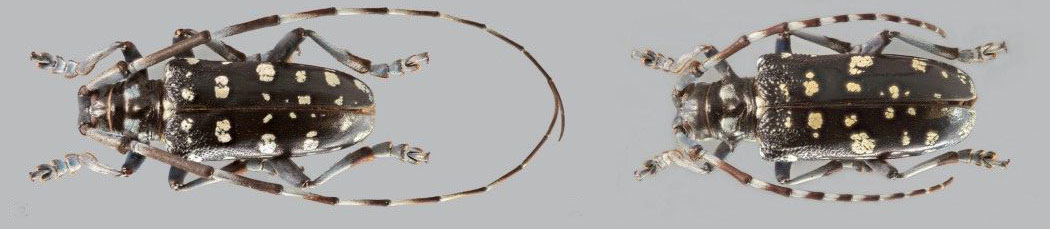
- Adults grow up to 39 mm and are characterised by having antennae longer than their body (Figure 1).
- Adults can be found in tree canopies or around exit holes in the trunks and branches of trees.
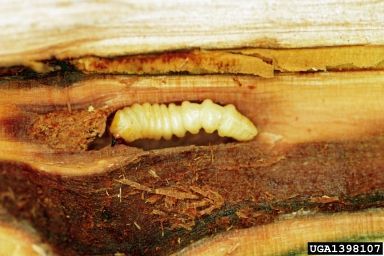
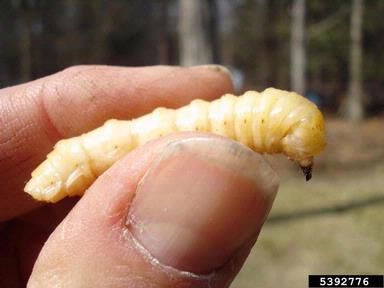
- Larvae are yellowish-white, legless grubs which can grow up to 50 mm long and are found in tunnels of host trees (Figures 7 and 10).
What should I do?
- Report immediately.
- Share your photos with us using the online public reporting form.
- Call the Exotic Plant Pest Hotline 1800 084 881.
- Please take good quality photos of the pest and/or damage to include in your report. For tips see How to take good quality photos for a report.
Why is it a pest of concern?
- Longhorns are wood-boring beetles that target hardwood trees and pose a serious threat to Australian forestry and agricultural industries.
- Damage is caused by larvae that bore into living wood, reducing the quality and value of the wood and causing the death of the tree.
- Both species are able to feed on numerous host trees, so the availability of host plants is not a limiting factor.
- The wide host range means that native plant species could be at risk.
Where to look
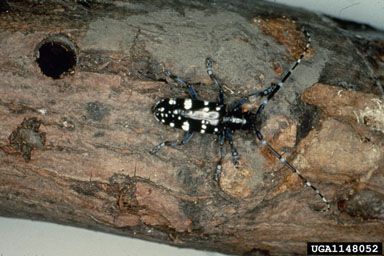
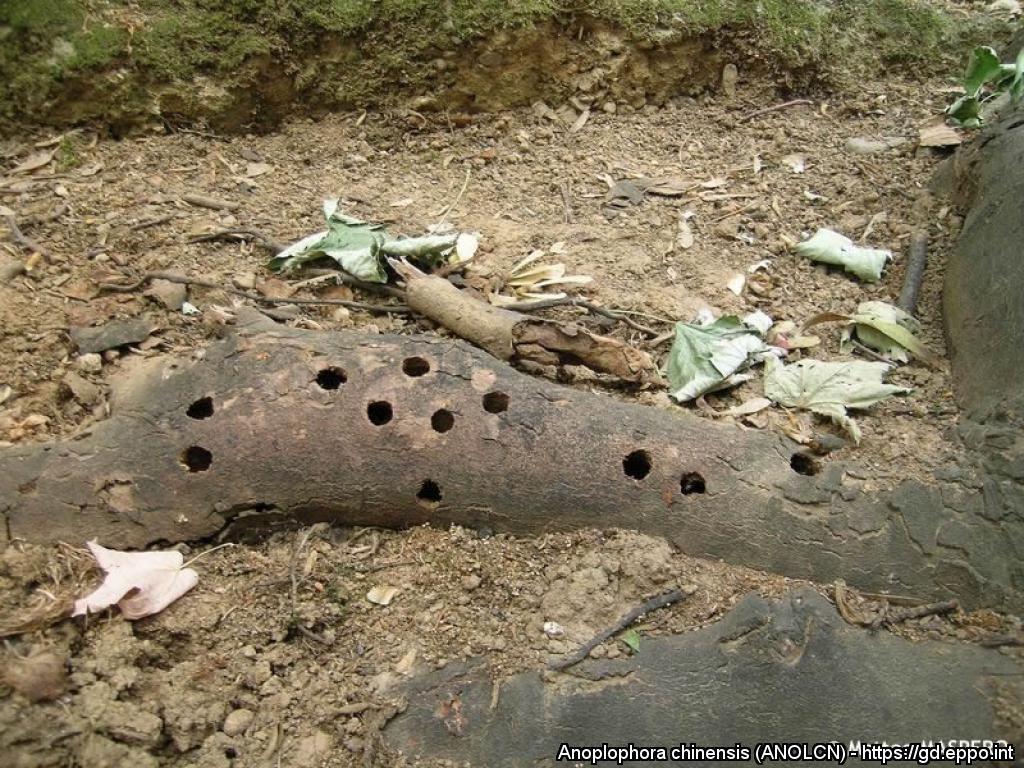
Adult beetles can be seen around exit holes on trunks and large branches (Figure 2). In spring and summer they can be seen flying in tree canopies, searching for a mate.
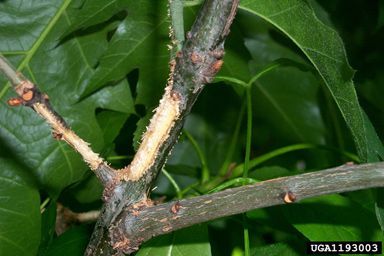
Signs of longhorn beetle damage are wilting foliage, scars from females chewing pits into the surface of the wood to lay eggs under the bark (Figure 3) and stripping of the bark on twigs and small branches due to feeding (Figure 4).

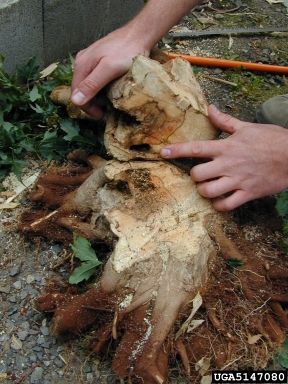
ALB exit holes, and other signs of infestation, occur in the upper part of the tree canopy, tree trunk and main branches. In contrast, CLB activity occurs closer to the ground, with exit holes and frass piles often seen in exposed roots (Figure 5) or around the base of tree trunks (Figure 6).
Larvae and pupae may be found in tunnels in host trees or fallen timber, firewood, timber pallets, logs, lumber or other imported wood from countries where the beetle is established (Figure 7).
Pest profile
Appearance
Adults
- Large beetles ranging from 17–39 mm long, with females larger than the males.
- Both sexes have 11 segmented antennae with alternating black-and-white banding. The antennae of the male are 2 or more times longer than its body, while the female’s are only slightly longer than the body (Figures 8 and 9).
- The hard black shiny forewings are covered with white-yellow irregular spots that are highly variable.
- The legs and the underside of the body have a grey-blue iridescent tinge
- ALB can be distinguished by the smooth and shiny wing cases (elytra), while CLB has tubercles (small bumps) on the upper part of the elytra. An alternative name for CLB is rough-shouldered longhorn beetle.
Larvae
- Larvae are creamy-coloured, yellowish or white grubs with 10 distinct segments and a large black head with a strong pair of mandibles (Figure 10).
- Fully grown, they can be 56 mm long and can weigh 1 gram.
- ALB and CLB larvae are very similar in appearance and can only be readily distinguished by microscopic examination of the mouthparts.
Pupae
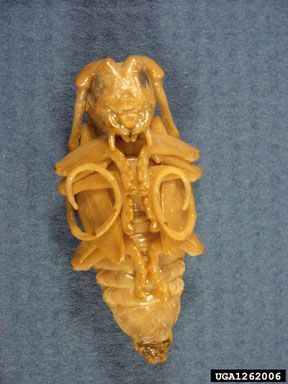
- The pupa is a creamy yellow colour and looks like an immature adult with legs and antennae compressed together (Figure 11).
Eggs
- Pale, oblong shaped and about the size of a grain of rice.
Host plants in Australia
- ALB has a wide host range. Major hosts are birch, horse chestnut, katsura tree, maple, poplar and willow, but alder, apple, ash, beech, elm, hornbeam, Japanese cherry, mulberry and oak are also susceptible.
- CLB is known to feed on over 100 different host trees from more than 30 families. These include beech, birch, chestnut, hazelnut, elm, fig, maple, plane, poplar, sycamore, oak and willow. Stonefruit, pomefruit (apple and pear) and particularly citrus are also vulnerable.
- The wide host range means the likelihood of impact to Australian native plant species is high, although the extent to which this would occur is unknown.
Life cycle
- Females lay a single egg in pits that they chew into the bark. ALB egg-laying sites are higher up in the tree, while CLB sites are closer to the ground.
- Eggs are laid in summer and hatch after 2 to 3 weeks, but can take longer at lower temperatures.
- Females are able to lay up to 70 eggs in their lifetime.
- Young larvae create galleries just under the bark, while older larvae tunnel deep into the heartwood. CLB larvae feed on the woody tissues of the lower trunk and roots of the host plant.
- Larvae require one to 2 years to develop and moult 5 times on average.
- Pupation occurs in the spring.
- Adults live for around one month and can lay eggs a week after mating.
Distribution
- ALB is native to China and the Korean peninsula and known from Japan. It was introduced to North America (where it has a restricted area of distribution) and Europe, where it is under attempted eradication.
- CLB also originates from eastern Asia. It is native to China, Korea and Japan and has been reported in many south-east Asian countries. It was also introduced into the US (where it has been eradicated) and is found in some European countries.
Dispersal
- Adults have been known to fly long distances (up to 14 km) when looking for a mate, but usually prefer shorter flying distances of less than 500 m.
- The most important pathway for the introduction of ALB is the import of wood packing material from infested areas.
- The most important pathway for the introduction of CLB is the importation of host plants for planting, with bonsai being of particular concern.
Image credits
- Figure 1: ALB – Steven Valley Oregon Department of Agriculture, Bugwood.org; CLB – Taiwan Waterbird Research Group CC-BY-NC-SA 2.0.
- Figures 2 and 10: Kenneth L. Law, USDA APHIS PPQ, Bugwood.org
- Figure 3: Joe Boggs, Ohio State University, Bugwood.org
- Figure 4: Dean Morewood, Health Canada, Bugwood.org
- Figure 5: M. Maspero, Fondazione Minoprio, Como, Italy, EPPO
- Figure 6: Art Wagner USDA APHIS, Bugwood.org
- Figure 7: Steven Katavich, Bugwood.org
- Figures 8 and 9: EPPO Standard Diagnostics PM7/149 (1) Anoplophora glabripennis and Anoplophora chinensis.
- Figure 11: Michael Bohne, USDA Forest Service, Bugwood.org
Reporting an unusual plant insect pest or disease
Report any unusual plant pest or disease immediately using our online reporting form or by calling the Exotic Plant Pest Hotline on 1800 084 881. Early reporting increases the chance of effective control and eradication.
Please take multiple good quality photos of the pests or damage to include in your report where possible, as this is essential for rapid pest and disease diagnosis and response.
Your report will be responded to by an experienced staff member, who may seek more information about the detection and explain next steps.
Report online