A case study: Feeding lambing ewes in 2025
Jonathan and Jo Jenkins, Hamilton
We run composite ewes and have been reducing the flock down from 4,500 to the current 2,000. The reduction in numbers has been driven by the cost of production and seasonal feed supply. The late-season feed is better suited to cattle here, as the quality isn’t good enough to finish lambs, so we are increasing our cattle numbers.
Lambing has shifted from July to mid-June, with a strict 4-week joining period. Lambs are weaned in October/November, and we try to get store lambs off before Christmas, given the season and markets. If feed is good, we might carry through to early New Year.
We try and run an efficient system. Our ewes are pretty hardy and generally don’t require a lot of supplementation. 2025 was obviously one out of the box. Our maternal trait selection is on moderate birth weight, moderate ewe size (SRW about 60–62 kg), high twinning capacity, positive weaning and post-weaning growth, black feet, low dag score and MCP+ index.
We selectively fed ewes hay over joining, and prioritised light and young ewes who got the good clover hay. As feed diminished and with no sign of a break, we realised we were going to run into trouble at lambing.
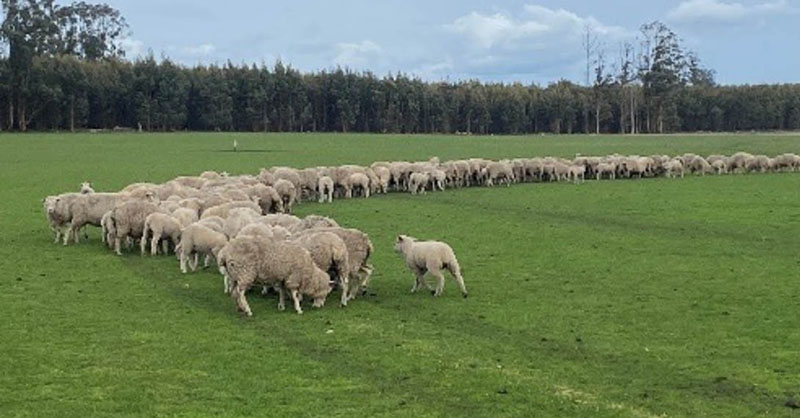
We went to the BetterBeef/BWBL roadshow in Dunkeld, where Tim Leeming shared the learnings from 2024 by the Glenelg Grass Growers BWBL group. This gave us the confidence to feed through lambing using both trail feeding and broadcasting corn.
Notes from the roadshow
Feed example provided: Twin-bearing 65 kg ewes can be supplied, say, 1.5 kg of corn/maize(14 mj/kg) per day x 6 ewes to the hectare over 15 days. This would mean you could spread 6 x 1.5 x 15 = 135 kg/ha of corn in that particular lambing paddock. This would allow ewes to graze all over the paddock and seek their requirements.
To encourage ewes to spread out to lamb is usually very positive, especially if the paddock in question provides some protection. Avoiding sheep camps/water troughs when spreading may be something to note.
After Easter we decided to give maize and cracked barley a go. We chose cracked barley as it has a better energy value when cracked for cattle but we were worried it would be pretty ‘hot’ for the sheep. [Editor’s note: Cracking grain doesn’t improve the energy value for sheep but increases the risk of acidosis.]
We started with the barley and trail fed using a 3-4 t feeder with scales and very specific ability to fine tune the rate. We had some dry standing feed as roughage and developed rations from the drought feeding guides. It took 2 to 3 weeks to background and get the ewes accustomed to the cracked barley. We had to back off the barley rate a bit in the first week but were fine after we reduced the rate and then slowly built up again. By 4 weeks the ewes were on nearly full rations. All ewes were in sacrifice paddocks – big mobs in small paddocks (7-10ha) with enough room to browse.
When the ewes were in late pregnancy, we decided to try maize and used split bins to trail feed barley in front and maize out the back (about 20%).
The break came in June, and we grew some grass. The older ewes joined to terminal sires were put into paddocks with some feed, so we didn’t need to supplement as much.
We delayed drifting ewes out of containment as late as possible – around the time when the first lambs were born. Lambing paddocks had about 1000 to 1500 kgDM/ha or less of good green feed, but it didn’t take them long to smash some paddocks. We contract spread maize – at rates appropriate for twin and single bearing ewes separately (aimed to provide 12 to 14 days feed).
After the 12–14 day period, we trail fed the self-replacing (maternal) ewes maize every 2 to 3 days. We had no problems and were feeding about 250 kg/every second day per 200 ewes. 80% lambs were born in the first cycle. Ration was about 1.25 kg/head every feed for twin lambing ewes, which provided a full ration with the pasture (about half requirements as maize).
It was much harder to keep green feed in front of the sheep compared to the cattle – sheep just devoured paddocks (peak lactation round June – so it was hard to build a wedge). That’s why the maize worked so well as we dropped large amounts in the paddocks without any health issues.
Despite the challenges, the lambs look great. Marking percentages were down a bit (normally mid 130 but back to mid 120 percentages) but we are happy with that given the earlier and shorter joining.
We planted lots of annuals in heavy swamp country which are usually too wet but anticipated they wouldn’t flood this year. So we had good feed there in September which gave us the option to cut or graze and spell other paddocks.
This was the first time we had grain fed cattle and we trail fed the cracked barley with good results. We watched cows carefully and drifted any ‘groggy ones’ back onto pastures until recovered.
Maize
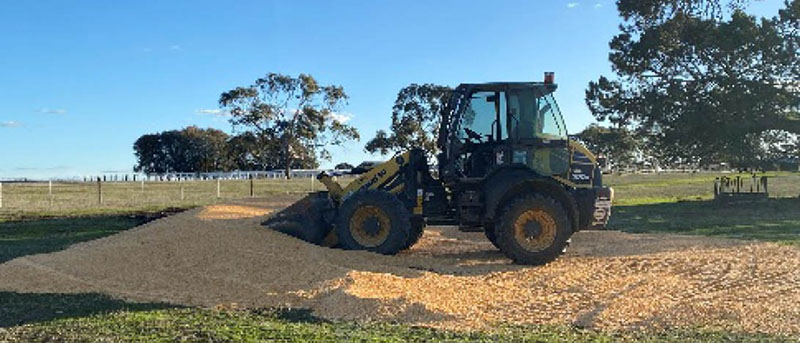
Maize for spreading
We would feed maize again, pre and post-lambing if we have to. The spreading of maize with fertiliser trucks was extremely effective, particularly in a year where the ground was still firm and the maize remained visible over the 2-week period. We used bulker bags when we were trail feeding weekly and this worked reasonably well for us. They are quick and easy but a lot of wastage with the bags. We had very few mortalities and the stock look great. The maize stayed hard – we did get some very wet weather early in lambing and would probably get wastage if the ground got very wet.
In the past we have fed pellets and we probably underestimate how much wastage there is. Cockatoos didn’t take any interest until near the end and then only in the paddocks with the terminal ewes that were less interested in the maize by then.
Milk production this year on the maize was excellent. The ewes had huge udders – we have never had such good lambs.
[Editor’s note: While maize generally has low protein compared to other grains, research by Banchero et al, 2015, showed increased colostrum production from maize due to the amount of starch entering the lower digestive tract as 14% for maize (due to a percentage of grain dry matter intake), 8.5% for barley and 2% for oats).]
Summary
- No hay fed at lambing as we had some green grass. No limestone was provided.
- We used the drought feed guide to work out the sheep rations for barley and maize.
- We always made sure we had enough residual dry feed when trailing barley.
- We watched stock carefully for any issues, especially on the cracked barley, and moved sheep or dropped rates back when needed.
- We used the drought funding to get one-on-one advisory service for nutritional advice and it reassured us that we were on track. The infrastructure grant contributed to a new fodder storage facility.