Barber’s pole worm
Kaitlin Ing, animal health officer
Barber’s pole worm (Haemonchus contortus) is a blood-sucking roundworm that poses a serious threat to sheep and goats. The worm gets its name from the distinct appearance of the female worm; the white reproductive tract and pink intestines intertwine to create a red-and-white striped appearance. Haemonchosis is the disease or condition that occurs when sheep are infected with large numbers of Barber’s pole worm.
What risk does this pose to my flock?
The adult Barber’s pole worm lives in the abomasum (fourth stomach) and slits the lining of the abomasum to ingest blood. Because of this, the symptoms caused by barber’s pole worm are mainly due to blood loss. Sheep that are heavily infested with barber’s pole worm can lose 5% to 10% of their blood volume (up to 250 ml) per day.
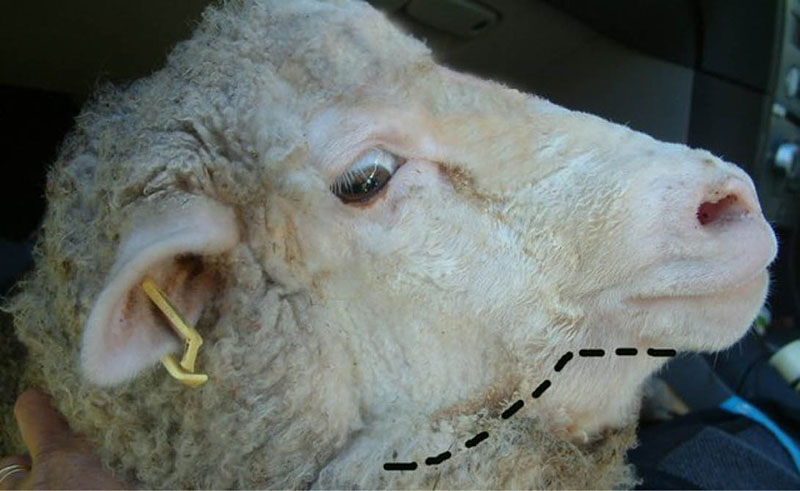
The significant blood loss caused by the blood-sucking parasite causes affected stock to develop severe anaemia. Symptoms of barber’s pole worm include pale gums and lower eyelids (a common sign of anaemia), lethargy, rapid weight loss, poor growth, bottle jaw (swelling under the jaw) and in some cases sudden death.
When can my flock be affected?
Barber’s pole worm requires a daily maximum temperature above 16 °C to 18 °C and adequate moisture (from rainfall or soil) for its eggs to develop into an infective larva. Due to this, summer and autumn are when most infestations occur.
A wet summer can also increase the risk of barber’s pole worm infestations extending into winter and spring. The female barber’s pole worm has a high reproductive rate and can lay 5,000 to 15,000 eggs per day. The high level of egg production, combined with a short life cycle, often results in high worm egg counts (sometimes in the thousands) in sheep.
Barber’s pole worm is highly adaptable and has previously been able to pause development inside the host until environmental conditions were favourable for the larvae’s survival. Although this survival mechanism has largely been controlled through drenching, drenching has applied selection pressure for the eggs to be able to hatch at a lower temperature and for a shorter life cycle. This is why barber’s pole worm is becoming an increasingly common winter parasite.
What can I do to manage infestations of barber’s pole worm?
Faecal egg counts (FECs) are the best indication of worm burden on farm. A worm larval culture is also recommended to ensure the correct diagnosis of worm species before treatment. Conducting regular FECs also ensures drenches being used on farm remain effective against barber’s pole worm and that worm resistance is not developing.
Drenching regularly with an effective drench will also aid in the management of barber’s pole worm. Most broad-spectrum drenches, as well as closantel, may be effective against barber’s pole worm). However, drench tests should be conducted every 2 to 3 years to monitor for worm resistance.
Lambs, weaners and pregnant and lactating ewes are more susceptible to the clinical effects of barber’s pole worm, also known as haemonchosis. To protect susceptible stock, choose low-risk paddocks for lambing and weaning where possible. Ensuring stock are in good body condition and receiving sufficient feed can also aid in increasing resilience to the parasite.
Grazing management is another important tool in the mitigating the risk of barber’s pole worm infestations. Avoid overgrazing pasture, where possible, to maintain pasture height and reduce the risk of sheep ingesting worm larvae. Allowing pasture to rest between grazing, where possible, can also allow larvae to die off between grazing. Short grazing periods (of less than 4 days) also prevent stock from being on the pasture once eggs have developed into infective larvae.
For more information visit Wormboss or seek advice from your private veterinarian.
References
Emery DL, Hunt PW and Jambre LF. Haemonchus contortus: the then and now, and where to from here? International Journal for Parasitology 46(12):755–769.
Wormboss (2022). Barber’s pole worm in Sheep and Goats.
Crilly JP, Evans M, Tähepõld K and Sargison N. Haemonchosis: dealing with the increasing threat of barber’s pole worm. Livestock 25(5).