Case study: AgTech integration pays off for dairy
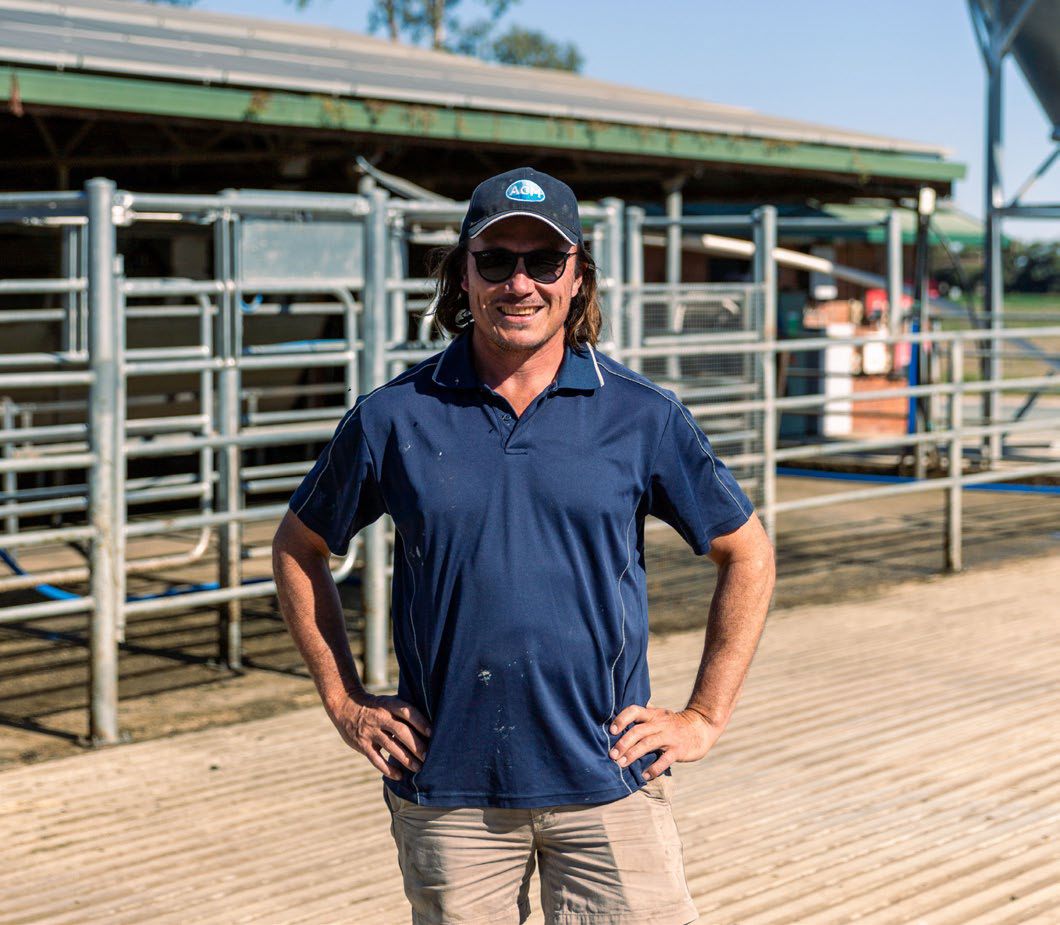 Meet Gus, a Victorian dairy farmer. We will explore how Gus has adopted new technology, including cow collars and automated systems for drafting, drenching and irrigation on the farm.
By adopting this technology, Gus has successfully boosted farm business performance and improved farm safety.
The McDonald family have a 344-hectare dairy farm at Girgarre, with about three-quarters irrigated. The dryland area supports young stock and fodder production. They milk 430 cows, producing over 2.8 million litres annually. The farm is family-managed with two full-time staff and contract milkers.
Efficiency
- Better use of labour.
- Optimises water use and pasture yields.
Productivity
- Enhances animal health.
- Higher milk production.
Safety
- Reduces risky activities like manual livestock handling and night-time irrigation checks.
- Lowers fatigue and workload stress.
Advantages
- Reduces risks from livestock handling, manual operations and fatigue.
- 50% time saved on drafting and drenching livestock.
- 6 years payback on AgTech.
Opportunity
Over the past five years, the McDonalds expanded their business and looked for opportunities to further boost efficiency, productivity, and work-life balance.
Gus wanted technology that saved time, improved herd health and milk production, optimised water use, and made the farm safer for everyone.
'Saving labour, improving efficiency and making our farm safer were the main objectives. The tech also needed to be simple to set up and use. It has kept me informed while I’m off the farm.'
Technology
The McDonalds chose to install:
- Cow collars – with GPS, real-time health monitoring and heat detection
- Automated drafting gates, also known as an auto-drafter, at the dairy. It uses radio frequency identification (RFID) or collar data to sort animals at the gates with an attached automated drenching system to apply fly drench
- The data from the collars, auto-drafter and drencher integrate into the farm management software.
- Automated irrigation system and bay sensors. The irrigation system was upgraded by automating water inflows – using actuators to control individual inflow valves.
Outcome
Gus McDonald is pleased with how well the new technology has streamlined farm operations. Gus found the technology was easy to install and use.
'The AgTech has reduced manual tasks, freeing up time for more strategic work.'
Combining the auto-drafter and drencher streamlines cow drafting and fly drenching. This minimises manual handling, enhances safety, and saves hours of labour. Together, these technologies ease stress – for both staff and cows.
The collars reduce the need for paddock checks, eliminate heat detection aids, and save around 30 minutes per milking during joining. They also help detect health issues early and track recovery after treatment.
Gus often works long hours, so it's essential to manage the safety risks associated with fatigue. The automated irrigation system has saved him a lot of time. He can now program the system and monitor water flow from his phone, making it easy to spot any issues.
This technology has also improved pasture and crop growth by using water more efficiently. This has allowed stocking rates to increase and achieve higher milk production per cow.
The AgTech also provides peace of mind, with Gus able to check on the herd and on irrigation inflows – while he is on or off the farm.
Cow collars (Datamars)
- Cost: $100,000 for 400 collars.
- Annual subscription: $nil.
- Lifespan: up to 8 years. 5-year guarantee.
Auto-drafter with an auto backline drencher
- Cost: $60,000 (including new drafting yard).
- Lifespan: greater than 7 years.
Automated irrigation via actuators
- Cost: $105,000.
- Lifespan: greater than 7 years.
Improved efficiency and productivity
The total AgTech investment cost was $265,000 plus GST. The direct benefits include labour and cost savings, alongside the value of improved milk production.
In addition to the measurable benefits, AgTech has delivered valuable intangible benefits, including:
- better decision making and the confidence to expand their business
- peace of mind
- reduced stress for people and animals
- less fatigue
'Now we can safely draft cows with fewer people and a lot less effort – it’s made a real difference on the farm.'
The benefits for the McDonald enterprise are valued at around $45,000 a year.
This delivers a payback period of around 6 years.
Farm safety benefits
Gus’s approach is to adopt modern AgTech which can support both farm performance and worker safety and wellbeing.
The AgTech on the farm has reduced physical strain and injury risks by making livestock interactions safer. The AgTech also minimised the need for risky night-time irrigation checks, alongside supporting better workload and fatigue management.
The auto-drafter has removed the need for manual drafting which was once a time-consuming and sometimes risky task. It reduces the need for close contact with livestock. Cows also experience less stress, moving more calmly through the race.
The automated irrigation system has also improved safety.
'I don’t have to drive out at night alone and climb over fences and check banks in the dark. It’s definitely safer – and as a bonus, I get more sleep.'
Injuries from being bitten or struck by livestock are the leading cause of farm work-related hospital admissions in Victoria, accounting for around 20% of admissions.
Of these injuries, around 59% involve cattle, 21% relate to horses, and 17% are due to sheep. *
Minimising close animal handling significantly reduces the risk of crush injuries, kicks, and other physical harm.
* Source: Victorian Injury Surveillance Unit (VISU).
Last word
For Gus, pairing cow collars with an auto drafter has been an operational leap.
'Cow collars work really well when paired with an auto-drafter. I reckon you’re selling yourself short if you don’t buy both and use them together to unlock their full potential.'
Adopting AgTech has helped Gus and his team save time, focus on doing each job properly, and work more safely.
'It’s boosted productivity while helping us manage fatigue.'
'We wanted to save on labour while also improving our efficiency and work-life balance. Not having to manually draft individual cows and being able to check on the farm remotely provides peace of mind while I’m off the farm. We couldn’t do without the tech now.'
Farmers should conduct their own analysis before investing in any technology. The case study is an independent example and is not an endorsement of the showcased AgTech over other products.