Wind erosion control at sowing to avoid sandblasting
Key points
- Ground cover is the primary way to control erosion.
- At least 50% of soil ground cover is required to control wind erosion.
- Sand blowing from eroding soils can sandblast emerging crops, which may need re-sowing.
- In most years, sandblasting is uncommon.
- To avoid sandblasting after sowing, aim to maintain at least 50% ground cover and to keep the stubble standing.
- Sow across (perpendicular to) the erosive wind direction.
Four decision trigger points to manage and control erosion
This series of decision trigger points can help land managers prepare for and mitigate wind erosion. This page discusses the last of 4 decision trigger points:
- Trigger 1: During growing season, June to September
- Trigger 2: Any time cover is less than 60%
- Trigger 3: Any time there are signs of erosion:
- Trigger 4: At sowing, to avoid sandblasting
Trigger 4: At sowing to avoid sandblasting
Sand blasting is a risk when ground cover is low (less than 50%) after the crop or pasture is sown.
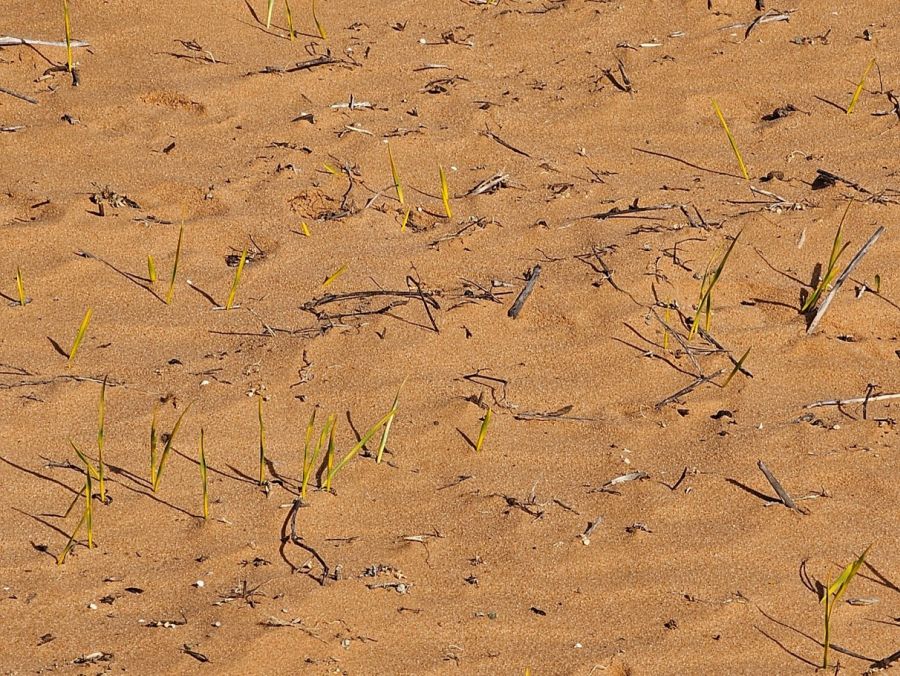
Sand blowing from eroding soils can damage or cut off emerging crops and pastures, which may require re-sowing. In most years, sandblasting of new crops and pastures is uncommon as strong winds are less frequent in May and June.
Sandy soils are more prone to sandblasting, especially on sand hills and dunes.
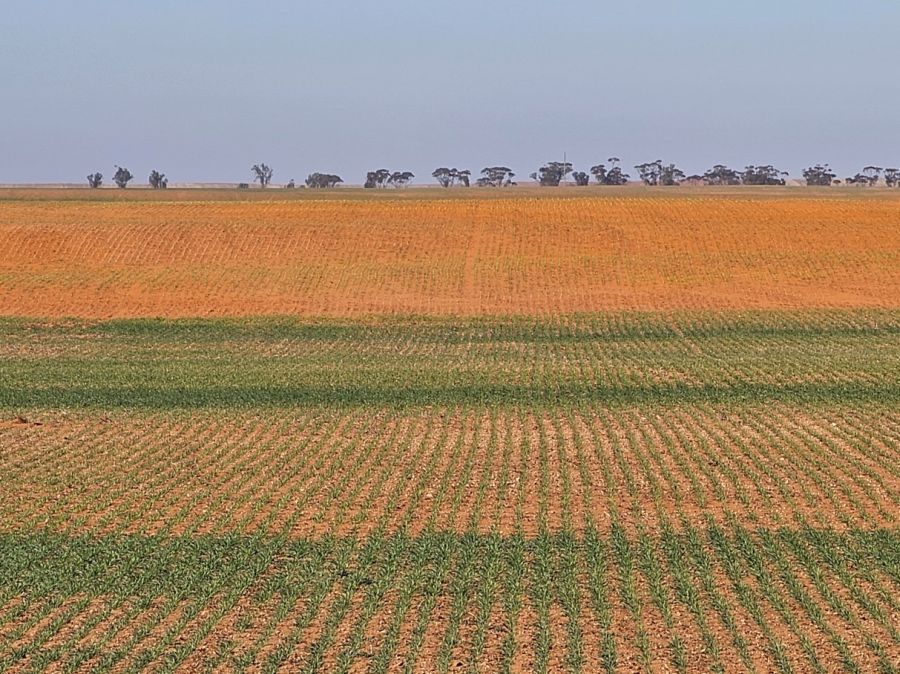
To avoid sandblasting, it is critical:
- to sow into good ground cover
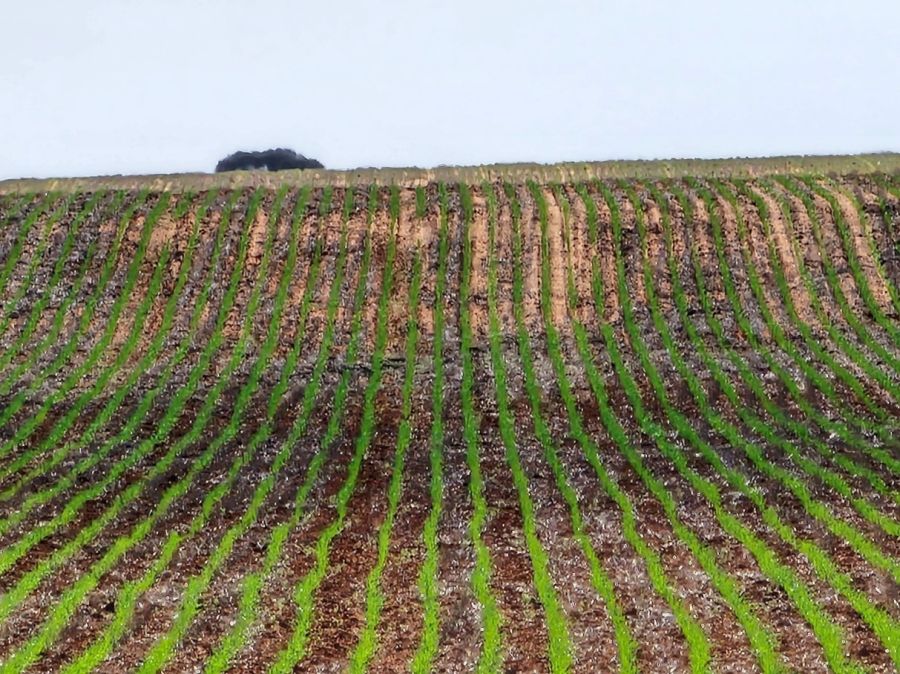 The best form of protection is standing stubble.
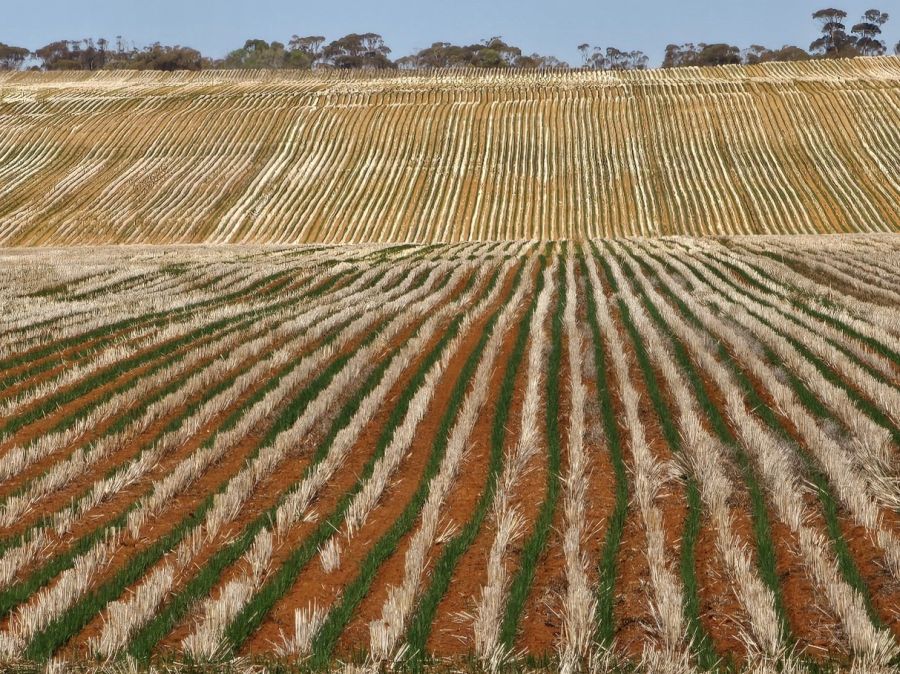
- Sow perpendicular to the erosive wind direction. Otherwise, the soil will blow down the rows, creating ruts and sand blasting after plants emerge.
Further Reading
Leys, JF, McDonald, SE, Murphy, SR, Turnbull, GL, and Harden, S (2026) Land degradation decision trigger points to minimise soil erosion in rangelands. The Rangeland Journal. (Submitted).
McDonough C and Leys J (2022) Practical tactics to improve ground cover and ensure soil preservation following successive low rainfall seasons, Ground Cover, December 2022.
Acknowledgements
Author: Dr John Leys, DustWatch Australia Pty Ltd
Editors: Melissa Cann, Jo Cameron, Felicity Pritchard and Adam Buzza
Proofing: Casey Tomkins
The FBR Program is jointly funded through the Australian Government’s Future Drought Fund and the Victorian Government’s Sustainability Fund.