Wind erosion control: Decision support for when there are signs of erosion
Key points
- Signs of wind erosion include raised dust, hummocking and ripple drift.
- If erosion starts, it is essential to stop erosion and prevent the eroded area from growing rapidly.
- The decision support framework in this webpage helps determine the best course of action.
- Emergency tillage may be warranted if cover falls below 50%, which may occur after a fire or in a drought.
Four decision trigger points to manage and control erosion
This series of decision trigger points can help land managers prepare for and mitigate wind erosion. This page discusses signs of erosion and a decision-support framework for the third of 4 decision trigger points:
- Trigger 1: During growing season, June to September
- Trigger 2: Any time cover is less than 60%
- Trigger 3: Any time there are signs of erosion:
- Decision support for when there are visible signs of erosion
- Practical tactics for when and how to use emergency tillage
- Trigger 4: At sowing, to avoid sandblasting
Third trigger point: any time there are signs of erosion
Wind erosion processes can begin due to land management practices such as overgrazing, timing of cultivation, excessive cultivation or fire. It is more difficult to manage in droughts or after a fire.
If erosion starts, it is essential to stop erosion and prevent the eroded area from expanding.
Signs of erosion
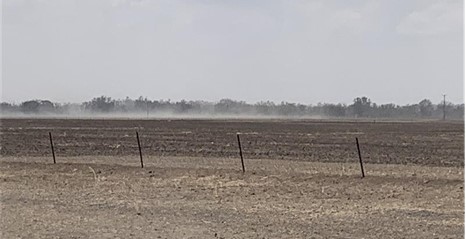
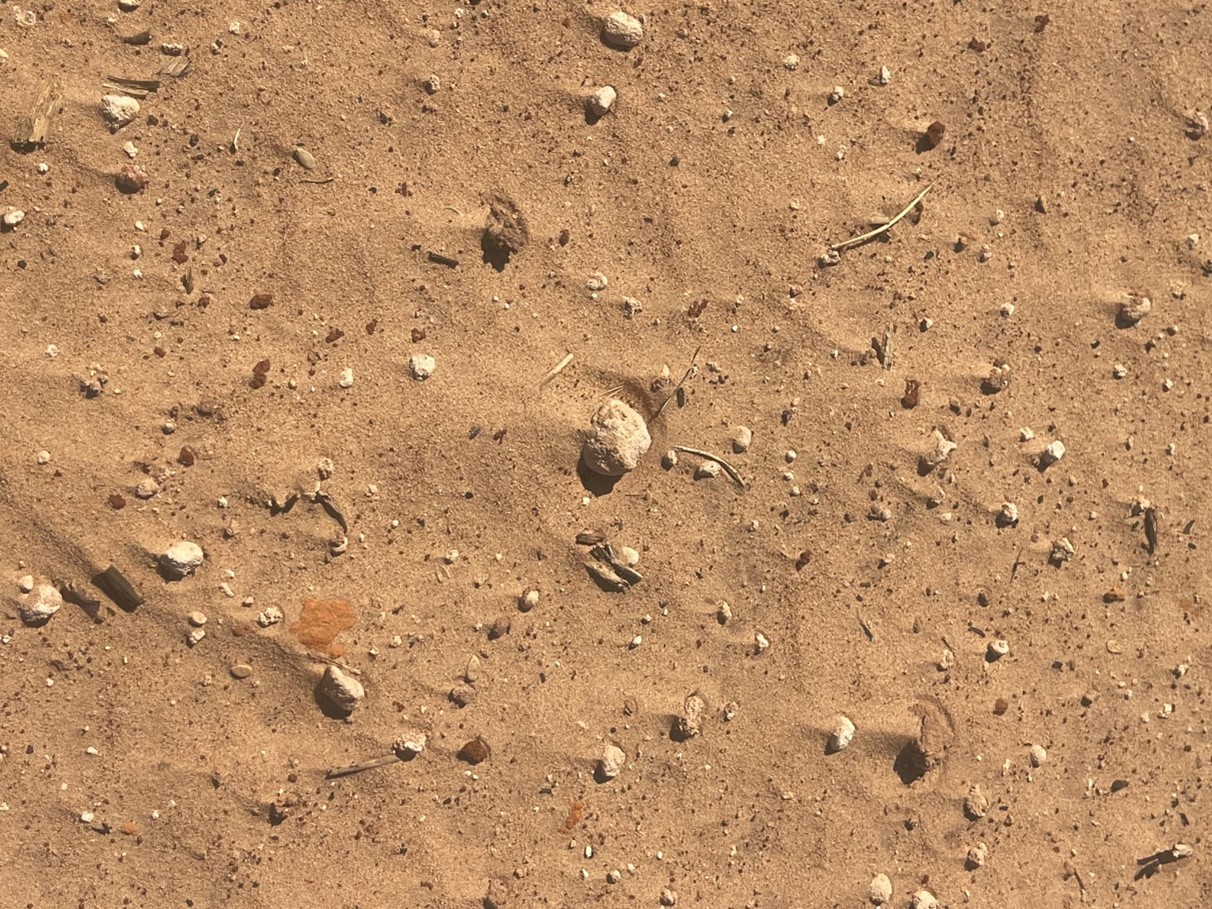
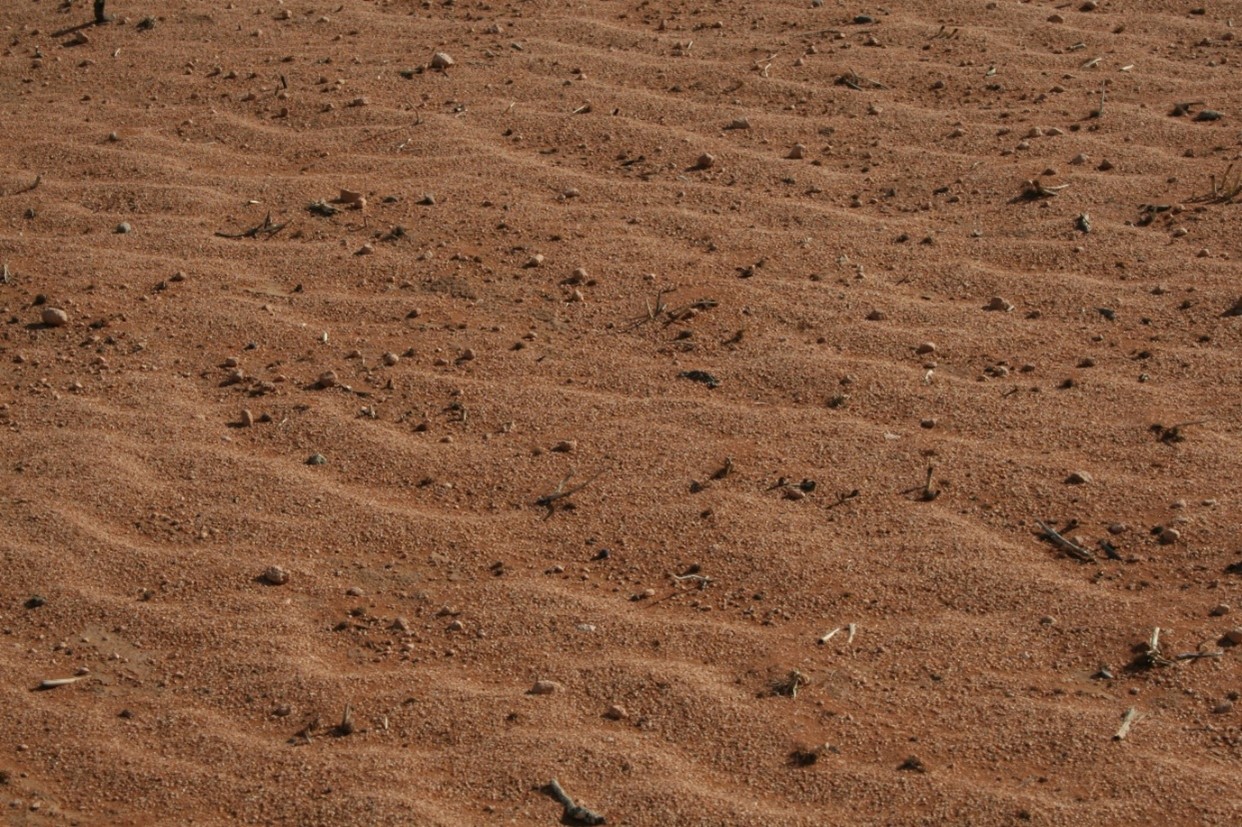
There are visible signs that wind erosion has started. The example images below show what to look for.
Dust being raised from the paddock
Signs of hummocking
Ripple drift lag surface
Lag means the concentration of coarse particles where finer particles have eroded.
Decision support when there are signs of erosion
If erosion starts, that is, dust is raised from the paddock, signs of hummocking and/or ripple drift, it is essential to stop erosion and prevent the eroded area from growing rapidly. A decision support framework helps determine the best course of action.
When erosion starts in the paddock, there are 2 options, depending on the soil type:
- Do nothing
- Use emergency tillage, ridging or ripping.
Decision support framework
To help decide what action to take when there are signs of erosion, consider if tillage will create clods.
If there is less than 10% clay in the soil, tillage will not create clods. Options include:
- Do nothing - rely on the lag layer.
- The lag layer is the concentration of coarse particles where finer particles have been eroded.
- Creation of wind ridges.
- Binding with a dust suppressant chemical - an option in very high value soils.
In soils with more than 10% clay, tillage will create clods. One of the following actions can stop erosion and prevent the eroded area from growing rapidly:
- Full width tillage - where about 50% of surface is covered with clods bigger than 3 cm.
- Ridge tillage - with about 50 cm spacing of ridges which are at least 20 cm tall, and at least 40% of the surface has clods bigger than 3cm.
- Ripping - creating rip lines at least 20 cm tall on 1 m spacing.
Further reading
Leys, JF, McDonald, SE, Murphy, SR, Turnbull, GL, and Harden, S (2026) Land degradation decision trigger points to minimise soil erosion in rangelands. The Rangeland Journal. (Submitted).
McDonough C and Leys J (2022) Practical tactics to improve ground cover and ensure soil preservation following successive low rainfall seasons, Ground Cover, December 2022.
McIntosh G, Leys J and Biesaga K (2006) ‘Estimating ground cover and soil aggregation for wind erosion control on cropping land’, Mallee Sustainable Farmers Inc.
Acknowledgements
Author: Dr John Leys, DustWatch Australia Pty Ltd.
Editors: Melissa Cann, Jo Cameron, Felicity Pritchard and Adam Buzza
The FBR Program is jointly funded through the Australian Government’s Future Drought Fund and the Victorian Government’s Sustainability Fund.