Innovation in the Air: Protecting Produce and People
Case study
Meet Rob Cox, the Senior Orchard Manager at Amaretto Almonds.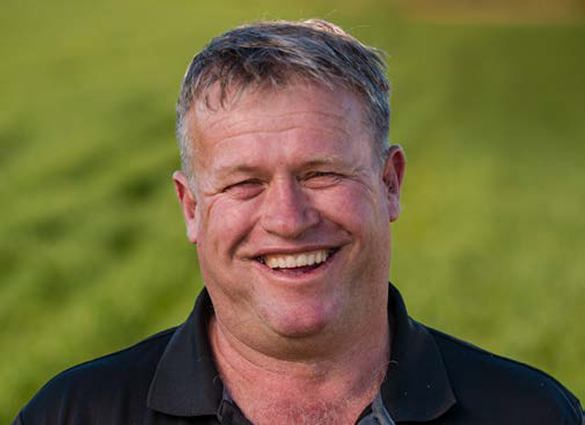
This case study explores how innovative technology is boosting business performance while improving farm safety. Amaretto Almonds uses the BioScout technology system to monitor disease risk through real-time monitoring. The solar powered BioScout device collects air samples that can detect fungal diseases. Rob receives these alerts to inform orchard disease management.
‘I like to try and stay ahead of the curve if we can, because if you miss out on the new stuff coming through, you’ll honestly get left behind.‘
Rob Cox
Amaretto Almonds operates across two almond producing properties: a 430-hectare orchard at Lake Powell, Victoria and a 570-hectare orchard at Tooleybuc, New South Wales. The family managed business employs 15 full-time staff with the workforce doubling during harvest to meet seasonal demands.
Efficiency
- Informs orchard management decisions
- Reducs time and spraying costs
- Supports sustainability outcomes
Productivity
- Helps manage disease early
- Frees up time for high-value tasks
- Supports quality almond production
Safety
- Reduces time in vehicles and tractors
- Reduces exposure to chemicals
- Lowers fatigue and stress
Advantages
- Reduces fatigue and risks from orchard operations
- 30% time and tractor use saved on spraying
- Positive cash flow and net benefit each year
Opportunity
Rob continues to explore new opportunities to improve orchard efficiency and productivity while also reducing stress and fatigue.
The business already used 2 precision optical sprayers and drone data to forecast almond yields. BioScout offered another technology to inform orchard management – for detecting and managing almond diseases earlier.
Traditional disease monitoring relies on visible signs. Early detection of spores, before the plant shows symptoms and while spores are still invisible, reduces risk of yield losses and helps ensure critical spray windows are not missed. Traditional approaches also rely on fixed preventative spray programs which can lead to unnecessary chemical applications and costs.
Technology
The BioScout system detects pollen and airborne disease spores including alternaria, botrytis, almond scab, powdery mildew and anthracnose.
In the earliest stages of crop disease infection, spores are microscopic and plants show no visible symptoms, making detection difficult yet this is the most effective time to apply fungicides.
BioScout addresses this challenge with an autonomous airborne disease detection system that uses smart sensors and artificial intelligence (AI) to identify fungal spores and pollens before they appear. The system samples air daily and analyses spore loads in real-time, delivering early, localised alerts through BioScout’s online dashboard. Growers can use these alerts alongside weather-based models to assess for infection risk and take proactive, targeted action rather than relying on routine blanket spraying. BioScout is suitable for horticulture and broadacre crops.
In addition to the BioScout system, the business uses SafeAg – a safety management software that supports safety compliance requirements and helps influence a positive safety culture in the workplace.
Outcome
By deploying multiple BioScout units, Rob is expecting it will transform operations. Based on available data on the performance of the device, a proactive approach to orchard management will reduce chemical use, lower costs and improve productivity.
Rob has budgeted on fewer manual monitoring tasks, freeing up staff time for more strategic, higher-value work. Using BioScout’s airborne disease detection system, the team can identify threats up to 2 weeks before symptoms appear, enabling timely and targeted interventions.
Rob is trialling heavy pruning in older parts of the orchard. Through the BioScount data, Rob has learned how the heavier pruning can increase airflow, reduce disease spores and improve tree health.
✔ Improves risk assessment of fungal diseases
✔ Reduces labour, vehicle and tractor use and chemical spraying
✔ Estimated savings of $120,000 for each avoided spraying
Improved efficiency and productivity
The AgTech investment (lease) costs around $80,000 per year for Amaretto Almonds. The direct benefits include labour and input cost savings, as well as the value of improved almond production.
Beyond these measurable outcomes, the AgTech also delivers valuable intangible benefits including:
- better decision making
- greater peace of mind
- lower fatigue and stress.
The benefits for the Amaretto Almonds enterprise are valued at around $160,000 a year.
The net benefits are positive each year.
‘Having BioScout in your orchard means fewer unnecessary tasks – and most importantly, freeing up staff to focus on more meaningful work or to ensure the team is well rested coming into busy periods.‘
BioScout enables data sharing across networks, delivering benefits for farmers and service providers. By identifying and forecasting disease hotspots, agronomists and crop protection agribusinesses can better plan and deliver targeted and efficient agrochemical applications. This reduces unnecessary travel, lowers operating costs and improves responsiveness to emerging disease risks.
Farm safety benefits
BioScout protects both produce and people. Reducing chemical use minimises environmental impacts, limits chemical exposure to farm workers, while also safeguarding almond quality. Less time in vehicles and tractors lowers injury risk and fatigue; and stress is removed when the data-driven insights can take the guess work out of decisions.
Using SafeAg digital systems is another example where Rob has adopted modern AgTech to boost worker safety and wellbeing. This makes incident reporting and inspections seamless. All policies, procedures, maintenance records, hazard logs and training are stored in one accessible platform.
Drone imaging combined with BioScout, also reduces fatigue by avoiding unnecessary vehicle driving and tractor work.
Chemical exposure can be a significant hazard in agriculture, including when storing, transporting, using and disposing of agricultural chemicals. Direct exposure to chemicals can lead to short-term and long-term health effects. The use of crop fungal detection and precision spraying technologies reduces the risks of exposure and health impacts.
Source: betterhealth.vic.gov.au
Transport related injuries rank among the top five work-related of hospital admissions, with 63% involving agricultural vehicles like tractors and side-by-side vehicles*. Technology that reduces the use of these vehicles for monitoring and spraying of orchards helps to lower the risk of transport accidents on farms.
* Source: Victorian Injury Surveillance Unit (VISU)
BioScout system
Indicative annual lease cost for the unit is between $14,000 and $17,000 including GST.
Lease costs vary by enterprise type and technology, while horticultural pathogens typically travel shorter distances with detection accuracy declining over distance, requiring about one unit per 100 hectares, compared to broadacre crops which require one unit per 1,000 hectares.
Last word
BioScout technology offers Amaretto Almonds improved business performance and farm safety.
‘For us, BioScout represents a decisive step toward smarter, data-driven farming. It empowers informed decisions that reduce the need for constant monitoring and unnecessary spraying, easing both physical and mental demands on our team. The result? Less stress, lower fatigue, improved efficiency, and progress toward our sustainability goals.‘
‘We’ve had zero staff turnover in six years – that’s a testament to our strong retention culture and the role that AgTech can play in reducing fatigue and stress, and creating a safer, smarter workplace.‘
Farmers should conduct their own analysis before investing in any technology. The case study is an independent example and is not an endorsement of the showcased AgTech over other products.