Guava root knot nematode
Guava root knot nematode or GRKN (Meloidogyne enterolobii) is a species of plant parasitic nematode which can infect and damage a wide range of crops, including vegetables, ornamentals, plants and weeds. It is considered a high priority pest of ginger, onion, potato, sweet potato and other vegetables.
Distribution
GRKN is primarily a pest of subtropical to tropical climates, but glasshouse environments may also be favourable to its growth. It is present across Asia, Africa, Europe, the Americas and the Caribbean.
GRKN has been reported in the Northern Territory and Queensland but is not known to occur elsewhere in Australia.
Symptoms of GRKN infection
Typical aboveground symptoms of GRKN infection include:
- stunted growth
- leaf yellowing
- wilting of leaves and whole plant.
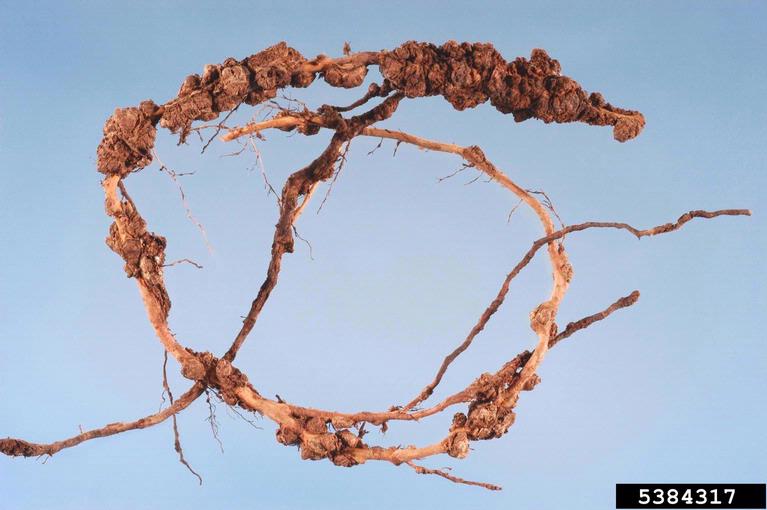
However, the most characteristic symptom of GRKN infection is the presence of galls on the roots of plants (Figure 1). The galls are the feeding sites of the juvenile nematodes.
Spread pathways
GRKN is transmitted via the movement of infested soil or plant material. This includes:
- Soil
- Infected plants
- Bulbs and edible tubers
- Machinery and other equipment, including tools and bins used in field
- Footwear
Prevention
To prevent the introduction or spread of GRKN, the following measures can be put into place:
- Source planting material and seedlings from reputable suppliers.
- Ensure planting material is free of soil and plant residues.
- Keep records of where plants/planting material/tubers are sourced, and where and when they are planted on your property.
- Carry out routine testing of soil and plant materials.
- Ensure strict hygiene measures.
- Carry out regular monitoring of crops for symptoms.
- Report suspect symptoms.
Market access
GRKN is currently a declared exotic pest under the Plant Biosecurity Act 2010. If you suspect GRKN, report it online or call 136 186. For market access information, please check Agriculture Victoria’s Plant Quarantine Manual or email market.access@agriculture.vic.gov.au.
Image credits
Jeffrey W. Lotz, Florida Department of Agriculture and Consumer Services, Bugwood.org