Bark Beetles
Exotic pest – Not wanted in Australia
Exotic bark beetles in the genus Dendroctonus are significant forestry pests of conifers.
They cause extensive damage, and kill trees, by feeding under the bark and introducing fungi which blocks water and nutrient flow within the tree.
Have you seen this pest?
- Adult beetles are cylindrical, 3 to 9 mm long, and dark red or brown to black (see Figures 1 and 2)
- Larvae are creamy white and legless with brown heads (see Figures 3 and 4)
- All life stages of the beetle live and feed under the bark of coniferous trees (see Figures 4, 7, 8, 9 and 10).
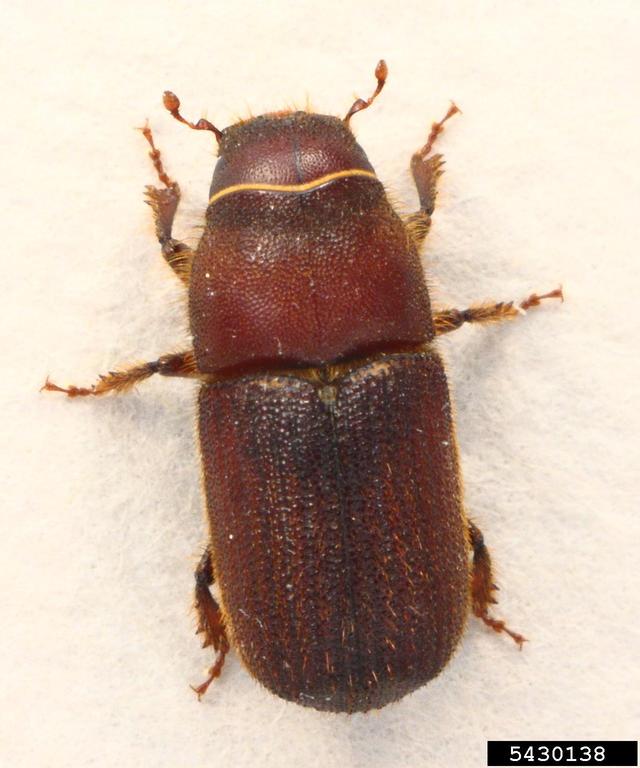
Figure 1. Adult red turpentine beetle (Dendroctonus valens)
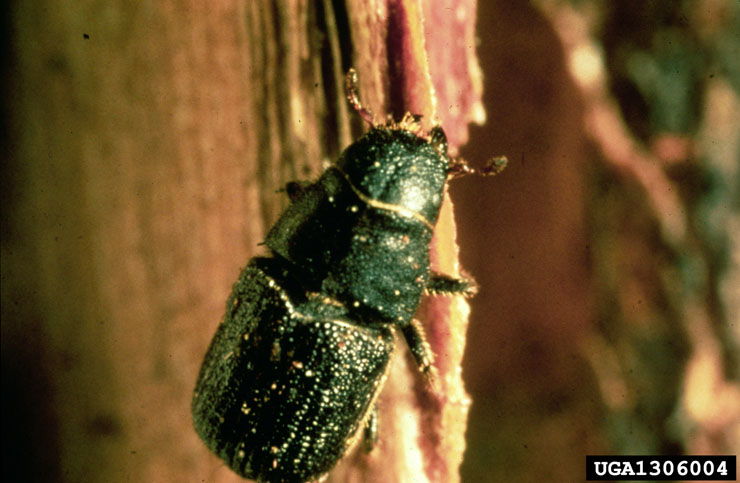
Figure 2. Adult mountain pine beetle (Dendroctonus ponderosae)
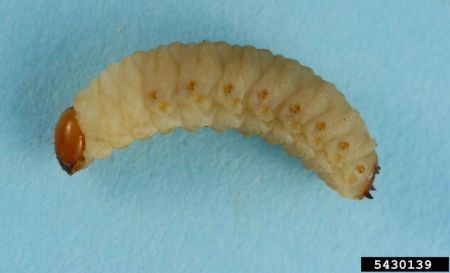
Figure 3. Larva of the red turpentine beetle (Dendroctonus valens)
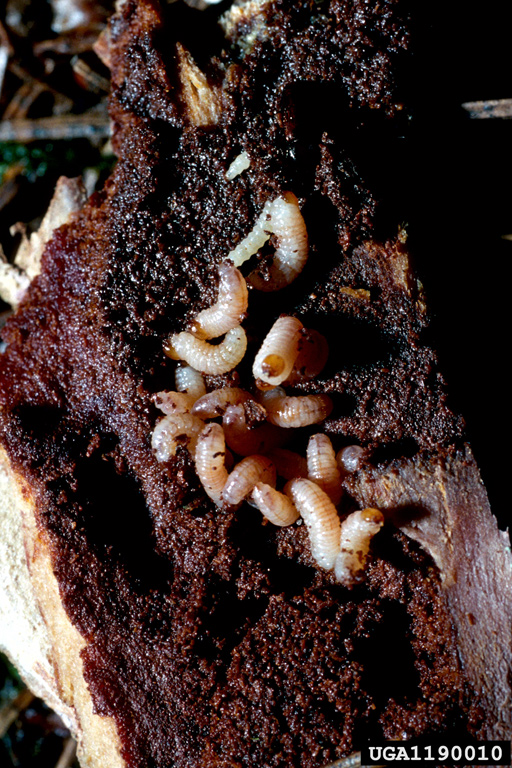
Figure 4. Larvae of the great spruce bark beetle feeding (Dendroctonus micans)
What should I do?
- Report immediately
- Share your photos using the Online Public Reporting Form
- Call the Exotic Plant Pest Hotline 1800 084 881
- Take good quality photos of the pest and or damage to include in your report.
Why is it a pest of concern?
Several species of bark beetles are known for causing widespread devastation of forests and significant economic losses especially in North America.
Bark beetles usually attack weakened or dying trees and play an important in ‘cleaning’ the forest to make way for new growth. However, warmer weather and fire suppression has led to large outbreaks causing widespread tree mortality and major economic losses especially in plantation species (Figure 5).
Mountain pine beetle (Dendroctonus ponderosae) is considered the most destructive bark beetle pest in Western North America.
The great spruce bark beetle (Dendroctonus micans) is native to the coniferous forests of Europe and Asia, has become an invasive species in other regions and a serious pest of commercial forestry.
Species such as the red turpentine beetle (Dendroctonus valens) are of particular concern because of their ability to attack stressed trees, including radiata pine (Pinus radiata).
In Victoria, commercial pine plantations (particularly those of Pinus radiata) would be highly vulnerable if exotic Dendroctonus species were introduced.
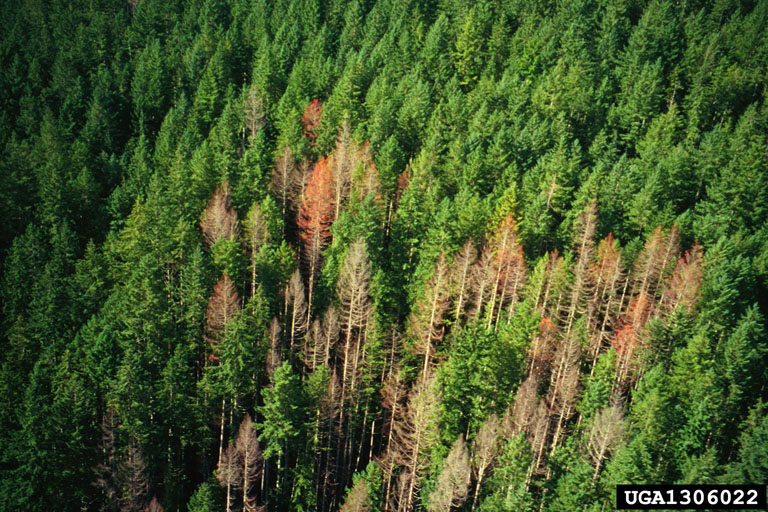
Figure 5. Damage to Douglas-fir plantation caused by the Douglas-fir beetle (Dendroctonus pseudotsugae)
Where to look
Except for a few days a year when adults emerge to find new hosts all life stages of the bark beetle are found beneath the bark.
Trees are attacked by tunnelling beneath the bark and disrupting the tree’s ability to transport water and nutrients.
Characteristic symptoms on host trees include:
- Pitch tubes. As the tunnels cut through resin vessel, the resin and frass are pushed out of the galleries and ooze onto the bark forming tubes surround an entrance hole (Figure 6)
- Frass found at the base of trees or in bark crevices
- Galleries under the bark forming distinctive patterns which are species-specific (Figures 7 and 8)
- Crown discoloration, with needles turning yellow, red, or brown then falling to the ground as the tree dies (Figure 5).
Some Dendroctonus species carry symbiotic fungi, which invade the sapwood causing discoloration to the wood and affecting the value and aesthetic of milled timber.
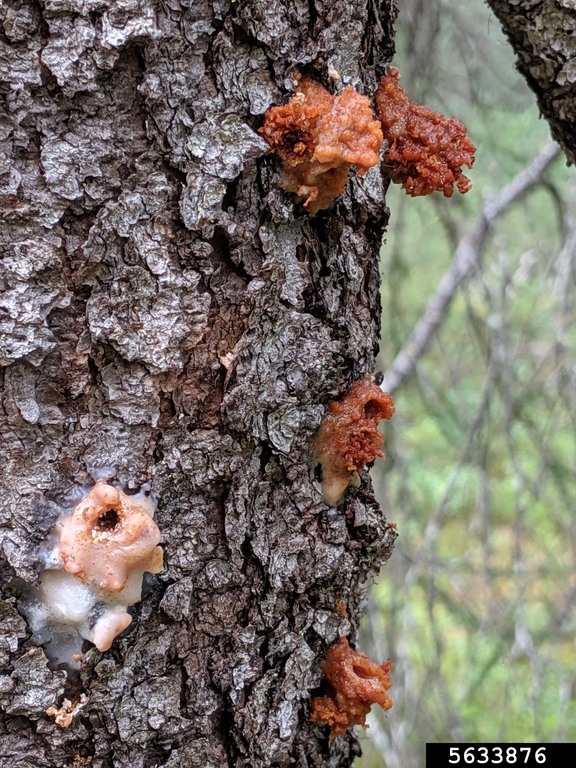
Figure 6. Pitch tubes caused by the black turpentine beetle (Dendroctonus tenebrans)
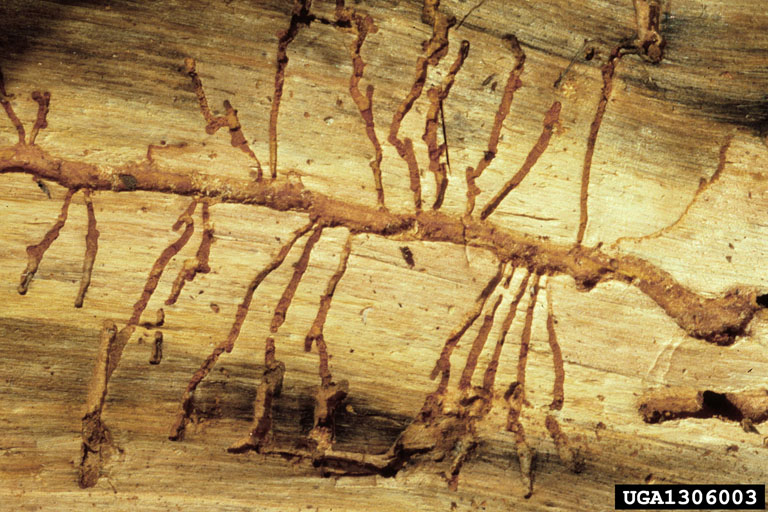
Figure 7. Exposed galleries formed by the mountain pine beetle (Dendroctonus ponderosae)
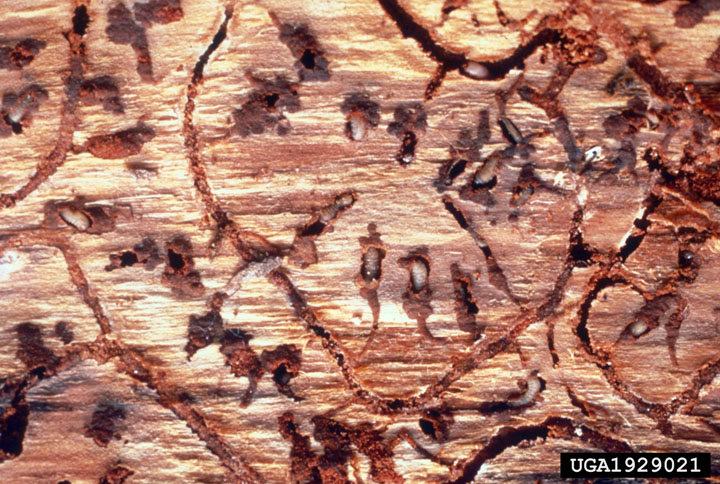
Figure 8. Exposed galleries formed by the southern pine beetle (Dendroctonus frontalis)
Pest profile
Appearance
Adults: Adult Dendroctonus beetles are small, cylindrical, and dark red to brown and black, measuring about 3 to 9 mm in length depending on the species. All Dendroctonus species have rounded tips of their abdomen which is a distinguishing feature. Their wing covers (elytra) are hard and shiny, and they possess strong mandibles for boring into bark (Figures 1 and 2).
Pupae: Yellowish-white mummy like versions of the adult beetle, ranging from 3-6 mm long. Pupation occurs in oval pupal chambers within the inner bark of the tree (Figure 9).
Larvae: The larvae are legless, creamy-white grubs with brownish head capsules (Figures 3 and 4). They feed in characteristic winding galleries beneath the bark, which become packed with frass (boring dust and faecal matter). Larval development occurs entirely within the tree’s phloem layer.
Eggs: Bark beetle eggs are small, oval, and pearly white, typically less than 1 mm long. Females deposit eggs in galleries they excavate beneath the bark of host trees. Eggs are often laid in clusters along the sides of the main gallery and are protected from external conditions by the bark (Figure 10).
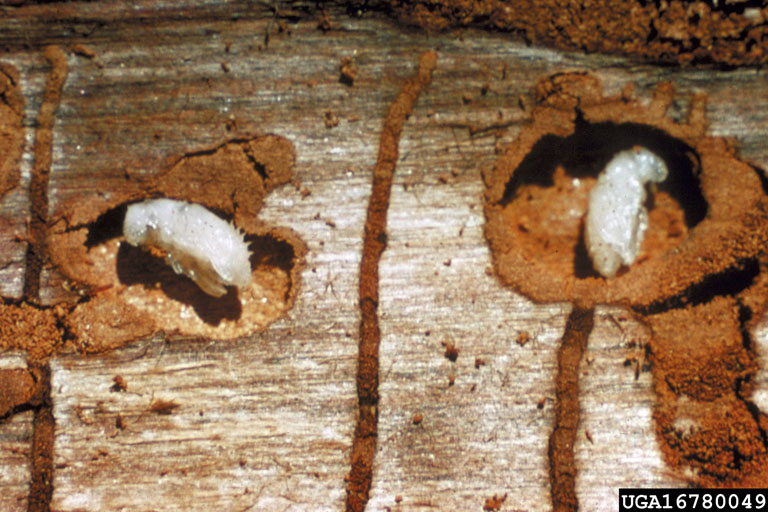
Figure 9. Pupa of the mountain pine beetle (Dendroctonus ponderosae) nestling in pupal chambers
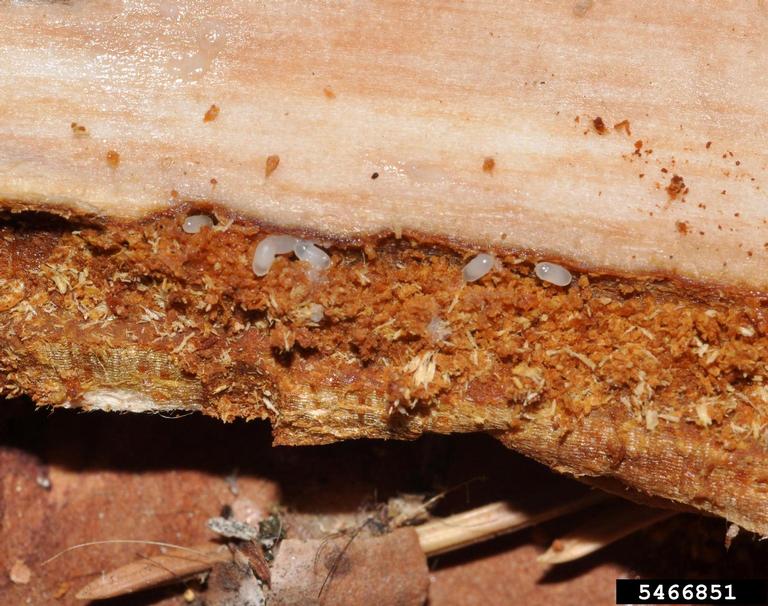
Figure 10. Exposed eggs of the spruce beetle (Dendroctonus rufipennis)
Host plants
Dendroctonus beetles primarily attack coniferous trees, especially species in the pine (Pinus), spruce (Picea), and fir (Abies) genera.
Known hosts include ponderosa pine (Pinus ponderosa), radiata pine (Pinus radiata), Engelmann spruce (Picea engelmannii), white fir (Abies concolor), Douglas-fir (Pseudotsuga menziesii).
In Australia, exotic pine plantations, particularly Pinus radiata, are considered at high risk should Dendroctonus species become established.
Life cycle
The Dendroctonus life cycle typically includes egg, larval, pupal, and adult stages, all completed beneath the bark except for the dispersing adult stage.
Eggs are laid in galleries under the bark.
Larvae feed on phloem tissue, creating tunnels that expand as they grow.
Pupation occurs within chambers in the bark or outer sapwood.
Adults emerge through small exit holes to find new hosts.
Most species complete one generation per year, but development time varies with temperature and environmental conditions.
Distribution and dispersal
Dispersal occurs via adult flight.
Long-distance movement is aided by humans through movement of untreated or infested logs and sawn timber, bark and wood packaging material, firewood, wood chips or dunnage.
Prevention
Preventing the introduction and establishment of Dendroctonus beetles in Australia relies on strong biosecurity measures and forest health surveillance.
Treatment and monitoring of imported host material to prevent the spread of the pest.
Image credits
All figures courtesy of Bugwood.org
Figures 1 and 3. Donald Owen, California Department of Forestry and Fire Protection.
Figure 2. Ron Long, Simon Fraser University.
Figure 4. Louis-Michel Nageleisen, Départment de la Santé des Forêts, Ministère de l’Agriculture, Paris.
Figure 5. Daniel Miller, USDA Forest Service.
Figure 6. Alexandria Wenninger, University of Alaska Cooperative Extension Service.
Figure 7. Leslie Chong, Simon Fraser University.
Figure 8. Tim Tigner, Virginia Department of Forestry.
Figure 9. David McComb, USDA Forest Service.
Figure 10. William M. Ciesla, Forest Health Management International.
Reporting an unusual plant insect pest or disease
Report any unusual plant pest or disease immediately using our online reporting form or by calling the Exotic Plant Pest Hotline on 1800 084 881. Early reporting increases the chance of effective control and eradication.
Please take multiple good quality photos of the pests or damage to include in your report where possible, as this is essential for rapid pest and disease diagnosis and response.
Your report will be responded to by an experienced staff member, who may seek more information about the detection and explain next steps.
Report online