Tomato potato psyllid information for home gardeners
About TPP
Tomato potato psyllid (TPP) (Bactericera cockerelli) is a tiny sap-sucking insect that causes damage to plants leading to loss of plant vigour and a reduction in yield.
It feeds on plants in the Solanaceae (potato, tomato, capsicum, chilli, eggplant and tamarillo) and the Convolvulaceae families (sweet potato).
TPP was first detected in Australia in Western Australia in 2017. Further detections were made in a restricted area outside Melbourne, Victoria in 2024 and across greater Melbourne in late 2025. In Australia, TPP is only found in the states of Western Australia and Victoria where it is considered established. All other jurisdictions (except Western Australia) have introduced requirements for trade in certain plants and plant products to reduce the risk of interstate spread.
TPP can transmit the bacterium Candidatus Liberibacter solanacearum (CLso), which causes the exotic disease ‘zebra chip’ in potatoes. TPP spread the bacterium by feeding on an infected plant then injecting it when it feeds on the next plant. It is possible that this bacterium is also transferred via other host psyllids. CLso is not present in Australia.
How does it spread?
TPP is predominantly spread through the movement of plants and plant materials, including fruit, vegetables and nursery stock, and on machinery and equipment. It can also fly or hop short distances or be carried longer distances by wind.
TPP can also be transported on other species of plants even though it does not feed on them. These ‘carrier’ plants are also regulated when moving interstate, with the specific definition of ‘carrier’ varying among states and territories.
What do I look for?
If you grow plants that are hosts for the pest, look for insect life stages on the underside of leaves. Adults and nymphs favour the lower parts of the plant and most nymphs and adults are found on the underside of leaves in the middle or lower part of the plant and especially near the margins of the crop. The adults will fly a short distance and quickly settle again and behave like whitefly.
Signs and symptoms of TPP include:
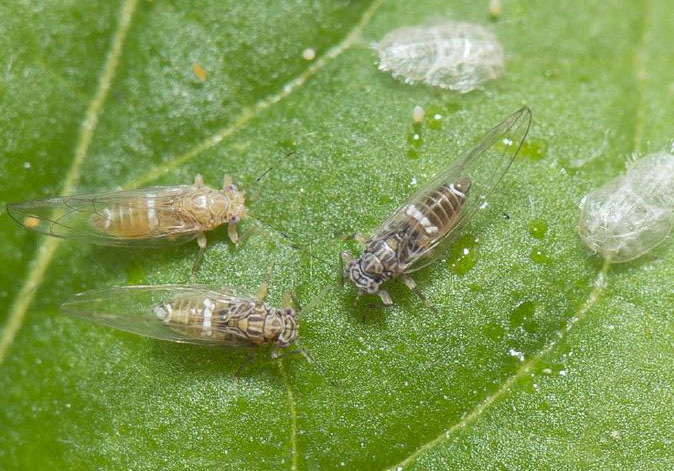
- Adult psyllids (Figure 1) jumping from foliage when disturbed
- Stunting and yellowing of growth tips
- Yellowing or purpling of leaf margins
- Severe wilting of plants caused by high numbers of psyllids feeding
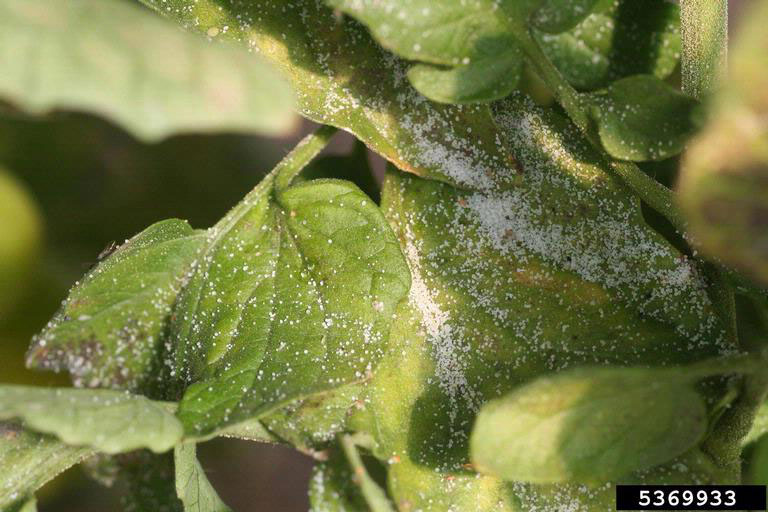
- ‘Psyllid sugars’ – white, sugar-like granules (Figure 2.) excreted by adults and nymphs, which coats leaves and stems, and leads to growth of sooty mould.
- Stem death symptoms are similar to other potato and tomato disorders.
Protect your plants
Integrated pest management
Protect your garden from TPP by regularly inspecting host plants (tomatoes, potatoes, capsicums) for signs of TPP and taking an Integrated Pest Management (IPM) approach.
Regular inspection
Check the underside of leaves for eggs and small, flat nymphs. Look for "psyllid sugar" (white, powdery waste) and yellowing, stunted, or curled leaves.
Physical barriers
Use fine insect netting (under 1.6 mm aperture) to cover plants, preventing adults from laying eggs on leaves.
For more information on how to use netting to protect your garden beds from pests, watch Gardening Australia’s short video.
Sticky traps
Hang yellow sticky traps at plant canopy level to monitor for adult TPP. Ensure they are within a protective cage to avoid catching beneficial wildlife.
Sticky traps can be purchased from nurseries, home garden and online retailers.
Weed management
Remove host weeds from the Solanaceae family (e.g., nightshade) and African boxthorn as they act as nurseries for TPP populations.
Beneficial insects
Encourage ladybirds, lacewings, and hoverflies, which are natural predators of psyllid nymphs, by judicious use of insecticides and providing shelter and sources of nectar with flowering plants.
Eco-friendly oils
Use horticultural oils or soap-based sprays to control nymphs, ensuring complete coverage of the leaf undersides.
Source quality seedlings
Only purchase seedlings from reputable suppliers to ensure they have been inspected and treated for pests.
Insecticides
If TPP is found, there are treatment options for control. The products available to treat plants for TPP have been approved by the Australian Pesticides and Veterinary Medicines Authority for use on a wide range of fruit and vegetable crops. This means they have been thoroughly assessed to ensure the safety of the user, the public and the environment, when used according to label directions and state legislation.
It is important to consider the following when using insecticides:
- Insecticide sprays can be harmful if used incorrectly, so always read the and follow the label directions.
- Make sure the withholding period has passed before picking treated fruit or vegetables and be sure to wash produce well before eating them.
- Insecticides can kill non-target species such as beneficial insects and spiders so always check the label.
- Practice targeted application – when applying a chemical control, concentrate on the underside of the leaves where most TPP adults and nymphs live.
Minimising spread
Solarisation and disposal of infested plants
There may be times when a plant is heavily infested with TPP. In these cases, solarisation can be used to control TPP on plants that have been removed and to prevent spread to nearby plants. Solarisation is a technique which uses the sun’s energy to combat pests such as TPP.
Below is a step-by-step guide on how to solarise infested plants.
- We recommend to first apply an approved insecticide to infested plants from the approved treatment list to limit psyllids from jumping off the plant during removal.
- Place infested plants in double-layer heavy duty black garbage bags.
- Leave bags in direct sun for up to 14 days.
- Bags can then be disposed of in general rubbish.
- Do not dispose of plants in your organics or green waste bin.
How you can help combat TPP
- Check plants in your garden for signs of TPP.
- Check any plants purchased for signs of TPP.
- Comply with any movement restrictions of host plants.
- Avoid moving homegrown plants off your property, even if you are not in a quarantine area.
- Apply treatments to control TPP.
Image credits
- Figure 1: Department of Primary Industries and Regional Development (DPIRD), Western Australia.
- Figure 2: Whitney Cranshaw, Colorado State University, bugwood.org