Identifying red imported fire ants (RIFA)
For more information relating to this surveillance program see Victoria’s invasive ant surveillance program.
Key features
Ants belong to a group of insects called Hymenoptera, which also includes bees, wasps, and sawflies. Because these insects share some similar body features, it can sometimes be hard to tell them apart, especially when looking at winged male or queen ants.
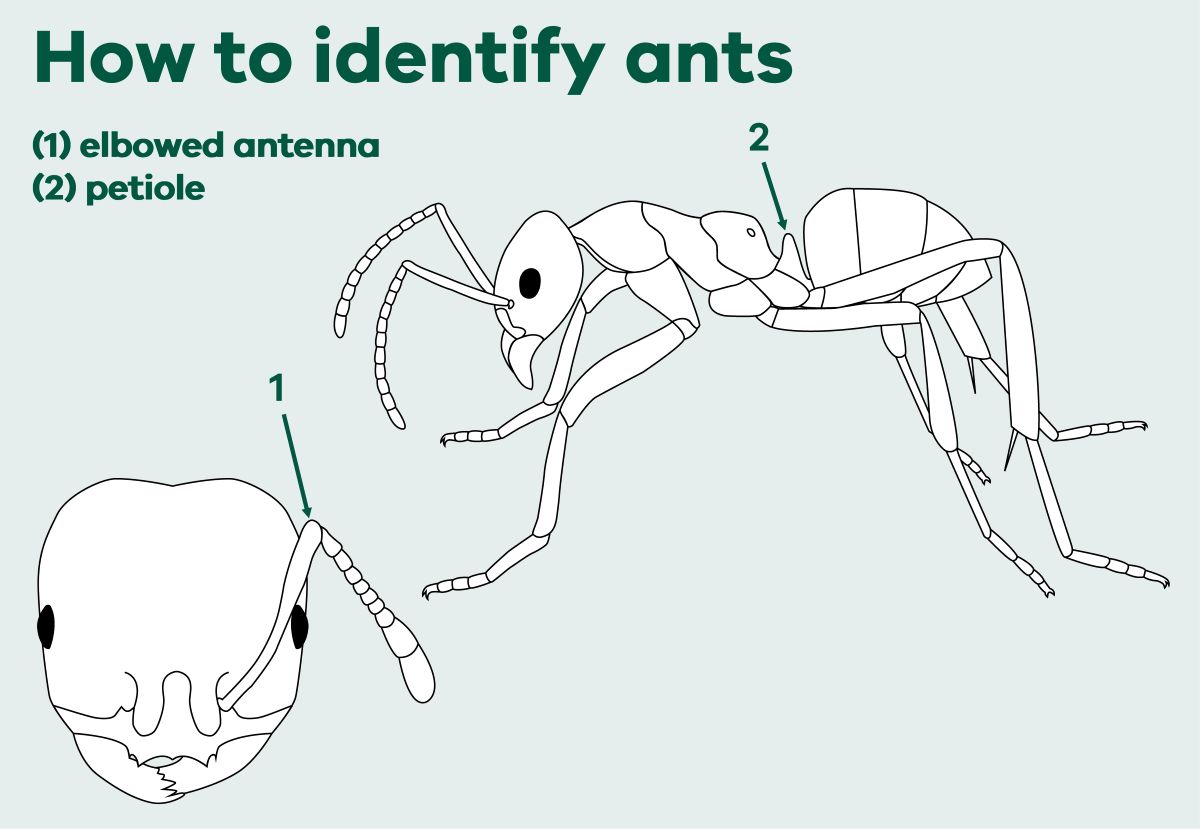
Ants can usually be identified by 2 main features: their bent (elbow-shaped) antennas and a narrow, section between the middle and back parts of their body called the petiole (Figure 1). The petiole typically features one or 2 raised bumps called nodes. In some cases, a stereo microscope may be needed to identify ants accurately.
Red imported fire ants (Solenopsis invicta) can be identified by 3 main features:
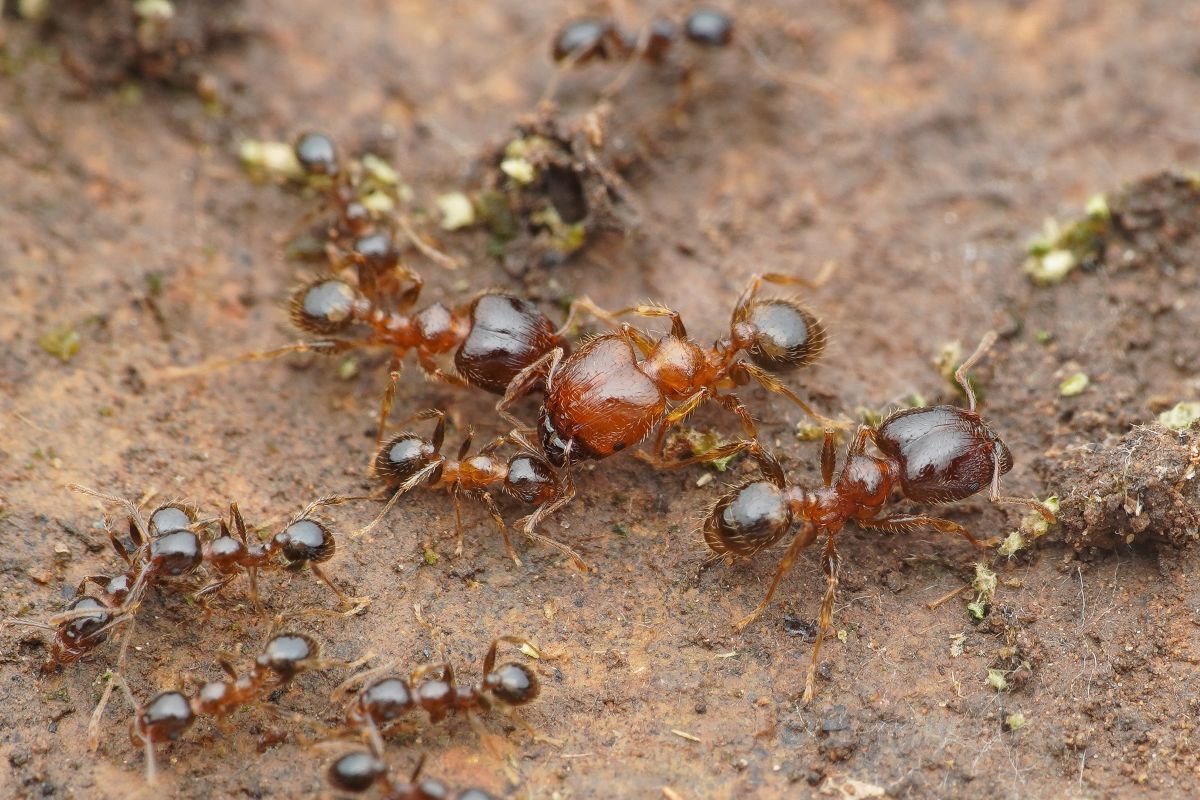
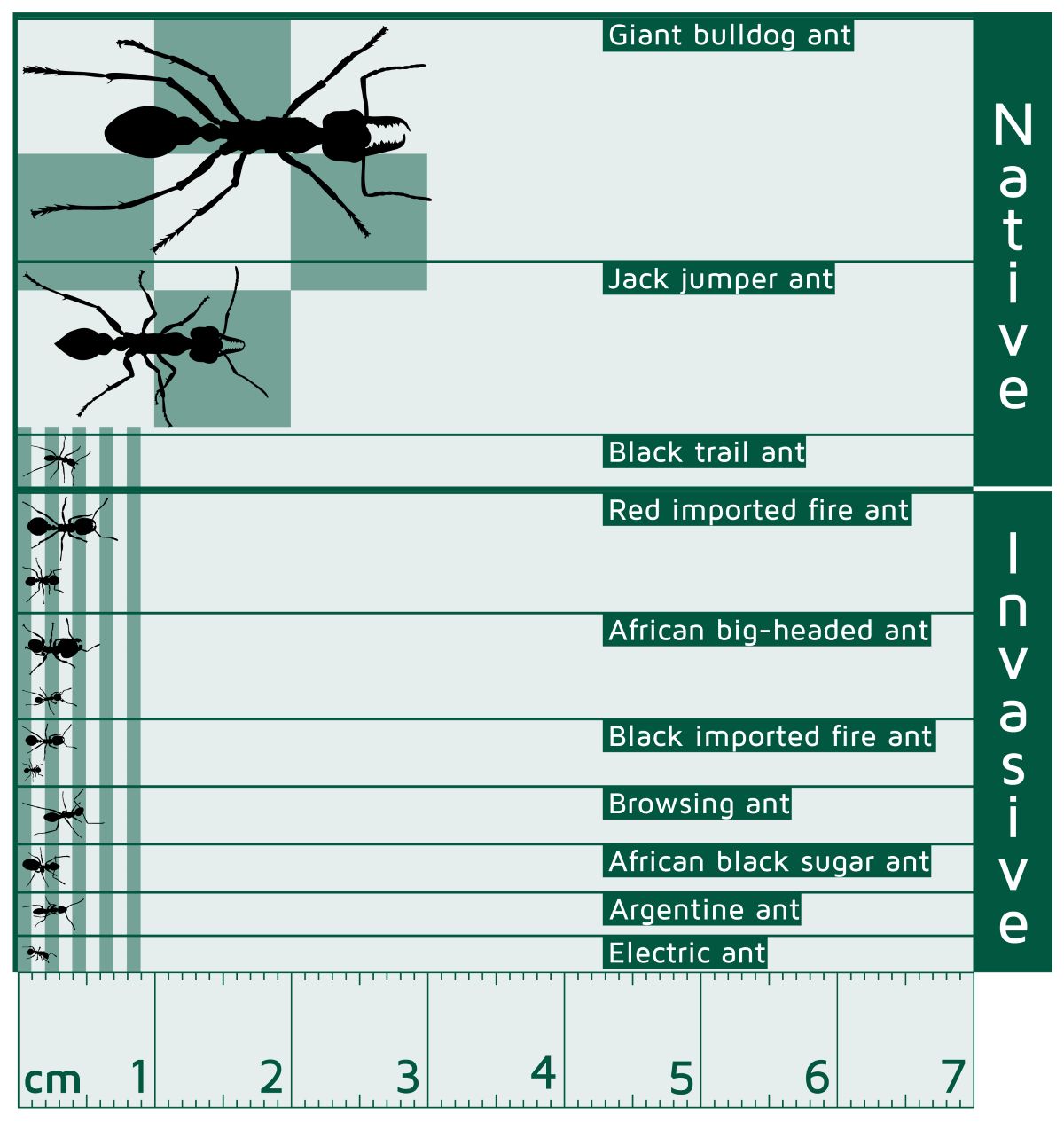
- Ants from the same nest come in a range of sizes (Figure 2), usually between 2 mm and 6 mm long.
- They are very aggressive when their nest is disturbed. Large numbers of ants will quickly leave the nest and attempt to sting the threat repeatedly.
- Their bodies are copper-brown in colour, with a darker abdomen.

RIFA lookalikes
The following ant species are often mistaken for red imported fire ants because they look similar at first glance. These ants do not need to be reported.
It is important to note that ant species other than RIFA can also bite and/or sting, so if you get stung or bitten by an ant it doesn’t always mean it is RIFA. However, if you are unsure whether an ant is a red imported fire ant, it is better to report it so that it can be properly identified.
Pheidole megacephala
Also known as coastal brown ants, these are a globally distributed invasive species native to Africa.
Worker ants come in only 2 sizes, around 2 mm and 4 mm in length. The larger one has a huge head that contributes to half of its body size.
Unlike RIFA, these ants are not aggressive, and their bodies are brownish-yellow in colour.
Iridomyrmex purpureus
The meat ant is a native Australian species found across most of mainland Australia.
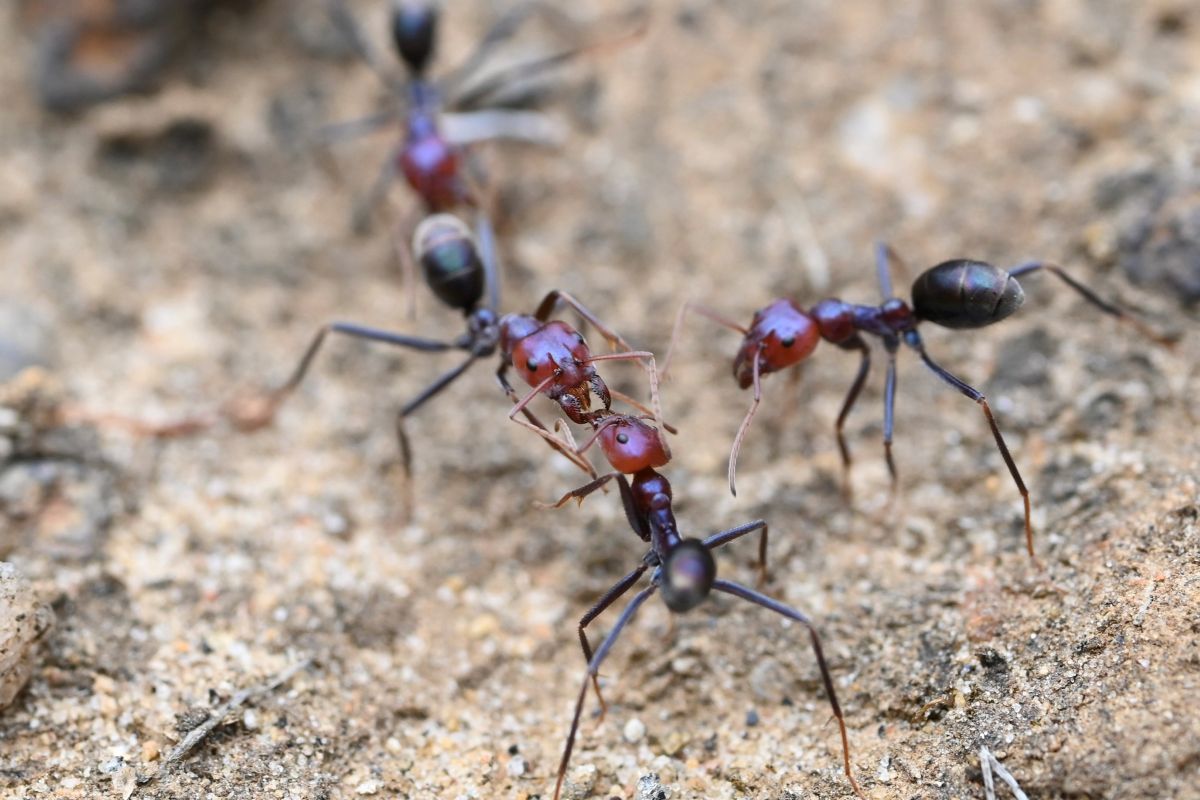
Worker ants of this species are about 6 mm to 8 mm long and can be recognised by their iridescent dark blue to purplish body and red head.
Meat ants also display aggressive behaviour if the nest is disturbed.
Nests of this species can be differentiated from RIFA nests because mounds have multiple exit holes, while RIFA nests do not have any exit holes.
Although they do not have a sting, their bite can be painful.
Camponotus consobrinus
Sugar ants are native to Australia and are commonly seen in Victorian forests and woodlands, though they also inhabit urban areas, where they are considered a pest.
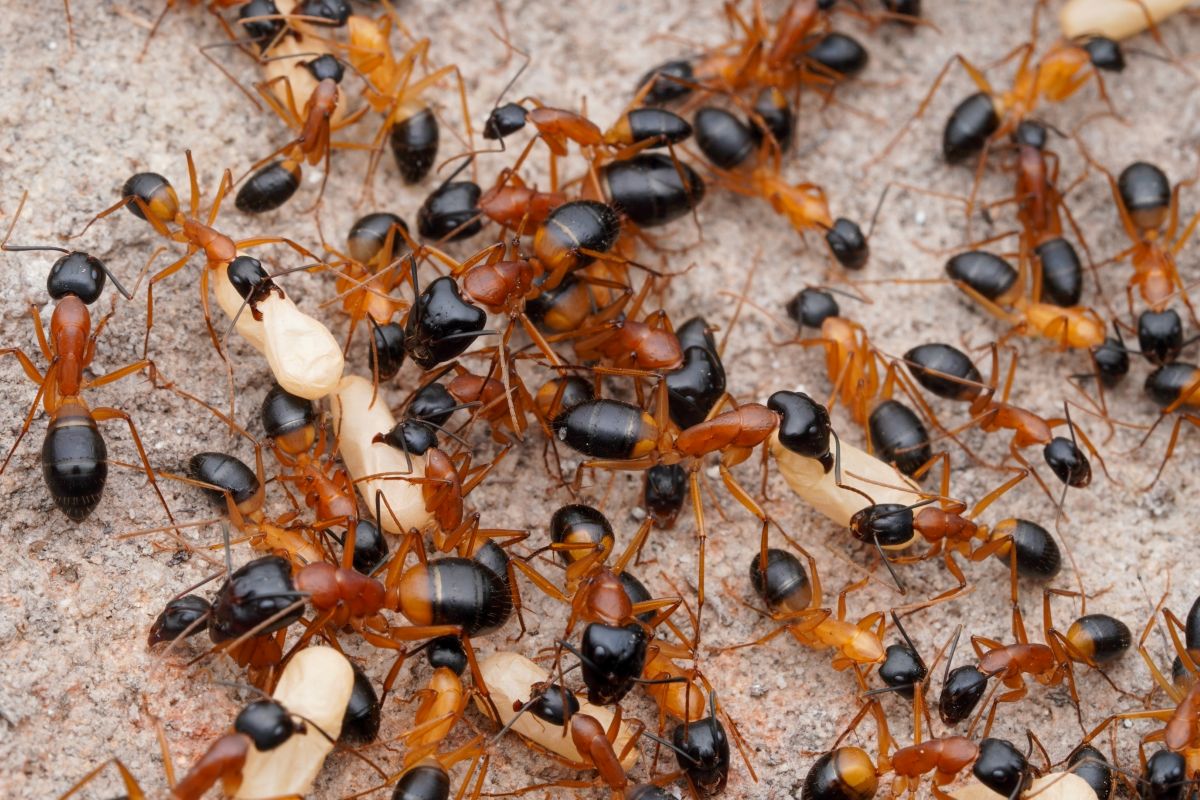
They are large ants that range between 5 mm and 15 mm long and have an orange-brown body and legs with a black head and abdomen.
Despite their large size, these ants don’t sting and are not aggressive, rarely biting.
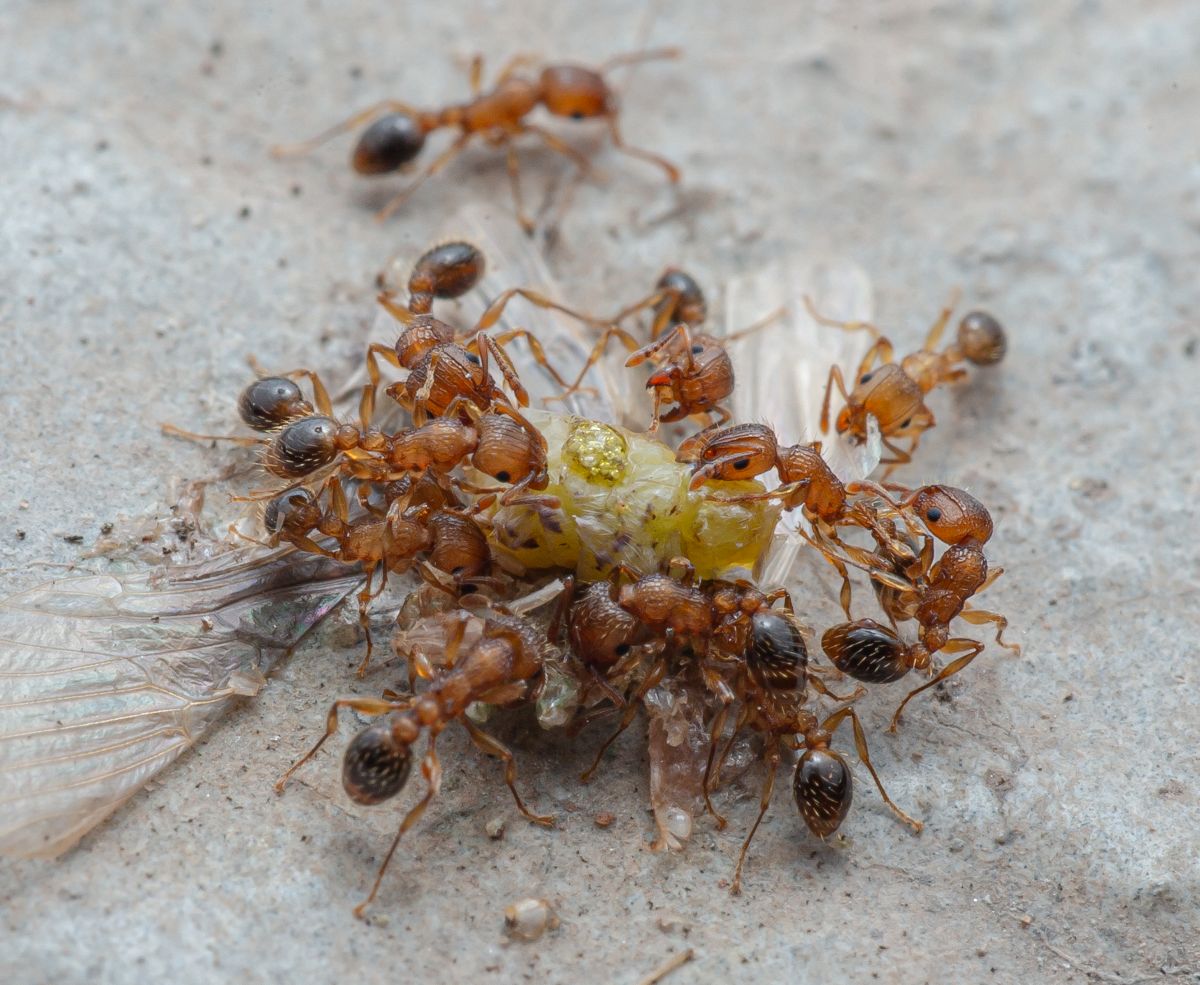
Tetramorium sp.
Tetramorium are a large group of ants distributed worldwide with numerous species found in Australia, both native and invasive.
Workers typically range between 2 mm and 5 mm long.
Because of their black abdomen and reddish body, they are often mistaken for red imported fire ants.
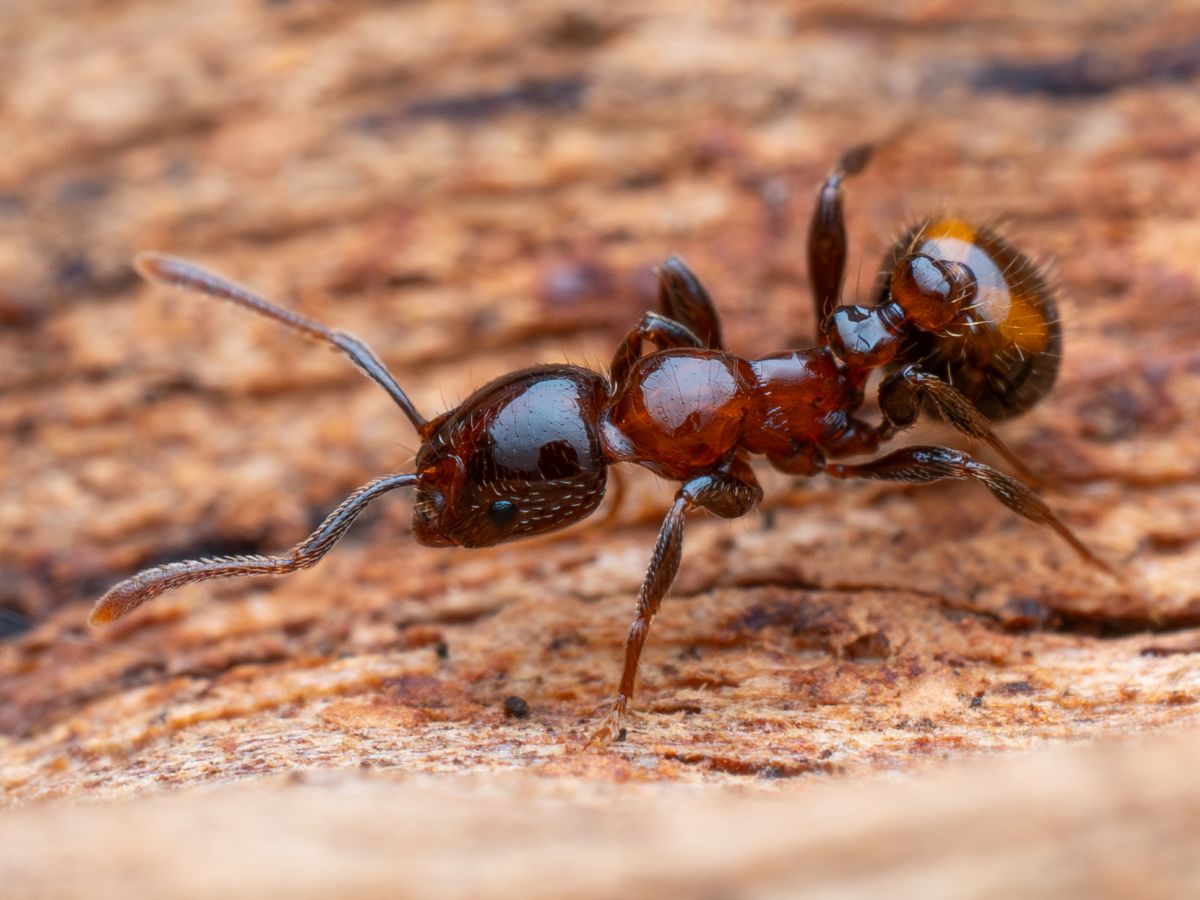
Chelaner rubriceps
This native species is found on the eastern and south-eastern coast of Australia from Queensland through to South Australia.
Workers are between 3.5 mm and 5 mm long and often, but not always, have a red body and a dark abdomen with lighter patches or bands.
Size sheet
Ants come in different shapes and sizes, Figure 8 shows some examples of this diversity, including red imported fire ants.
Some ant species are very small and identifying them will require a stereo microscope.
RIFA nests
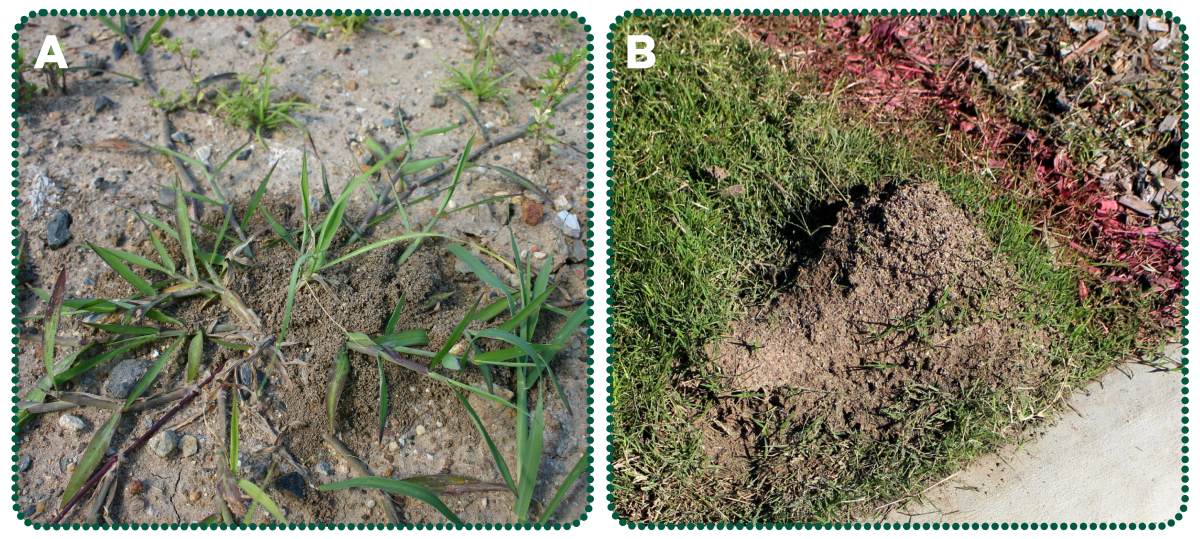
Nests of red imported fire ants are often distinct from the nests of other ant species. Nests do not have a visible entrance or exit holes. New nests, or nests in sandy, cold, or dry areas, can be hard to find because they look like a small patch of disturbed soil (Figure 9A).
Older nests, or nests located in clay soil or warm, humid areas, have dome-shaped mounds that are usually about 30 cm wide and 10 cm high (Figure 9B), and are rarely more than 45 cm wide.
Do not disturb a suspected red imported fire ant nest – this species is highly aggressive and may swarm if disturbed.
How to report RIFA
Report
If you think you have found red imported fire ants you must report them immediately using the Agriculture Victoria public online reporting form or by calling the Exotic Plant Pest Hotline on 1800 084 881.
Red imported fire ants are a notifiable pest in Victoria, which means there is a legal obligation to report suspected detections. This obligation applies to everyone, including individuals and organisations.
Photograph
Take clear photographs of the ants and nests and upload them with your report. See Photographing RIFA.
Collect
A sample of the ants may be required for diagnostic confirmation. If you are comfortable, see Collecting RIFA.
If you have concerns about your ability to safely collect a sample, please contact us by calling the Exotic Plant Pest Hotline on 1800 084 881.