Tomato potato psyllid
Tomato potato psyllid (TPP) (Bactericera cockerelli) is a tiny sap-sucking insect that attacks plants such as potato, tomato, capsicum, chilli and eggplant, solanaceous weeds and sweet potato.
Tomato potato psyllid is a serious pest for home gardeners and commercial growers throughout Victoria.
TPP was first detected in Victoria in 2024 and it now considered established. All Victorian businesses transporting TPP host or carrier plants or plant products interstate need to comply with entry requirements set by each destination jurisdiction. These requirements vary by state and differ for host and carrier commodities of TPP. Other jurisdictions (except Western Australia) have established import conditions for host and carrier plants to reduce the risk of interstate spread.
Biosecurity updates
10 April 2026
Queensland entry conditions updated for tomato potato psyllid
1 April 2026
Tomato potato psyllid
24 December 2025
Advanced notification of the release of PS-66: Pest Free Production Site for Tomato-Potato Psyllid
Description
The tomato potato psyllid has three stages of development:
- eggs
- nymphs (juveniles), and
- adults.
Eggs
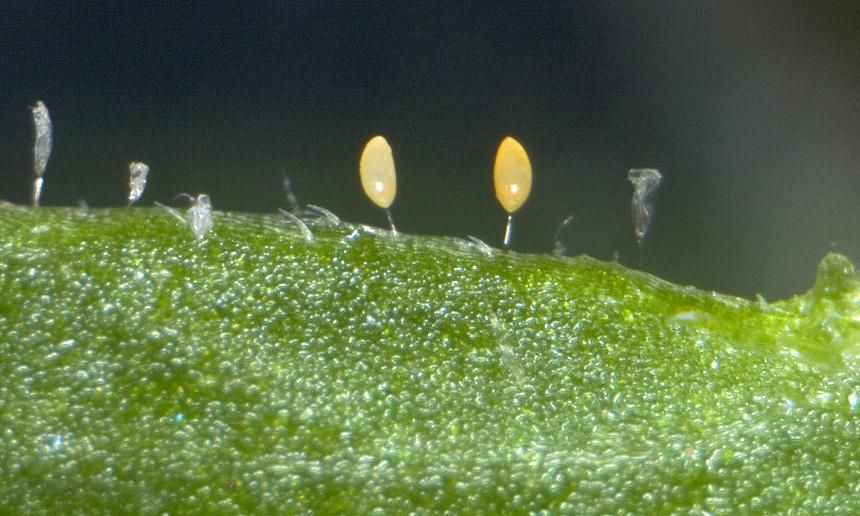
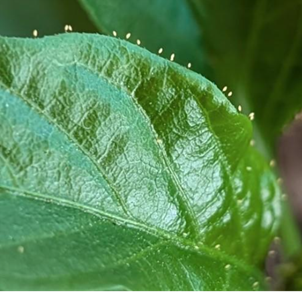
Psyllid eggs are yellow, oblong-shaped and 0.3 mm long. They are laid on the end of a short stalk on the lower surface of leaves and on leaf margins (Figures 1 and 2).
Nymphs (juveniles)
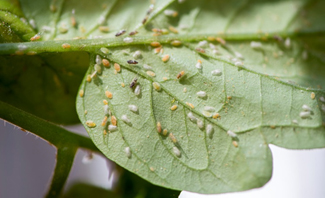
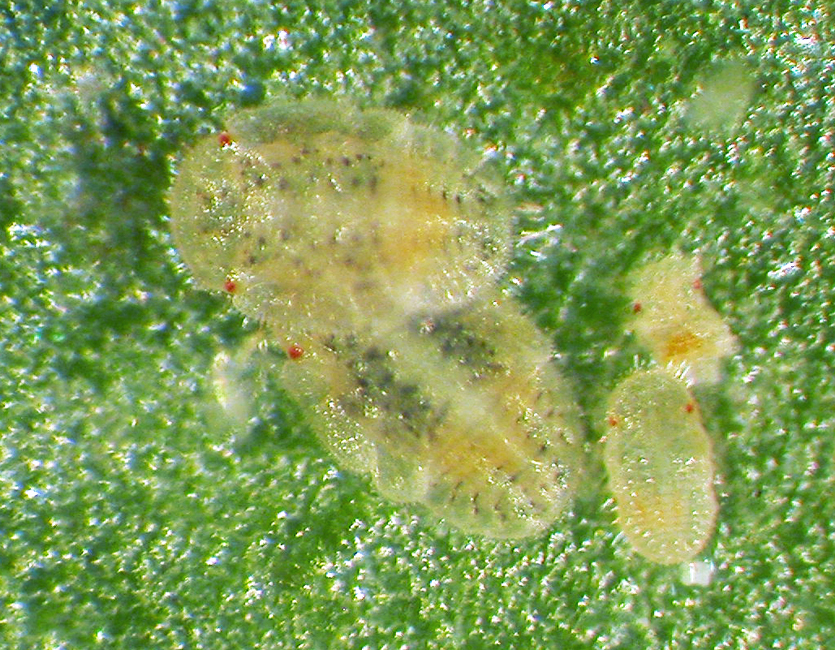
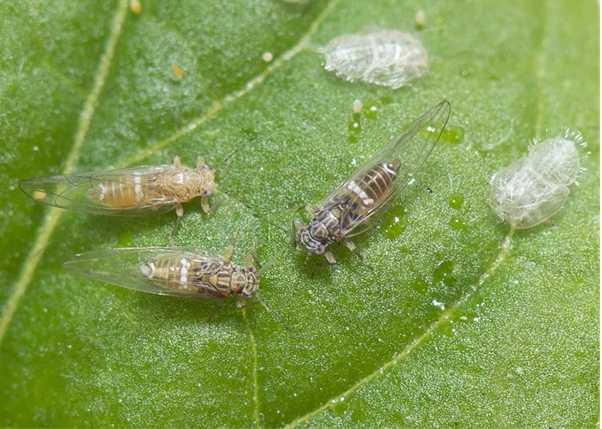
Nymphs moult 5 times, growing in size from 0.2 mm to 2 mm. Nymphs have flattened oval, pale yellow to green or orange scale-like bodies and red eyes. More mature nymphs have wing buds and are fringed with hairs. Nymphs prefer sheltered locations and are predominantly found on the underside of leaves (Figures 3 and 4).
Adults
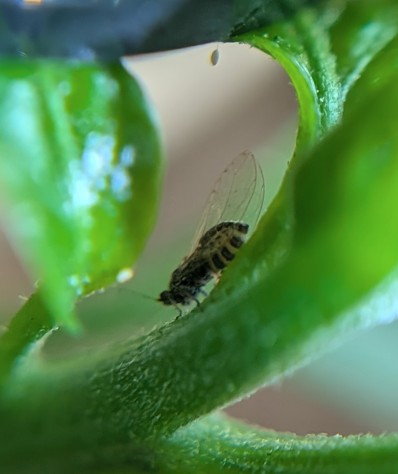
Adults resemble small, winged cicadas and are about 3 mm long with transparent wings held tent-like over their body (Figures 5 and 6). When new moulted, their body is yellow but turns brown soon after. They have a broad white stripe on the first abdominal segment and an inverted V-shaped band on the last abdominal segment.
Feeding damage
An infestation of TPP can cause psyllid yellows, which includes the following symptoms:
- Stunted growth
- Severe wilting
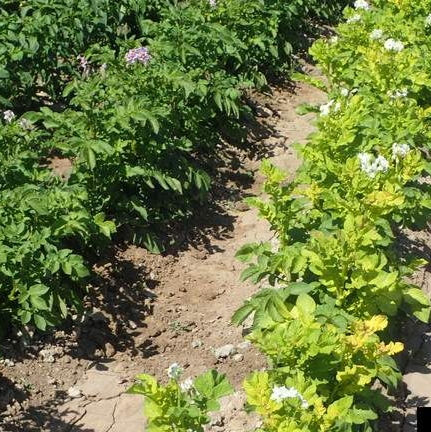
- Yellowing of the leaves (Figure 7)
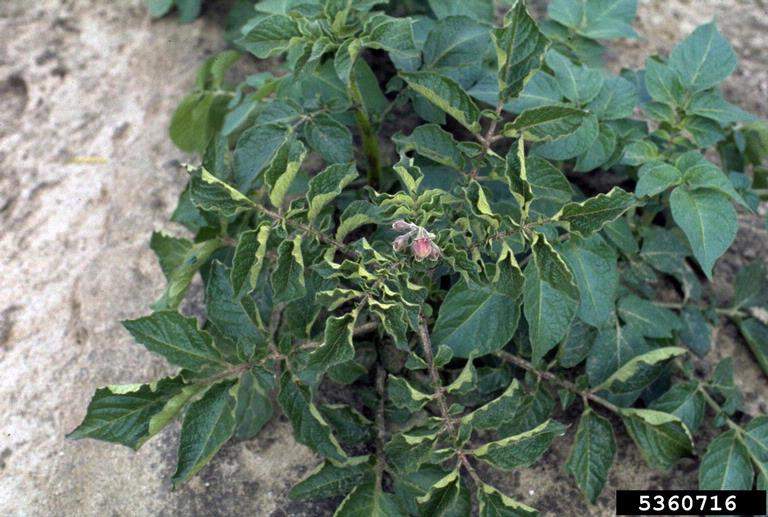
- Upward curling or cupping of leaves (Figure 8)
- Shortened stem internodes
- Reduction in yield and quality
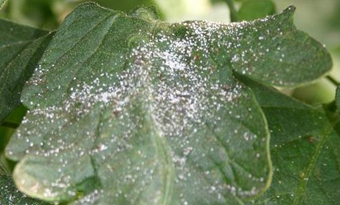
Nymphs and adults produce large quantities of white, sticky, sugar-like granules (‘psyllid sugars’) as a by-product of feeding. This sticks to the foliage, coating the leaves and stems and can lead to the development of sooty mould, making the plant look dirty (Figure 9). Stunted growth, shortened stem internodes and stem death can resemble other potato and tomato disorders.
TPP can carry a serious exotic bacteria known as Candidatus Liberibacter solanacearum (CLso), which can cause zebra chip disease in potatoes leading to misshapen tubers and striped patterns of discolouration on potato crisps. CLso has not been detected in Australia. Ongoing surveillance and testing will continue to confirm Victoria’s freedom from CLso.
Hosts
TPP can live on many plants. These are mostly plants and plant products from the Solanaceae and Convolvulaceae families.
Fresh fruit and vegetables affected are:
- Capsicum
- Chilli
- Eggplant
- Goji berry
- Potato
- Sweet potato
- Tamarillo
- Tomatillo
- Tomato
- Water spinach (kangkong)
Solanaceous and convolvulaceous weeds affected are:
- Thorn apple also known as Jimsonweed
- Downy thorn apple
- African boxthorn
- Anderson boxthorn
- Chinese lantern
- Cut-leaf ground cherry, also known as wild goose cherry
- Cape gooseberry
- Deadly nightshade, also known as belladonna
- Velvety nightshade
- Kangaroo apple
- Field bindweed
- Morning glory
Life cycle
Developmental times depend on temperature and plant hosts.
Eggs are deposited singly, preferentially on lower surfaces of leaves of leaf margins although sometimes throughout suitable host plants. They are usually mounted on a short stalk (0.5 mm). Eggs hatch 7 days after oviposition (egg laying).
The five nymphal stages take between 12-24 days to develop with optimum development occurring at 27oC. Development is reduced at 32oC and ceases at 35oC. Both adults and nymphs are cold tolerant. For example, nymphs can survive temporary exposure at -15oC and 50% adults survive -10oc over 24 hours.
Adults live between 20-60 days with females living 2-3 times longer than males. Mating occurs 2-3 days after the final nymphal stage. Females lay 300-500 eggs in a lifetime.
There can be between 3-7 generations per year depending on the region.
Distribution and spread
TPP are often referred to as 'jumping plant lice', as the adults readily jump and fly off when foliage is disturbed, but only move short distances.
Longer distance spread occurs through the movement of plants and plant materials, including fruit, vegetables and nursery stock, and on horticultural machinery and equipment. TPP has also been known to travel relatively long distances assisted by wind.
TPP can also be transported on other species of plants and produce even through it does not feed on them. These ‘carrier’ plants and produce are regulated when moving interstate.
Reporting an unusual plant insect pest or disease
TPP has not yet been found in regional Victoria, so if you think you have seen it in these areas, please report it using our online reporting form or by calling the Exotic Plant Pest Hotline on 1800 084 881. Early reporting increases the chance of effective control and eradication.
Please take multiple good quality photos of the pests or damage to include in your report where possible, as this is essential for rapid pest and disease diagnosis and response.
Your report will be responded to by an experienced staff member, who may seek more information about the detection and explain next steps.
Photo credits
- Figure 1: Plant and Food Research, New Zealand
- Figure 2 and 5: Ashley De Vries
- Figures 3, 6 and 9: Department of Primary Industries and Regional Development (DPIRD), Western Australia.
- Figure 4: Joseph Munyaneza, USDA, ARS, bugwood.org.
- Figure 7: Whitney Cranshaw, Colorado State University, bugwood.org
- Figure 8: Eugene E Nelson, bugwood.org