Australian plague locust
The Australian plague locust (Chortoicetes terminifera) is a native insect that can cause significant damage to pastures, crops and horticultural industries if left unmanaged. While they mainly occur in Queensland and New South Wales, favourable seasonal conditions can lead to outbreaks in Victoria.
Locust outbreaks can cause significant economic losses and affect agricultural, public places and community assets.
Early detection, reporting and management are critical to reducing their impact.
Current locust risk and outlook
Victoria
There is an increased risk of high locust activity in north-west Victoria this spring.
September surveillance has detected newly hatched Australian plague locusts (APL), confirming that hatching is now underway in the Mallee.
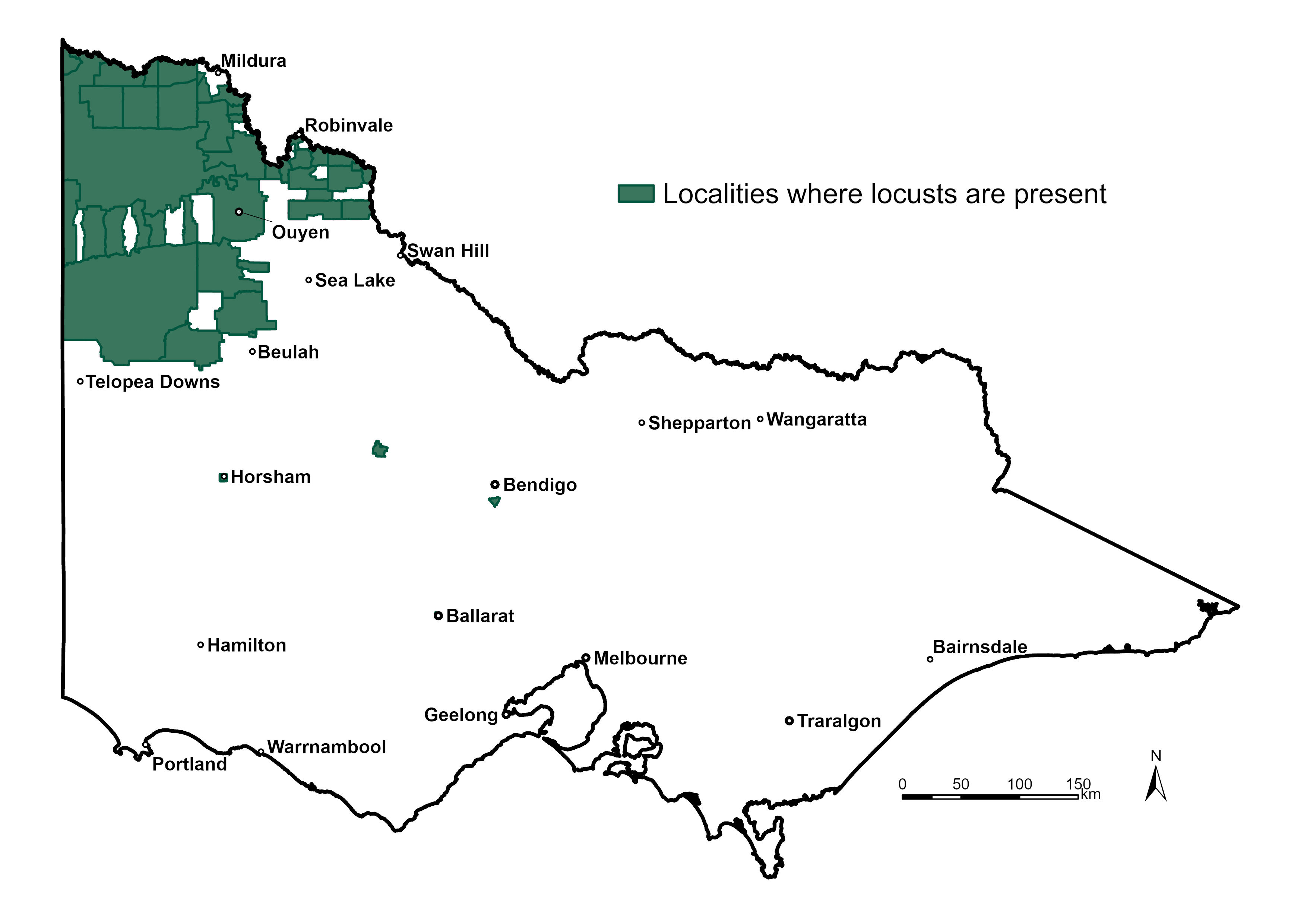
Australian plague locust detections in September
Surveillance of the priority local government areas has found locusts hatchings in the following locations:
- Northern Mallee: Carwarp, Cullulleraine, Hattah, Iraak, Koorlong, Lindsay Point, Merbein South, Meringur, Merrinee, Murray Sunset, Nangiloc, Neds Corner, Red Cliffs, Werrimull and Wargan
- Central Mallee: Annuello, Bannerton, Boinka, Bolton, Boundary Bend, Cowangie, Kenley, Kooloonong, Lake Powell, Linga, Liparoo, Manangatang, Murrayville, Narrung, Ouyen, Panitya, Piangil, Robinvale, Torrita and Wemen
- Southern Mallee: Big Desert, Hopetoun, Patchewollock, Rainbow and Speed
A lack of detection in other townships within Agriculture Victoria’s priority local government areas does not mean locusts are absent.
Under Victoria's shared responsibility arrangements, private landholders and public land managers are responsible for monitoring their land and undertaking any necessary control.
As the coordinating body responsible for sharing information and technical advice, Agriculture Victoria conducts annual surveillance of parts of the state where we know locusts can occur.
This surveillance helps land managers to understand seasonal shifts in population and whether further morning may be required by them, such as in the current situation.
Locusts have been observed as a mix of developmental stages in some locations. This may have occurred because in some areas, eggs were laid during different periods of the year.
An extended hatching time is now expected.
What the detections mean
Locusts may be present in all priority local government areas.
Detections listed on this page have been reported to or identified by Agriculture Victoria.
The list does not represent the full extent of locust activity. Our surveillance focuses on areas where egg laying occurred during autumn and does not cover all land. Under Victoria’s shared responsibility arrangements, land managers are responsible for monitoring their land and our data can only capture what is reported to us.
Some areas surveyed may not have been fully accessible due to dense growth of vegetation. This means that locusts hatching may still occur in areas where no locusts were detected.
Because eggs were laid over an extended period, hatching is expected to continue throughout spring.
Locust activity can change quickly and all land managers should regularly inspect their own land and report locust activity to us.
In the areas west of Mildura to the South Australian border and southern Mallee areas, surveillance is finding localised areas of APL in stages ranging from recent hatchings through to all stages of instars up to adults.
Surveillance has extended into the Wimmera in October, in line with expected hatching time periods for this region.
Why are we seeing more locusts than normal?
Agriculture Victoria has been conducting spring surveillance at locations where high locust numbers were recorded last autumn.
These high autumn locust numbers combined with above-average rainfall and favourable soil moisture conditions has created ideal conditions for spring hatching and population growth.
Mallee
- Moderate to high risk of increased locust numbers in spring.
- Eggs have begun to hatch from mid-September.
Wimmera
- Low to moderate risk of increased locust numbers in spring.
- Eggs are expected to hatch from late September.
Priority Local Government Areas for surveillance
Surveillance is focusing on seven priority LGAs within the Mallee and Wimmera based on forecasts. They include:
- Mildura
- Swan Hill
- Gannawarra
- Buloke
- West Wimmera
- Yarriambiack
- Hindmarsh
Eastern Australia
Locust numbers increased significantly across inland eastern Australia during autumn.
Heavy rainfall created favourable breeding conditions, while warm autumn weather also helped locusts move south and south-east.
In south-west New South Wales and eastern South Australia there is predicted to be:
- a moderate to high risk of significant hatching in early spring
- a moderate to high risk of locust movement in late spring.
Overall, there is a moderate to high risk of high locust numbers in many regional areas across south-eastern Australia.
Report and prepare for locust activity
Managing locusts is a shared responsibility. Landholders and public land managers, government and the community all have a role in monitoring, reporting and managing locust populations.
Landholders and public land managers should:
- report locust sightings and activity
- review chemical and management options
- prepare management plans
- check spray equipment and supplies
- monitor local locust updates.
Recent survey results
In May 2026, Agriculture Victoria and the Australian Plague Locust Commission surveyed north-west Victoria after high locust activity was reported in April 2026.
Adult locusts were found across the region, including some areas with higher activity.
Many females had developing eggs or signs they had laid eggs, although widespread laying could not be confirmed.
Locusts' impact on crops and communities
Locusts can feed on fresh green vegetation and cause significant damage to:
- pasture and crops
- horticultural crops
- home gardens
- parks
- sporting grounds.
Hoppers can form large bands and rapidly strip vegetation. Adult locusts travel long distances and can devastate crops and pastures in short periods.
In severe outbreaks, swarms may land overnight and cause extensive damage by the following morning.
Locusts can also affect communities by damaging gardens, parks and sporting grounds. Large swarms may cover buildings and vehicles and can sometimes block car radiators.
Adult locusts
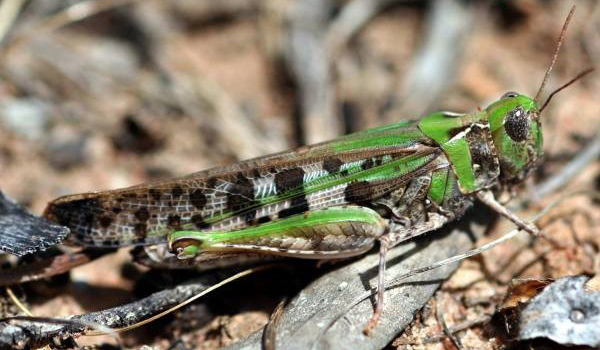
Adult Australian plague locusts can be identified by:
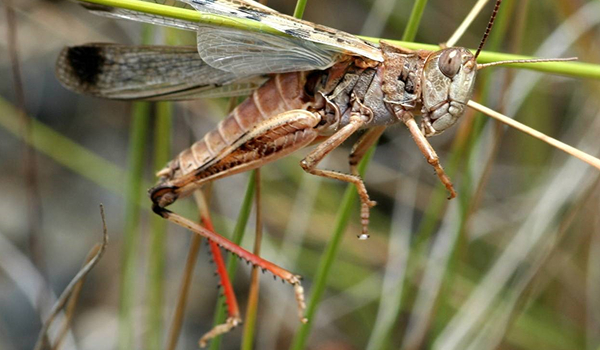
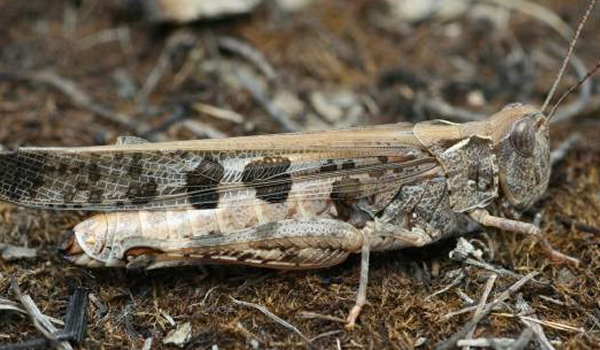
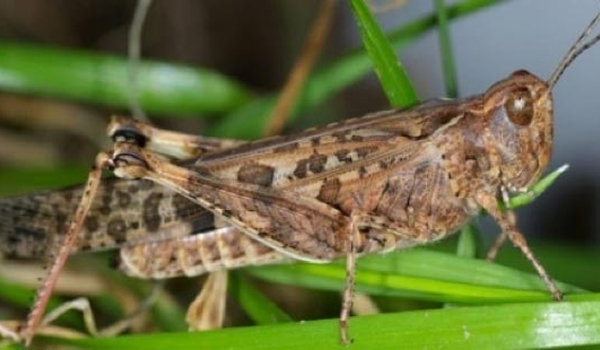
- a large dark spot on the tip of their hind wings
- distinctive red hind legs (Figure 1)
- body colour can vary from grey and brown to green (Figures 2, 3 and 4)
- adult males are typically 25 to 30 mm long.
- females are 30 to 45 mm long.
Grasshopper or locust?
Grasshoppers and locusts look similar, but they behave differently.
Grasshoppers are solitary insects. Locusts can gather in large numbers, form swarms and travel long distances in search of food.
While some native grasshopper species in Victoria can occur in large numbers, they rarely form organised groups or swarms.
Image credits
Figure 1, 2, 4: Michael Moerkerk, Agriculture Victoria, Horsham
Figure 3: Agriculture Victoria
Locust life cycle
After hatching, locusts pass through 5 juvenile growth stages (instars) before becoming adults. Young locusts are known as hoppers or nymphs.
Locusts generally mature within 2 weeks of becoming adult, depending on weather and food availability. In favourable conditions, locusts can produce 2 to 3 generations in a single year.
Egg laying and egg beds
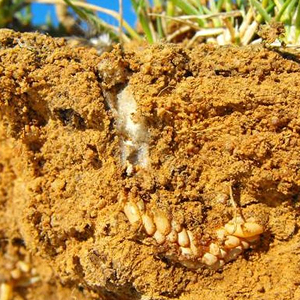
Female locusts lay eggs in pods 2 to 10 cm below the soil. Each pod contains 30 to 60 banana-shaped eggs and is sealed with a frothy plug that helps protect the eggs and retain moisture (Figure 5). A single female locust can lay 2 to 3 pods during her lifetime.
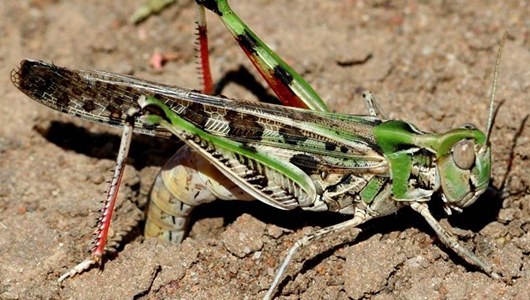
Egg-laying female locusts keep their abdomen firmly in the ground (Figure 6). They are hard to disturb and rarely fly away when approached.
Egg laying locusts are often found in large numbers in open, sunny areas. Low-level flight activity is also commonly seen nearby.
Thousands of female locusts can gather in one area to lay eggs, forming a large egg-laying site known as an egg bed.
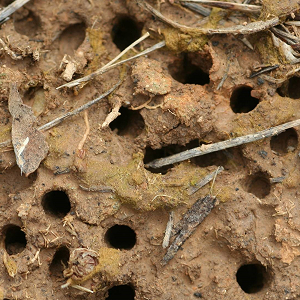
Fresh egg beds often look like a sieve, with many holes on the soil surface (Figure 7). The holes can be quickly covered by soil, making egg beds difficult to find. Egg beds are easiest to locate if egg laying has been observed previously. Finding egg beds usually involves digging through soil clods. Marking known egg-laying sites can help with future monitoring and management.
Female locusts will often drill test holes before laying eggs to check whether the soil is suitable. As a result, not all holes contain eggs, and the size of an egg bed can sometimes be overestimated.
Egg development and hatching
Locust eggs need warmth and moisture to develop in the soil. Warmer temperatures speed up development. At a daily maximum temperature of 35°C, eggs can develop in just over 2 weeks. At 25°C, hatching can more than a month. Egg development stops when temperatures fall below 15°C.
In Victoria, locust eggs usually occur from spring to autumn. In favourable conditions, 2 to 3 generations can hatch during this period.
Eggs may hatch at once at the same time during warmer weather, or over several weeks during cool, damp conditions.
Hoppers and hopper bands
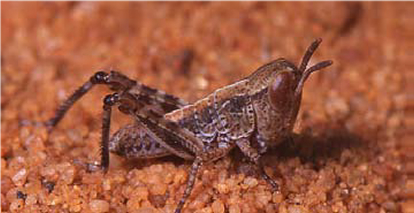
After hatching, locusts undergo 5 juvenile stages. Young locusts are known as hoppers or instars. Newly hatched hoppers are about 4 mm long. They are white when they first hatch but quickly change to pale brown, dark brown or black (Figure 8).
Thousands of young hoppers can emerge from an egg bed. They often remain close to the hatching site for several days before moving into nearby vegetation.
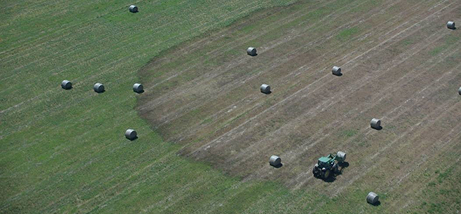
As hoppers grow, they can form large groups called bands. These bands may stretch for several kilometres and may be visible from the air. (Figure 9).
Hoppers in bands usually move in the same direction. The leading edge of a band can contain 1,000 to 5,000 hoppers per square metre.
Hopper bands can cause significant damage because they feed on vegetation as they move.
The best time to spray hoppers is when hoppers are in their second or third growth stage, about 2 weeks after hatching. Management is most effective when band densities reach or exceed 80 hoppers per square metre.
Once locusts develop wings and become adults, they become very hard to manage. During mid-summer, hoppers can develop into a mature adult in as little as 20 to 25 days, making early detection and management critical.
Locust swarms
Adult locusts are highly social and band together to form swarms. When locust numbers are high, swarms travel up to 20 kms during the day. These flights usually occur in light winds and temperatures between 20°C and 35°C.
Swarms typically fly 3 to 20 metres above the ground and can appear to roll across the landscape.
Large swarms usually originate in Queensland and northern New South Wales and generally head south on hot northerly winds. Given favourable conditions, they can move through New South Wales and into northern Victoria.
Swarms are most likely to reach Victoria during late spring, summer and autumn. While they mainly affect northern Victoria, outbreaks can occasionally occur in southern parts of the state.
Image credits
Figure 5: Australian Plague Locust Commission (APLC)
Figure 6: Michael Moerkerk, Agriculture Victoria, Horsham
Figure 7, 8: Agriculture Victoria
Figure 9: Lyn Jacka, Agriculture Victoria, Mildura
Locust migration
Locusts can travel much greater distances during migration.
These flights occur at night and are carried by strong, warm winds associated with fronts or low-pressure systems. Locusts can travel up to 800 km and can fly at heights of up to 1,000 metres.
Migration can result in large numbers of locusts appearing in a new area overnight. While migration can contribute to outbreaks, it does not always lead to successful breeding if they land in a spot where conditions are unsuitable. There have been reports of locust swarms flying too far and landing in Bass Strait.
Report locust activity
Seen locusts or signs of locust activity? Report them online. Your report helps Agriculture Victoria monitor locust populations and support early management efforts across Victoria.